Languages
Sunday, November 29, 2026



News and Views from the Global South
Economy & Trade
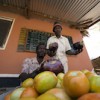
Revolution in African Agriculture Gathering Momentum
As one major meeting on agriculture ends, another begins: farming is truly back on Africa's agenda.Flood-Ridden Pakistan Ineligible For Emergency Debt Relief
A loan deal between the International Monetary Fund (IMF) and flood-stricken Pakistan announced Thursday has drawn the ire of several NGOs that claim the deal represents an "inadequate" and "cynical" response to the disaster that is estimated to have affected the lives of millions.BRAZIL: Inequality Declines in Rio as Rich Get Poorer
The huge gap between the poorest and richest neighbourhoods of Brazil's most famous city shrank between 1996 and 2008. But the news is not as good as it sounds, because the decline in inequality was due to lower incomes in the richer zones, rather than to an increase in wealth in the "favelas" or shantytowns.
Environmental Forensics for BP Gulf Spill
Stealthy submarine gliders slide through the depths of the Gulf of Mexico with the precision of birds of prey. Robot-like rovers search for droplets of oil thousands of metres under the surface. Powerful computerised analysers send instant results to scientists on board the ship above. All of this to assess the impact of disaster.SRI LANKA: Anger Rises Over Torture Case, But Solution Unclear
The ordeal of a Sri Lankan domestic worker whose Saudi Arabian employer allegedly drove nails and metal wires into her body has sent alarm bells ringing among government officials and activists, but how such abuses can be stopped remain far from clear.Funding Begins Flowing for African Agriculture
The Comprehensive Africa Agriculture Development Programme (CAADP) has received a major boost as several countries have begun drawing on funds from a $22 billion pledge made by the G8.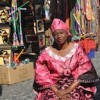
SOUTH AFRICA: “Xenophobia Simmering Just Below Boiling Point”
"Xenophobia is part of life. We do not live easy here. We only survive," says Somali shopkeeper, Abdinasir Shaikh Aden, looking tense.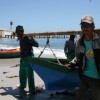
Fisheries Can Play Key Role in Africa
Fisheries contribute at least $10 billion dollars to African economies every year. In countries such as Angola, Egypt and Namibia, fisheries are vital economic drivers.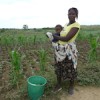
SOUTHERN AFRICA: Growing Seed Security
Farmer Obed Dlamini, like many of his colleagues from Swaziland, finds it difficult to find quality maize seeds each planting season. Not only are the seeds expensive but they are often not available.Environmentalists Push For Coal-ash Regulation
In what promises to be a contentious, high-profile series of debates, the forces of environmental protection will be lining up against those of the electric power industry over the future status of coal-ash.
Portugal’s Forests Losing Ability to Capture Carbon
Environmentalists are alarmed: fires have destroyed close to 100,000 hectares of forest in Portugal this summer, releasing one million tonnes of greenhouse gases into the atmosphere. Worst of all, the forests are losing their ability to absorb carbon.Geothermal: Getting Energy from the Earth
The heat in the upper six miles of the earth's crust contains 50,000 times as much energy as found in all the world's oil and gas reserves combined. Despite this abundance, only 10,700 megawatts of geothermal electricity generating capacity have been harnessed worldwide.Billion Dollar Audit Missed by Pentagon Watchdog
Military auditors failed to complete an audit of the business systems of an Ohio- based company - Mission Essential Personnel - even though it had billed for one billion dollars worth of work largely in Afghanistan over the last four years.DEVELOPMENT: South-east Asian Highway Hits Roadblock in Burma
With its thick forest cover and abundant wildlife, the Dawna mountain range in south-eastern Burma is coming in the way of a flagship highway project being pushed by one of Asia’s premier financiers of roads.EGYPT: Military Court Sentences Civilian Workers
An Egyptian military court handed down sentences Monday in the trial of eight civilian factory workers who led a protest against deteriorating safety conditions in an army-owned factory. Rights groups say the trial should never have taken place.JAPAN: Househusbands Giving Birth To More Gender Equality
Since their first child was born 16 years ago, Hiroyuki Ozaki has taken care of the household, relinquishing his traditional role as the main breadwinner while his wife held on to her career in the travel industry.MINING-CHILE: Make Good on Concern for Worker Safety, Say Unions
While efforts get underway to try to rescue the 33 miners who are trapped 700 metres underground in a mine in northern Chile, trade unions are calling on the country's political leaders to tackle the underlying problems of worker safety.SOUTH AMERICA: Argentine Beef Overtaken by Mercosur Partners
South America's Mercosur trade bloc is becoming established as the top world producer of beef, with 40 percent of the international market. But while in Brazil, Paraguay and Uruguay production and exports are growing, Argentina, the home of the legendary "asado" barbecue, is falling behind.
EAST AFRICA: Protecting Lake Victoria’s Top Predator
Coordinated conservation measures to arrest the steep decline of stocks of Nile perch in Lake Victoria are showing encouraging results - for fish, if not for fishing communities around the lake.US: New Banking Overhaul More Like An Under-Haul
On July 21, 2010, U.S. President Barack Obama signed into law the most sweeping financial industry regulatory reform since the Great Depression of the 1930s. But, experts point out that the bill does not address some of the real problems behind the structural instabilities of the U.S. economic system.
HAITI: Scraping by on Mud Cookies
At six in the morning in Cite Soleil, the poorest zone of Haiti's capital city, the sun is already up. It's the start of another workday for Lurene Jeanti, making cookies from mud, butter and salt. She's been mixing the ingredients on the side of the road to sell to her neighbours for the past eight years.« Previous Page — Next Page »


 UN Commission on International Trade Law Holds Colloquium on Harmonizing Law in Age of Digital Trade and Finance. Credit: UN Photo/Manuel Elías
Trade has historically been a geopolitical tool that can both be used to propel development as well as entrench inequalities. In various nations in East Asia and Latin America, increased trade, as often seen in export booms, has allowed them to achieve influential standings within the global economy. On the other hand, many low-income countries in Sub-Saharan Africa, Asia, and Latin America struggle to maintain a robust trade performance, and oftentimes are subjugated to exploitative trade dynamics through intense extraction of their natural resources. In recent decades, international trade has reached a new era as emerging economies across the world are rising in economic preeminence. Stable international trade is crucial to world peace as global interconnectedness facilitates reliable diplomacy. Nevertheless, significant challenges are on the rise. Notably, a major wave of United States tariff escalations in January 2025 lifted US import taxes to their highest level since the 1930s, changing market dynamics and forcing renegotiations with global trading partners.These articles are aimed at informing readers about the complexities of trade and its varying effects on development, with a special focus on the consequences of the global economic crisis, the potential of fair trade and the gender implications of trade policies.
Updated by Yilan Batista and Shuli Wong August 2026

The Week with IPS

NEXT STOP - SDGs
Tracking global progress towards a sustainable world
