Languages
Sunday, November 29, 2026



News and Views from the Global South
Economy & Trade
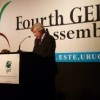
LATIN AMERICA: Governments Call for Greater Voice in Environmental Funding
"There should be a mechanism for recipient countries to help bring about a more balanced distribution of GEF funds," Cuban delegate Jorge Luis Fernández told IPS after a forum Tuesday on how to boost the efficiency and effectiveness of the Global Environment Facility.SRI LANKA: War-Affected Women Bewail Their Plight
Rajini Padamaraj, 32, is burdened with the responsibility of looking after the needs of her entire household, composed of her mother and two younger siblings.
Q&A: “Militarisation of Zimbabwe’s Diamond Fields Continues”
Almost a year after a review mission of the Kimberley Process Certification Scheme (KPCS) found Zimbabwe guilty of "serious non-compliance" with the scheme’s minimum criteria on conflict diamonds, the militarisation of the southern African country’s diamond mining operations continues.
More Funds, Less Red Tape, NGOs Tell GEF Assembly
Civil society organisations called for more funds, less bureaucracy and greater decision-making power, at the opening of the Fourth Global Environment Facility (GEF) Assembly Monday in this Uruguayan resort town.Namibia Stands Up to EU ‘Bullying’
Tensions between the European Union and Africa have once again erupted, with Namibia accusing the Brussels elite of resorting to bullying tactics in trade negotiations.Portugal Looks to Former Colonies for Lifeline in Crisis
First Angola, and now Brazil, Portugal's two largest former colonial possessions, are extending a helping hand to the battered Portuguese economy.BOLIVIA: Morales Caught Between Gas Revenues and Indigenous Demands
The Bolivian government negotiated with native groups to head off major marches and roadblocks aimed at demanding protection of indigenous land rights and conservation of the environment in their territories.
AFRICA: “EU Subsidises Companies Guilty of Illegal Fishing”
The European Union has for years been paying subsidies to the tune of one billion euro annually to industrial fishing companies based in its member states, including companies that have been caught fishing illegally in African waters.
TRADE-NEPAL: Himalayan Nation’s Garment Industry in Tatters
These days, First Vice-President of the Garment Association (GAN) of Nepal Udaya Raj Pandey is mostly seen at the National Campus rather than the GAN office that he once frequented almost every day.Thai, Argentine Textile Workers Unite Against Slave Labour
Textile cooperatives founded by former slave labourers from Argentina and Thailand will jointly launch a new brand of clothing in June to raise awareness about exploitation and promote decent jobs in the garment industry.ROMANIA: Trade Unions Warn Against Unjustified Pay Cuts
Romania’s trade unions have warned that a series of protests against drastic cuts in pensions and salaries would turn into full-fledged general strikes by month-end unless the government heeded to the needs of ordinary people.URUGUAY: Job Training Moves “Trans” Off Streets to Better Future
Ruler in hand, Fabiana draws lines with a pencil on orange cardboard, occasionally pushing her curly hair away from her eyes. Next to her, Fernanda fashions a colourful cardboard box, a prototype for what their cooperative will ultimately produce in large quantities.
EAST AFRICA: Global Players Behind Anti-Counterfeit Law Campaign
The international push behind Kenya’s controversial Anti-Counterfeit Act of 2008 dates back as far as October 2006 when the World Customs Organisation held its first intellectual property rights (IPRs) seminar in Kampala, the capital of neighbouring Uganda, focusing on East African governments’ enforcement of these rights.MALAYSIA: Encroaching Forest, Oil Palm Plantations Alarm Villagers
A increasing number of natives in Sarawak state in north Borneo are alarmed at encroaching forest and oil palm plantations, which are taking over their native customary land and destroying their traditional lifestyles and biodiversity.US-MEXICO: State Visit Highlights Ties, Frustrations
With no major new initiatives on the agenda, President Felipe Calderón's state visit here this week appeared designed primarily to highlight increasingly close ties between the United States and Mexico despite growing frustrations on both sides of the border over immigration, economics and security cooperation.FINANCE: Ecuador Wants Off the Money-Laundering List
"It sounds incredible, but it's just a matter of a letter that wasn't turned in on time," Ecuador's attorney general said in regards to the Financial Action Task Force decision to qualify the country as "posing a risk to the international financial system."
South America on Guard Against Europe’s Economic Woes
Although the European Union's financial bailout of Greece to avoid contagion of the crisis to other eurozone countries has had positive effects, South America is not ruling out collateral damage, especially from austerity measures demanded from Spain and Portugal and being considered for other EU countries.
Q&A: Can Democracy Survive the “Oil Curse” in Africa?
Africa’s economic boom, driven by oil, has undermined the idea that democracy is a prerequisite for economic development on the continent.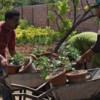
RIGHTS-PAKISTAN: Green Initiative Gives Hope to the Disabled
Talib Hussain, 29, became the sole breadwinner of his family of seven after his father suffered a stroke that left him half paralysed. Hussain brings home 4,000 Pakistani rupees (about 47 U.S. dollars) monthly, which he dutifully turns over to his mother.
WORLD: “Poor Countries Should Have a Seat at G20 Table”
The global economic crisis highlighted the necessity of transforming global economic governance. But least developed countries (LDCs) have little voice in this process. It is time they are allowed a seat at the meetings of the Group of 20 industrialised and emerging economies.
MIDEAST: Palestinian Economic Boycott Hits Israeli Settlers
Israeli settlers are beginning to feel the bite of an economic boycott campaign launched by the Palestinian Authority (PA) against goods produced in the illegal Israeli settlements dotting the occupied West Bank.« Previous Page — Next Page »


 UN Commission on International Trade Law Holds Colloquium on Harmonizing Law in Age of Digital Trade and Finance. Credit: UN Photo/Manuel Elías
Trade has historically been a geopolitical tool that can both be used to propel development as well as entrench inequalities. In various nations in East Asia and Latin America, increased trade, as often seen in export booms, has allowed them to achieve influential standings within the global economy. On the other hand, many low-income countries in Sub-Saharan Africa, Asia, and Latin America struggle to maintain a robust trade performance, and oftentimes are subjugated to exploitative trade dynamics through intense extraction of their natural resources. In recent decades, international trade has reached a new era as emerging economies across the world are rising in economic preeminence. Stable international trade is crucial to world peace as global interconnectedness facilitates reliable diplomacy. Nevertheless, significant challenges are on the rise. Notably, a major wave of United States tariff escalations in January 2025 lifted US import taxes to their highest level since the 1930s, changing market dynamics and forcing renegotiations with global trading partners.These articles are aimed at informing readers about the complexities of trade and its varying effects on development, with a special focus on the consequences of the global economic crisis, the potential of fair trade and the gender implications of trade policies.
Updated by Yilan Batista and Shuli Wong August 2026

The Week with IPS

NEXT STOP - SDGs
Tracking global progress towards a sustainable world
