Languages
Sunday, November 29, 2026



News and Views from the Global South
Economy & Trade
COSTA RICA: Headhunting First-World Seniors
The Costa Rican government has declared retirement communities, aimed at attracting U.S. pensioners, to be "of national interest." Plans to create "retirement clusters" providing complete health services for older adults are seen as a profitable prospect for this Central American country.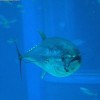
BIODIVERSITY: CITES Faces Political Storm over Tuna Ban
The vast majority of the species protected by the Convention on International Trade in Endangered Species of Wild Fauna and Flora, or CITES, live on land, but as marine species come under increasing pressure from unsustainable fishing and a range of climate change-related threats that focus is beginning to shift.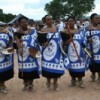
RIGHTS-SWAZILAND: Property Rights At Last for Women
A recent court ruling has finally given Swazi women the right to own and administer property in their own names.HAITI: Experts Urge Sea Change in “Culture of Aid”
A delegation of human rights experts is preparing to visit Haiti to assess the human rights and aid situation in the earthquake-crippled nation and to urge the international community to follow a series of guidelines they have prepared to help donors' to "overcome the mistakes of the past."LATIN AMERICA: Canada Moves to Oversee Mining Firms
Amidst allegations that Canadian mining companies operating in Latin America have been complicit in the murders and harassment of activists, several positive developments in Canada are seen as a source of hope that firms may begin to be held accountable on human rights and environmental questions.EUROPE: Economists Blame Germany for Mediterranean Crisis
Germany’s obsession with maintaining a trade surplus, in line with its mercantilist traditions, is one cause for the severe economic crisis that has gripped several Euro-Mediterranean countries, say economists.
UGANDA: Pressure Mounts to Make Public Oil Agreements
Uganda’s members of parliament (MPs) are pressurising government to make public details of oil production-sharing agreements it signed with various international oil companies.U.S.: Grassroots Groups Get More Bang for Donors’ Bucks
While "community organising" has become a punch line for late- night comedians since the election of Barack Obama as U.S. president, the activity "delivers enormous benefits to communities," according to a new study conducted by the National Committee for Responsive Philanthropy (NCRP).DR-CONGO: EU Urged to Ban ‘Conflict Minerals’
After the United States senate’s move to stem the flow of money from mineral mines fuelling the brutal civil war in the Democratic Republic of Congo (DRC), the watchdog group Global Witness (GW) is calling on Europe to follow suit.
MIDEAST: Occupation Turns Palestinian Women Into Breadwinners
Israel’s occupation of the Palestinian territories, with its ubiquitous closures, checkpoints, military raids and arrests, has decimated the Palestinian economy in the West Bank and Gaza.US-IRAN: Debate Over Military Action Against Iran Gains Steam
While the ongoing U.S. military "surge" in Afghanistan continues to capture the headlines, Iran's nuclear programme – and how best to deal with it – is rapidly emerging here as this year's biggest foreign policy challenge.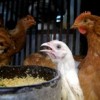
DR CONGO: Will Poultry Project Live up to Expectations?
For some seven million Congolese living in Kinshasa the only meat and poultry they could buy to eat since the 1980s was frozen imports from Western countries, distributed locally by a few local businessmen.GUATEMALA: Off Track for Millennium Development Goals
Guatemala knows that when it comes time to demonstrate compliance with the Millennium Development Goals (MDGs), a set of global anti-poverty and development target to be met by 2015, it will make a poor showing.AFGHANISTAN: Traffickers Step Up Import of Heroin-Making Chemicals
Drug traffickers are increasing imports of precursor chemicals used for processing opium poppy into heroin and morphine, according to a new State Department report released here Monday.ENVIRONMENT-LEBANON: Coastal Pollution Threatens Fisherfolk
Pollution, oil spills and difficult living conditions are some of the challenges that fishermen in this eastern Mediterranean country face daily.
PHILIPPINES: Children’s Charities Feel Economic Crunch
Children's charities and non-government organisations (NGOs) in the Philippines face tough times ahead as major overseas funders cut back on financial support due to the global financial crisis, against a backdrop of donor fatigue.
PERU: Relocating Entire Villages for Mines, Dams
Hundreds of Peruvian communities were displaced as they fled the 1980-2000 civil war. Today the government is pushing for urgent passage of a law that would facilitate the relocation of entire villages or neighbourhoods in mineral or energy-rich areas.HEALTH: Neoliberalism not Liberal Enough for AIDS Investments
Neoliberal economic ideas have grown increasingly dominant over the last 30 years. During that same time, the spread of HIV/AIDS has reached an epidemic crescendo.
URUGUAY: New President Aims for Leap in Development
"I've been crying (tears of joy) since yesterday. It's amazing to see how an ordinary person made it so far," said 44-year-old María del Rosario Corbo, referring to Uruguay's new President José "Pepe" Mujica, who was sworn in Monday at the head of this South American country's second leftist administration.CARIBBEAN: A New Era of South-Oriented Geopolitics?
As chair of the 15-member regional integration movement, Dominica's Prime Minister Roosevelt Skerrit insists that the decision by Caribbean Community countries to be part of a new Community of Latin American and Caribbean States (CLACS) is not intended to sideline longtime hemispheric alliances such as the Organisation of American States.
ECONOMY-GREECE: Austerity Measures Unsettle Public
Xristos Kiriakou, 30, joined the Feb. 24 strike against the austerity measures announced by the Panhellenic Socialist Party (Pasok), although he has never been involved in public protests before.« Previous Page — Next Page »


 UN Commission on International Trade Law Holds Colloquium on Harmonizing Law in Age of Digital Trade and Finance. Credit: UN Photo/Manuel Elías
Trade has historically been a geopolitical tool that can both be used to propel development as well as entrench inequalities. In various nations in East Asia and Latin America, increased trade, as often seen in export booms, has allowed them to achieve influential standings within the global economy. On the other hand, many low-income countries in Sub-Saharan Africa, Asia, and Latin America struggle to maintain a robust trade performance, and oftentimes are subjugated to exploitative trade dynamics through intense extraction of their natural resources. In recent decades, international trade has reached a new era as emerging economies across the world are rising in economic preeminence. Stable international trade is crucial to world peace as global interconnectedness facilitates reliable diplomacy. Nevertheless, significant challenges are on the rise. Notably, a major wave of United States tariff escalations in January 2025 lifted US import taxes to their highest level since the 1930s, changing market dynamics and forcing renegotiations with global trading partners.These articles are aimed at informing readers about the complexities of trade and its varying effects on development, with a special focus on the consequences of the global economic crisis, the potential of fair trade and the gender implications of trade policies.
Updated by Yilan Batista and Shuli Wong August 2026

The Week with IPS

NEXT STOP - SDGs
Tracking global progress towards a sustainable world
