Languages
Friday, November 13, 2026



News and Views from the Global South
Economy & Trade

Clean Energy Alone Won’t Uplift Impoverished Nations — We Must Invest in People
Last month, at the COP 26 climate conference in Glasgow, a consortium of philanthropies, led by The Rockefeller Foundation, announced a massive program to fund renewable electricity projects for impoverished people in developing countries.
African Network Fosters Unity, Fights Gender Discrimination & Advances Sustainable Development
The widespread 21-month-old lockdown, triggered by the corona virus pandemic, had a destructive impact on the global economy, claimed over 5.2 million lives, destabilized governments and radically changed lifestyles worldwide.
Call It ‘Old’, ‘Contemporary’, ‘Modern’ or Whatever: It Is Slavery
No matter what it is called -- it is the abhorrent daily life of a billion enslaved humans. The real number of “modern” slaves is understandably unknown. The International Labour Organisation (ILO) estimates that more than 40 million people worldwide are victims of modern slavery.
Fighting Loss of the Greater Mekong’s Prized Rosewood Forests
The famed Rosewood forests of the Greater Mekong region in Southeast Asia produce dark, richly grained timbers zealously sought after worldwide by manufacturers of luxury furniture, flooring and musical instruments, among other products. But their high value has also made them a major commodity in transnational organized crime.
Profiting from the Carbon Offset Distraction
Carbon offset markets allow the rich to emit as financial intermediaries profit. By fostering the fiction that others can be paid to cut greenhouse gases (GHGs) instead, it undermines efforts to do so.
New Pan-African Payments System Provides Big Relief for African Traders
When Fidelis Adele, the CEO of Freetown-based Solid Graphics, a printing and communications company, needed to order some printing equipment from Nigeria in September, he paid an extra $165 on top of a $10,000 bank transfer to the seller. Yet it took three days for the money transferred in Sierra Leone to be credited to the beneficiary’s account in Nigeria.
How to Tackle Africa’s Employment Crisis
The Covid-19 pandemic aggravated Africa's already severe employment crisis. The solution lies in a long-term political and economic transformation.
From Fruit Waste to Gourmet Grub
When Bonolo Monthe’s neighbours discarded bucketsful of fallen ripe morula fruit from their backyard, she saw food and fortune going to waste.
Corporate Fear Drives Caribbean Vaccine COVID-19 Mandates
When face-to-face Cabinet meetings resumed in Jamaica following more than a year of virtual meetings due to COVID-19, Ministers lined up to have their immunisation cards inspected.
Mother of Summits: Sweet and Sour Diplomacy, but Nothing Cooked!
It has been said that when Greek meets Greek, then comes the tug of war. The summit of the leaders of world’s two strongest powers, the United States and China, came face to face at long last. Albeit virtually. Still, this was undoubtedly the “mother of summits” this year. There were two telephone conversations earlier, but according to US officials this nearly four hours of summitry was far more “candid intense, and deeper interaction”. If there was one single take-away from this meeting, it was the establishment beyond all reasonable doubt of the incontrovertible fact that the US and China were indeed the two most influential global state actors. The decisions between the two, represented by their leaders, would profoundly impact the rest of humanity far into the future.
‘The Brutal Death of a Child’s Dream’
Kailash Satyarthi, an Indian social reformer and co-recipient of the 2014 Nobel Peace Prize, along with Malala Yousafzai, spoke in a recent international forum about the devastating impacts of child labour.
Time Honoured Food Traditions, Pleasing for Palate and Planet
Balance is the absolute key, says Alia Chughtai, a journalist who started a catering service with filmmaker Akhlaque Mahesar, by the name of Aur Chaawal (And Rice), two years ago.
Glossing Over in Glasgow – Some Thoughts on COP26
A week has gone by since COP 26 with 197 Parties ended in the Scottish city of Glasgow on extended time last Saturday. Climate change which covers wide array of issues affecting all living beings engaged the people around the world for COP 26 in a way never experienced since COP1 was held in Berlin in 1995.
Hunger, Desperation in Lebanon as Food Prices Rocket
On the streets of Beirut, Hadi Hassoun begs for a few pounds to feed his five children. He has little hope of a job, especially now that the economic crisis in Lebanon has destroyed wealth.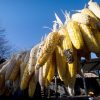
Why Seed Companies Fear México
Last month México’s Supreme Court provided hope for biodiversity, especially in the Global South, while flaming fear for seed companies. In a historic step, it ruled for corn advocates and against genetically modified (GMO) corn. The decision was a momentous act in country where maíz (corn) carries daily and sacred significance.
Double Solution to Ongoing Food and Climate Crises
For the last ten years, Angeline Wanjira’s food stall at Kirigiti Market in Kiambu County has featured the same foods, cabbages, potatoes and carrots, keeping with the community’s most preferred food types.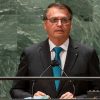
Why Covid-19 Misinformation Works
At the United Nations General Assembly meeting in September, Brazilian President Jair Bolsonaro used his allotted time at the podium to recount his views on Covid-19. He extolled the virtues of treatments that have been rejected by scientists and proclaimed that he had benefitted from the anti-malarial drug hydroxychloroquine.
The Squid Game: The Story about Losers in the Shadow of Glory
Immediately after its release, the Squid Game went viral, grabbing the attention of the world's entertainment stage. The grotesque and hyper-violent thriller has reportedly become Netflix's biggest show, the world's most-watched and the most-talked-about streaming entertainment. Is it a case of art imitating life?
Politicians Subsidise Fossil Fuel with Six Trillion Dollars in Just One Year
It sounds incredible: while politicians have been cackling about the climate emergency and profiling in empty promises to halt it, they have spent six trillion US dollars from taxpayers' money to subsidise fossil fuels in just one year: 2020. And they are set to increase the figure to nearly seven trillion by 2025.
Push for Civil Registration Set to Hit Key Milestone in Asian and Pacific Countries
Most countries in the Asia-Pacific region are on track to reach universal birth registration by 2030: an incredible achievement and a significant milestone in realizing human rights and equality. However, as the COVID-19 pandemic has exposed, many weaknesses remain in official recording systems, creating gaps in knowledge about the population and affecting how authorities respond to crises and reach those in greatest need.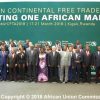
How Effective Communication can Help Boost Intra-African Trade
The African Continental Free Trade Area (AfCFTA) agreement promotes socio-economic growth and development in Africa through liberalised trade processes and structures. So far, the 54 African countries have signed the agreement, resulting in immense potential for the growth of trade between African countries.« Previous Page — Next Page »


 UN Commission on International Trade Law Holds Colloquium on Harmonizing Law in Age of Digital Trade and Finance. Credit: UN Photo/Manuel Elías
Trade has historically been a geopolitical tool that can both be used to propel development as well as entrench inequalities. In various nations in East Asia and Latin America, increased trade, as often seen in export booms, has allowed them to achieve influential standings within the global economy. On the other hand, many low-income countries in Sub-Saharan Africa, Asia, and Latin America struggle to maintain a robust trade performance, and oftentimes are subjugated to exploitative trade dynamics through intense extraction of their natural resources. In recent decades, international trade has reached a new era as emerging economies across the world are rising in economic preeminence. Stable international trade is crucial to world peace as global interconnectedness facilitates reliable diplomacy. Nevertheless, significant challenges are on the rise. Notably, a major wave of United States tariff escalations in January 2025 lifted US import taxes to their highest level since the 1930s, changing market dynamics and forcing renegotiations with global trading partners.These articles are aimed at informing readers about the complexities of trade and its varying effects on development, with a special focus on the consequences of the global economic crisis, the potential of fair trade and the gender implications of trade policies.
Updated by Yilan Batista and Shuli Wong August 2026

The Week with IPS

NEXT STOP - SDGs
Tracking global progress towards a sustainable world
Tracking global progress towards a sustainable world
