Languages
Saturday, November 14, 2026



News and Views from the Global South
Editors' Choice
Africa Under “Unprecedented” Pressure from Rich Countries Over Trade
African countries are coming under strong pressure from the United States and the European Union to reverse the decision adopted by their trade ministers to implement the World Trade Organization’s trade facilitation agreement on a “provisional” basis.
Gun Lobbyists, Minus Weapons, Gather at World Body
When the United Nations hosted its biennial review meeting on the illicit trade in small arms last month, the conference room was overflowing both with pro-gun and anti-gun lobbyists.
Inequality Blocks Path to “Gold” in Latin America
Inequality, poor infrastructure and declining trade are some of the problems that Latin America needs to overcome if the region truly wishes to achieve a “golden age”, according to Peru’s President Ollanta Humala.
Here Are the Real Victims of Pakistan’s War on the Taliban
Three days ago, Rameela Bibi was the mother of a month-old baby boy. He died in her arms on Jun. 28, of a chest infection that he contracted when the family fled their home in Pakistan’s North Waziristan Agency, where a full-scale military offensive against the Taliban has forced nearly half a million people to flee.Trouble Brewing in Kurdish-Controlled Kirkuk
The Kurdish flag is flying high in the wind from the rooftop of an old brick house inside Kirkuk’s millennia-old citadel, as Rashid – a stern-looking man sitting behind a machine gun – monitors the surroundings.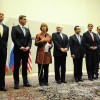
U.S. Demand for Deep Centrifuge Cut Is a Diplomatic Ploy
With only a few weeks remaining before the Jul. 20 deadline, the Barack Obama administration issued a warning to Iran that it must accept deep cuts in the number of its centrifuges in order to demonstrate that its nuclear programme is only for peaceful purposes.
Syrian Kurds Have Their Own TV Against All Odds
Rudi Mohamed Amid gives his script one quick, last glance before he goes live. "Roj bas, Kurdistan (Good morning, Kurdistan)," he greets his audience, with the assuredness of a veteran journalist. However, hardly anyone at Ronahi, Syrian Kurds' first and only television channel, had any media experience before the war.
Ethiopia’s Somali Region Nomadic Pastoralists Benefit from Mobile Services
 The pastoralists of Somali region make their living raising cattle, camels and goats. In the arid and drought-prone region, they are forced to move from place to place in search of pasture and watering holes for their animals.

Trekking with Ethiopia’s Nomads, from Watering Holes to Pasture Lands, For a Better Life
When he was a young boy, 20-year-old Abdi, who comes from a small pastoralist community in Ethiopia’s Somali Region, “knew about school, reading and writing but did not expect this is something we would ever get close to.”
Maternal Deaths Due to HIV a Grim Reality
An African proverb says that every woman who gives birth has one foot on her grave. Sadly, this is still true today, especially within the context of the AIDS epidemic.
Moscow Protest Highlights Litany of Abuses Suffered by Russia’s Drug Users
A protest in Moscow Thursday marking the U.N. International Day Against Drug Abuse and Illicit Trafficking has highlighted the ‘torture’ drug users are put through in the Russian criminal justice system.
Adapting to a Dry Season That Never Seems to End
The Caribbean region’s bid to become food secure is in peril as farmers struggle to produce staple crops under harsh drought conditions brought about by climate change.
Bolivia Charts Its Own Path on Coca
This week, the U.N. reported that coca cultivation in Bolivia fell nine percent last year, and a massive 26 percent in the past three years.
This is What Happened to the 18,000 People Forcefully Relocated to an Arid Zimbabwean Government Farm
When the Tokwe-Mukosi dam’s wall breached, so started the long, painful and disorienting journey for almost 18,000 people who had lived in the 50-kilometre radius of Chivi basin in Zimbabwe’s Masvingo province as even those not affected by the flood were removed from their homes.

Zimbabwe’s Unfolding Humanitarian Disaster – We Visit the 18,000 People Forcibly Relocated to Ruling Party Farm
As the villagers sit around the flickering fire on a pitch-black night lit only by the blurry moon, they speak, recounting how it all began. They take turns, sometimes talking over each other to have their own experiences heard. When the old man speaks, everyone listens. “It was my first time riding a helicopter,” John Moyo* remembers.
Higher Food Prices Can Help to End Hunger, Malnutrition and Food Waste
The choice of foods displayed on supermarket shelves can be quite bewildering. This abundance encourages us to take it for granted that we will always be able to buy the food we want at affordable prices.
Atheists, the “Ultimate Other” in Turkey
"Being an atheist isn't something you can easily express in Turkey,” says Sinem Köroğlu, a member of the Atheism Association, the first official organisation for atheists in the country. “It's becoming more difficult with the current government as well,” she adds.
Military Offensive Deepens Housing Crisis in Northern Pakistan
Shaukat Ali, a shopkeeper originally hailing from Miramshah in the Northern Waziristan Agency of Pakistan’s Federally Administered Tribal Areas (FATA), looks exhausted as he sits outside a makeshift shelter with his family of 10.
With its Own Satellite, Bolivia Hopes to Put Rural Areas on the Grid
Maria Eugenia Calle, a local official in this Andean agricultural community, recently saw the Internet for the first time.
From Genocide to African Catwalks – How Rwandan Women are Building their Lives and the Fashion Industry
Before Rwanda’s 1994 genocide, Salaam Uwamariya’s husband, a professor, was the family breadwinner, providing for her and their eight children. Uwamariya sold vegetables at a nearby market to supplement their income.
India’s ‘Temple Slaves’ Struggle to Break Free
At 32, Nalluri Poshani looks like an old woman. Squatting on the floor amidst piles of tobacco and tree leaves that she expertly transforms into ‘beedis’, a local cigarette, she tells IPS, “I feel dizzy. The tobacco gives me headaches and nausea.”« Previous Page — Next Page »


The Week with IPS

NEXT STOP - SDGs
Tracking global progress towards a sustainable world
Tracking global progress towards a sustainable world
