Languages
Thursday, October 29, 2026



News and Views from the Global South
Editors' Choice

Biogas, a Circular Energy, Advances in Brazil Thanks to Local Arrangements
“I don't know of a more sustainable technology for the transformation of society than biogas,” said Professor Alex Enrich-Prast, an activist for this energy alternative with a highly diversified and decentralised expansion in Brazil.
A Growing New Battle: Nuclear Weapons vs Conventional Arms
The warnings from the United Nations and from anti-nuclear activists are increasingly ominous: the world is closer to a nuclear war—by design or by accident—more than ever before. The current conflicts—and the intense war of words—between nuclear and non-nuclear states—Russia vs. Ukraine, Israel vs. Palestine and North Korea vs. South Korea—are adding fuel to a slow-burning fire.
“Escalation Dominance” . . . and the Prospect of More Than 1,000 Holocausts
Everything is at stake. Everything is at stake with nuclear weapons. While working as a nuclear war planner for the Kennedy administration, Daniel Ellsberg was shown a document calculating that a U.S. nuclear attack on communist countries would result in 600 million dead. As he put it later: “A hundred Holocausts.”
Why Africa Should Embrace Territorial Markets to Withstand Climate Shocks and Crises
African policymakers, local leaders and the private sector have been asked to create an enabling environment that will help African traders and farmer folks build reliable systems for food security and resilience through territorial markets. During a week-long 2024 Africa Agroecological Entrepreneurship and Seed Festival in Harare, Zimbabwe, experts observed that persistent crises have shown the importance of resilient close-to-home ‘territorial’ markets that feed billions of people every day—from public markets and street vendors to cooperatives, from urban agriculture to online direct sales, and from food hubs to community kitchens.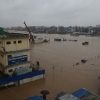
Nepal’s Deadly Flash Floods: What Went Wrong?
Nepal is trying to recover from recent flash floods and landslides caused by heavy rainfall over the last weekend of September, which claimed at least 226 lives. The mid- and eastern parts of the country, including the capital, Kathmandu, experienced the heaviest monsoon rains in two decades from September 26-28, leaving many parts of Kathmandu underwater. Experts say this is one of the deadliest and worst flash floods that impacted thousands of people in decades.
Goodbye to Large Families in Latin America
Large families are already a relic of the past in Latin America and the Caribbean, as a result of modernisation and the growth of the economy and the labour force. Now, the region faces an ageing population and migratory movements.
Cuba’s Coastal Dwellers Mitigate the Effects of Climate Change
Every time a hurricane clouds the skies over the city of Manzanillo, in the eastern Cuban province of Granma, the sea pounds the Litoral neighbourhood, forcing many of the 200 families who live there to evacuate inland because of flooding. When the weather is calm, the sea penetrates subtly and constantly, salinizing the water table and eroding the coast, affecting the foundations of houses and artesian wells.
Nuclear Annihilation Threatened by Revival of 20h Century McCarthy Era Cold War & Red Scare
The world may have dodged an immediate bullet when the US intelligence agencies warned, this week, that by giving in to Ukraine’s pleading for long range missiles that could attack targets deep into Russia, we would be poking the Russian bear beyond its patience without even influencing the outcome of the war in Ukraine’s favor.
COP 29: High Stakes for Small Islands Fighting for Climate Finance
Small Island Developing States (SIDS) are experiencing the most severe impacts of climate change. When leaders of those islands met in Antigua and Barbuda in May, they let the world know that achieving climate justice hinges on comprehensive climate finance.
Will the UN’s Pact of The Future Modernize the World’s Outdated Multilateral Systems?
While most world leaders who attended the United Nations inaugural Summit of the Future—a two-day high-level event at UN headquarters in New York meant to address the most pressing global challenges of the 21st century—agree that the world's aging multilateral system needs modernizing, not all agree on how to get there.
It’s Time for Rich Polluters to Pay for the Climate Crisis They Created
The world is standing at a critical juncture. Climate change is not just a future threat—it’s here, and it’s already devastating lives. From record-breaking heat waves to floods and landslides, the planet is sending us clear signals that we cannot afford to ignore.
Bangladesh’s Chief Advisor Addresses UNGA Calling for International Cooperation, Freedom and Rights
In his first major address at the United Nations, the Chief Advisor of Bangladesh’s interim government, Dr. Muhammad Yunus, appealed to the international community to engage with a ‘new Bangladesh’ in the shared efforts to cooperate on global issues. Yunus arrived earlier in the week to attend the 79th United Nations General Assembly (UNGA) in New York. In the four days he was here, Yunus held meetings with a range of world leaders, notably UN Secretary-General António Guterres and US President Joe Biden. This would indicate there is good support for him and what he represents. On Friday, Yunus addressed the General Assembly, speaking in his native language, Bangla.
Inequality in Access to Abortion Rights in Latin America
The struggle for women's right to decide in Latin America and the Caribbean, for their access to legal, safe and free abortion continues in the region, with some countries fully criminalising it, others with severe regulations, and a few guaranteeing better conditions, while threats of regression persist.
Activists Call on World to ‘Imagine’ Peace, End Nuclear Arms
In any discussion of world peace and the future of humanity, the issue of nuclear arms must be addressed, and now. That was the message from a range of delegates at the “Imaginer la Paix / Imagine Peace” conference, held in Paris September 22 to 24, and organized by the Sant’Egidio Community, a Christian organization founded in Rome in 1968 and now based in 70 countries.
Solar Panels Aim to Protect Mexican Family Farming
Verónica Molina, an indigenous Comcaac woman, first came into contact with solar energy in 2016, when she travelled to India for training on communal photovoltaic facilities. This later enabled her to take part in the installation of the first solar systems and family vegetable gardens in her community, Desemboque del Seri, in northern Mexico.
Rising Temperatures Devastate Agricultural Eden of India’s Kashmir Region
Abdul Hameed Sheikh sowed his crop, working tirelessly for days in his paddy field. The 52-year-old farmer, from central Kashmir’s Budgam area, religiously irrigated his 3-acre plot to keep the soil well hydrated. He waited for the rain, but days passed and it didn’t come.
Dying for a Cause: Environmental Defenders in the Firing Line
In 2017, South African activist Nonhle Mbuthuma took a stand against the powerful oil giant Shell, halting their plans to explore the pristine Wild Coast. Despite facing death threats, she refused to back down. As a co-founder of the Amadiba Crisis Committee and a 2024 Goldman Prize winner, Mbuthuma continues to fight for her community’s rights and the environment. Her bravery reflects the countless risks land and environmental defenders face across the globe.
The Crucial Connection Between Climate Change and Mental Health
“Young people today are growing up with enormous uncertainty about their future. Climate change is a major driver of that uncertainty, but we weren’t talking enough about how the climate crisis impacts mental health,” researcher Dr. Emma Lawrance told IPS from her family home in Australia.
Tanzania’s Maasai Women Adopt Climate-Smart Solutions To Tame Drought
In the scorching sun of Mikese village in Tanzania’s eastern Mvomero district, 31-year-old Maria Naeku tirelessly tends to her small vegetable patch. Each time she pulls a weed, the red soil stains her hands as she guides the trickle of water from a maze of pipes through an elevated bed to nurture her plants. In a drought-stricken area, Naeku's small garden is a lifeline for her family, giving them food and income.
Summit of the Future: Youth Driven Action Needed to Tackle Nuclear and Climate Crises
Driving the Summit of the Future’s core messages of international solidarity and decisive action are young people who are determined to address the intersecting issues that the world contends with today.
Using Education To Stop the Generational Cycle of Violence Against Women in the Pacific
Parliamentary representation by women in Pacific Island countries remains stubbornly low at 8.4 percent. Yet women leaders across the region have been meeting every year for the past four decades to discuss goals and drive action to address gender inequality and the most pressing development challenges in the Pacific.« Previous Page — Next Page »





The Week with IPS

NEXT STOP - SDGs
Tracking global progress towards a sustainable world
Tracking global progress towards a sustainable world
