Languages
Monday, September 28, 2026



News and Views from the Global South
Editors' Choice

Hate Attacks Against LGBTQI People Increase in Europe – Report
When D.A.* first heard about the fatal attack on a gay bar in the Slovak capital, Bratislava, last October, their first reaction was a mix of grief, shock and anger. But then, soon after, the university student and member of the country’s LGBTQI community immediately began to worry.
Digital Gender Gap in Latin America Reflects Discrimination Against Women
The digital gender gap is multifactorial in Latin America and as long as countries fail to address discrimination against women, inequality will be reflected in the digital space, excluding them from access to opportunities and enjoyment of their rights.
Nigeria’s Unbanked, Poor Get Reprieve After Court Rules Naira Deadline Unconstitutional
Nigerians confronted by hardships over the scarcity of the newly redesigned naira notes in conjunction with the country's cashless policy introduced by the apex bank have had a last-minute reprieve from a policy that had disrupted their lives and exacerbated hunger.
Indigenous Conflicts over Land Spread, Fueling Debate in Argentina
In 1994 Argentina recognized in the constitution the ethnic and cultural pre-existence of indigenous peoples. However, enforcement of respect for their rights has fallen short and almost 30 years later the question of land is generating growing conflicts, which sometimes pit native communities against the rest of society.
Racist Political System Thwarts Candidacy of Mayan Woman in Guatemala
Centuries of racism and exclusion suffered by indigenous peoples in Guatemala continue to weigh heavily, as demonstrated by the denial of the registration of a political party that is promoting the presidential candidacy of indigenous leader Thelma Cabrera in the upcoming general elections.
Management Areas Protect Sustainable Artisanal Fishing of Molluscs and Kelp in Chile
Management areas in Chile for benthic organisims, which live on the bottom of the sea, are successfully combating the overexploitation of this food source thanks to the efforts of organized shellfish and seaweed harvesters and divers.
Venezuela Drafts Legal Stranglehold on NGOs
The Venezuelan parliament, in the hands of the ruling party, is moving towards passing a law to control non-governmental organizations (NGOs) so that, in practice, they could not exist independently.
Nigeria in Search of a True Leader in Presidential Elections
From all indications, President Muhammadu Buhari will be handing over a fractured nation that is deeply divided along ethnic and religious lines when he formally hands over to his successor on May 29, 2023. This would-be successor will be inheriting a country mired in economic woes threatening its corporate existence if he’s not assuming the job prepared to address these problems headlong.
Nigeria’s Post-Election Reset Needs Youth-Centred Accountable Leaders
Youth have already transformed the narrative of the 2023 elections, and it would be crucial for Nigeria’s newly elected president to consider their issues as he takes on the enormous task of rebuilding the country, says CIVICUS’ Advocacy and Campaigns Lead David Kode. Speaking on the eve of the Presidential election, Kode told IPS there had been an 11 percent increase in registration since the 2019 elections, and youth have shown more interest in these elections than any other since 1999.
BRAC ‘Resets’ Program Aimed at Empowering Adolescent Girls in Africa
BRAC’s Empowerment and Livelihood Program (ELA) has benefitted tens of thousands of girls, and its recently released report shows an organization willing to adapt to the circumstances to continue to ensure adolescent girls and young women receive meaningful sexual and reproductive health rights support.
A Vital Partnership for the 2030 Agenda
Flexible and predictable funding allows UN agencies to respond promptly and with agility in times of crisis. In countries such as Afghanistan, Yemen, and Ukraine, UNDP implements projects and programmes that help protect livelihoods and enhance the resilience of vulnerable communities.
UN Hobbled by Junta and Under Pressure Over Myanmar Aid Crisis
Nearly 18 million people – about one-third of Myanmar’s population – need humanitarian aid this year because of civil war and the post-coup economic crisis, according to the latest United Nations estimates.
UN Confronts Existential Challenge After Russia’s Invasion of Ukraine
Paralysed by its own Charter and structure, the world organisation that is charged with preventing wars confronts an existential challenge from Russia’s invasion of Ukraine.
A Last-Ditch Effort to Save a High Seas Treaty from Sinking
When the United Nations began negotiations on a legally binding treaty to protect and regulate the high seas, one diplomat pointedly remarked: “It’s a jungle out there”—characterizing a wide-open ocean degraded by illegal and over-fishing, plastics pollution, indiscriminate sea bed mining and the destruction of marine eco-systems.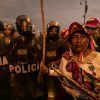
Privilege and Centralism in Lima Goad Protesters in Peru
The current political and social upheaval in Peru is not a temporary problem, but has to do with deeply-rooted inequality and social hierarchies, according to historian José Carlos Agüero.
Climate Crisis is a Child Crisis and Climate-Resilient Children, Teachers and Schools Must Become Top International Agenda
From southern Ethiopia to northern Kenya and Somalia, the most severe drought in the last 40 years is unfolding. It is simply too hot to go to school on an empty stomach, and close to 3 million children are out of school, with an additional 4 million at risk of dropping out entirely across the Horn of Africa.
Taking a Stance on Feminists’ Prejudice Against Religious Minority Women
Since researching the experiences of gender discrimination against women in poverty who belong to religious minorities, many fellow feminists have turned their back on me.
Act on the Taliban and Secure Our Right to Education, Afghan Women and Girls’ Plea
It has been more than 500 days since the Taliban regime in Afghanistan shut down schools and shattered the education dreams of girls and women like Somaya Faruqi, who has been forced to leave her homeland to continue her education.
ECW High-Level Financing Conference Raises More than 826 Million USD to Keep Crisis-Impacted Children in School
As an unparalleled, unprecedented global education crisis unfolds, an estimated 222 million crisis-impacted children are desperate to learn. As barriers to accessing education increase, darkness beckons, and education is their last hope.
Driven by the War, Russian Women Arrive en Masse to Give Birth in Argentina
They began to arrive en masse in Argentina in the second half of 2022, a few months after the Russian invasion of Ukraine. They are pregnant Russian women who land in the capital to give birth, with the hope of gaining an Argentine passport, given the fact that so many countries refuse to let in people with Russian passports today.
World Leaders, Private Sector Urged to Establish an International Green Bank to Win Climate Change Battle
As the effects of climate change escalate and natural disasters such as earthquakes, floods, and droughts become more frequent and severe, threatening lives and livelihoods, humanity is losing the climate battle.« Previous Page — Next Page »


The Week with IPS

NEXT STOP - SDGs
Tracking global progress towards a sustainable world
Tracking global progress towards a sustainable world
