
Wednesday, July 1, 2026



News and Views from the Global South
Climate Change

Interview with Siddharth Chatterjee, UN Resident Coordinator in China, on the Beijing Winter Olympics and Paralympics
The interview was originally conducted by Beijing Daily. Beijing Daily: The world is paying attention to whether the Beijing Winter Olympic Games can be successfully held 6 months after the Tokyo Olympics in the face of COVID-19. How do you evaluate the preparations for the Beijing Winter Olympics? What is the key to the success of the Beijing Winter Olym-pics? What kind of signal will the successful hosting of the Beijing Winter Olympics send to the world?
2021: A Grim Year for Planet Earth
Between the COVID-19 pandemic and the deadly manifestations of the climate crisis, there were few places to hide for most of us in 2021. Ageing billionaires riding booming stock markets could take their first flights into space in their own rockets, but for the rest of Planet Earth’s 8 billion people with their feet on the ground it was a year of placing hope in the hands of scientists and our political leaders to turn the tide.
America Faces a Fateful Crossroad in 2022
When my assistant handed me copy expressing my greetings and good wishes for 2022 for approval, I paused, thinking, “is that all I can say, just hope for a better, brighter new year?”
Sugarcane Gas Opens New Horizons for Energy Agriculture – Video
 Nothing is wasted from sugarcane, one can conclude from the biomethane production process at the Cocal plant, a Brazilian company that produces sugar, ethanol, electricity and other by-products from sugarcane agro-industrial waste.
Blue Ocean Solutions for Climate Resilience and Accelerated Development
Seychelles’ 115 islands are an exotic ocean ecosystem of beaches, coral reefs, and unique plant and animal species. Concerned with the impacts of climate change, the country has committed to decarbonize by 2050.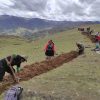
Rural Women in Peru Seed Water Today to Harvest It Tomorrow
"When I was a little girl we didn't suffer from water shortages like we do now. Today we are experiencing more droughts, our water sources are drying up and we cannot sit idly by," Kely Quispe, a small farmer from the community of Huasao, located half an hour from Cuzco, the capital of Peru's ancient Inca empire, told IPS.
What Would Europe, the US, Do with One Billion Climate Refugees?
A bit of fiction. Or maybe not. If things keep going the way they are, the result will be that such a massive flux would create instability and tensions, impact the global markets, cause record prices of fossil fuels, food and everything else, and the bankruptcy of big private financial corporations…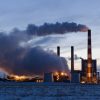
COP26 Agreed Rules on Trading Carbon Emissions – But They’re Fatally Flawed
One surprise from COP26 – the latest UN climate change conference in Glasgow – was an agreement between world leaders on a new set of rules for regulating carbon markets. This would allow countries to trade the right to emit greenhouse gases.
Green Gas: Energy as a By-Product of Sugarcane in Brazil
First came sugar. For four centuries, it was the main sugarcane product in Brazil. But since the 1970s sugarcane has grown and diversified as a source of energy: ethanol, electricity and biogas.
We Must Rise to the Occasion, Now.
In 2021, COVID-19 continued to plague the world – a world already burdened by armed conflicts, climate-induced disasters and forced displacement. Communities, nations and people struggled to maintain normalcy in the midst of the abnormal. This was especially notable in the education sector – a sector that is the very foundation for achieving all human rights and all Sustainable Development Goals.
Quest for Asian Innovation & Solutions in a Networked World
The UN’s 76th anniversary in 2021 arrived at a time of great upheaval and change. If the world is to transition from COVID-19 and we are to deliver on our promises to future generations - to secure a world where everyone can thrive in peace, dignity, and equality on a healthy planet – then 2022 must be the year we change both gear and discourse.
Nature-Based Solutions for Enhancing Coordinated Action Around Climate Change, Land and Biodiversity
A key outcome of COP26 climate summit is the enhanced focus on “nature-based solutions” – the plans for people to work closely alongside nature to avert a planetary catastrophe.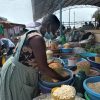
High Yield Seeds Could Address Food Shortages and Place Africa on Track to Zero Hunger – Experts
Rahab Munene’s shoe selling business crumbled at the height of COVID-19 in 2020. She traded the enterprise for a mobile grocery along the Thika Superhighway, Kiambu County.
Doubling Adaptation Finance can be an Opportunity for the World’s Poorest
Amid several disappointments of the 2021 UN climate conference in Glasgow, one sign of hope was the agreement on financing for adaptation to climate change. Developed countries agreed to double adaptation finance for poorer nations by 2025, from 2019 levels.
Energy Inequality in Latin America Exacerbated by Pandemic, High Prices
The effects of the covid-19 pandemic and high energy prices have had an impact on the consumption of polluting fuels in Latin America and the Caribbean, exacerbating energy poverty in the region.
Youth at Forefront of Climate Change Action Will Make Biggest Impact
On Gladys Habu’s birthday, she filmed a message to world leaders while standing waist-deep in the sea next to a dead tree stump – the only remnant of Kale Island now submerged underwater due to climate-change-induced sea-level rise.
Beyond Expo: Embedding the SDGs in the DNA of Future Technology and Innovation
A landscape of shared global challenges The COVID-19 pandemic has moved us farther away from the Sustainable Development Goals (SDGs). Data shows that the pandemic has pushed a further 124 million people into extreme poverty. Global poverty is now expected to be at 7% by 2030 – only marginally below the level in 2015. And with the global temperature increase already at 1.2 degrees, we are on the verge of the abyss. UN Secretary-General António Guterres is deeply concerned about the impact of the pandemic on the SDGs. But there is hope. He believes in the knowledge, science, technology, and resources to turn it around. He also urges further financing for development and climate action.

A New Transport Agenda to Carry Asia and the Pacific Towards Sustainable Development
Transport ministers from across Asia and the Pacific are meeting this week to consider a potentially transformational agenda for how people and goods are moved around the region and across the globe.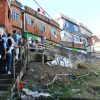
Climate Crisis Exacerbates Urban Inequality in Latin America
The Brazilian megalopolis of São Paulo recorded 932 flooded premises on Feb. 10, 2020. The Mexican city of Tula de Allende was under water for 48 hours in September 2021. In Lima it almost never rains, but the rivers in the Peruvian capital overflowed in 2017 and left several outlying municipalities covered with mud.
Climate Change: Adapt for the Future, Not the Past
Funding for developing countries to address global warming is grossly inadequate. Very little finance is for adaptation to climate change, the urgent need of countries most adversely affected. Also, adaptation needs to be forward-looking rather than only addressing accumulated problems.
Clean Energy Alone Won’t Uplift Impoverished Nations — We Must Invest in People
Last month, at the COP 26 climate conference in Glasgow, a consortium of philanthropies, led by The Rockefeller Foundation, announced a massive program to fund renewable electricity projects for impoverished people in developing countries.« Previous Page — Next Page »


As unsustainable human consumption and production systems are driving changes in average temperatures and weather patterns, "abnormal" is increasingly becoming the norm. So far, a lack of financing has been standing in the way of a comprehensive global plan for climate adaptation, and a global financial crisis has contributed to an increasing reliance on public-private partnerships. Our Climate Change page provides you with the latest news about international and local efforts to address what's frequently been called "the challenge of our time", the forces behind the climate change and the impact it has on the world's most vulnerable populations. Along the way, we bring you stories on growing citizen awareness, new scientific data, and emerging climate policies towards sustainable development.

The Week with IPS

Tracking global progress towards a sustainable world

