
Wednesday, November 11, 2026



News and Views from the Global South
Climate Change

Pushing For a Green Economy & Clean Energy
Africa is grappling with myriad environmental and climate challenges, from drought to loss of biodiversity, cyclones and plastics pollution.
What Would It Really Take to Plant a Trillion Trees?
Tree planting is capturing the minds of those who look for fast climate action. Earlier this month, the Ethiopian Government announced a new world record: thousands of volunteers planted 353 million trees in one single day. This came shortly after a team of scientists identified suitable places in the world where up to 1 trillion new trees could be planted. Such a massive effort could absorb about 20 years’ worth of global greenhouse gas emissions. And on 8 August 2019, the Intergovernmental Panel on Climate Change launched a Special Report on the importance of land use for the climate. About 23 per cent of all emissions come from the agriculture, land use and forest sector. The Intergovernmental Panel on Climate Change outlines land management opportunities with benefits for food security, biodiversity, and the climate, such as agroforestry.
How to Bring the Indus Delta Back to Life – Give it Water
Gulab Shah, 45, is having sleepless nights. He and his family are worried about their imminent migration from their village in Jhaloo to a major city in Pakistan, thanks to the continued ingress of sea water inland.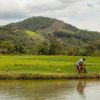
Solving the Climate Crisis is Beyond Governments
Throughout my ten years working in international development and climate policy, I’ve mostly heard colleagues talk about the private sector as if it was this intangible, multifaceted medusa with its own business lingo that is impossible for us policy experts to tackle: “the ‘private sector’ needs a return on investment in order to act on climate” or “the ‘private sector' does not have the right incentives, but we need ‘private’ capital to solve this crisis”

Forests, Food & Farming Next Frontier in Climate Emergency
The special report by the Intergovernmental Panel on Climate Change (IPCC) on climate and land, launched last week, makes it clear that without drastic changes in land use, agriculture and human diets, we will fall significantly short of targets to hold global temperature rise below 1.5°C.
Women Pastoralists Feel Heat of Climate Change
For many people, climate change is about shrinking glaciers, rising sea levels, longer and more intense heatwaves, and other extreme and unpredictable weather patterns. But for women pastoralists—livestock farmers in the semi-arid lands of Kenya—climate change has forced drastic changes to everyday life, including long and sometimes treacherous journeys to get water.
Are Jair Messias Bolsonaro and Donald John Trump a Menace to the Planet?
We live in different worlds. The ones of friends, family and work colleagues. Worlds which are overshadowed by other, much bigger ones. Global spheres of international finance, politics, climate change, etc., contexts that might threaten our smaller circle of relationships; our family, our income, our general wellbeing, in short – our entire existence. However, even at those levels there exist small circles of acquaintances and associates able to make decisions that affect the entire humankind. Let me take one example – the regimes of U.S. President Donald J. Trump and Brazilian President Jair Messias Bolsonaro, which are menacing our global natural habitat.
Is India on Track to Beat the Perfect Storm?
“The Perfect Storm” was a dire prediction that by 2030 food shortages, scarce water and insufficient energy resources together with climate change would threaten to unleash public unrest, cross-border conflicts and mass migration from worst-affected regions.
Burning Forests for Rain, and Other Climate Catastrophes
The villagers living on the foothills of Mount Kenya have a belief: If they burn the forest, the rains will come.
Land Degradation Jeopardizes Ability to Feed the World
We have known for over 25 years that poor land use and management are major drivers of climate change, but have never mustered the political will to act.
Desertification a Frontline Against Climate Change: IPCC
A new United Nations report has described farming, land degradation and desertification as critical frontlines in the battle to keep the global rise in temperatures below the benchmark figure of 2 degrees Celsius.
Global Geodetic Framework Helps Monitor Natural Disasters & Rising Sea Levels
There are several initiatives in place to foster sustainable development-- and the Global Geodetic Reference governance frame is one that has proved effective.
Your Life or Your Freedom? The Ultimate Price to Defend the Environment
For the family of indigenous Guatemalan activist Jorge Juc, the announcement last week by US President Donald Trump of an agreement declaring Guatemala a “safe third country” could not be more bitterly ironic.
Extreme Floods, the Key to Climate Change Adaptation in Africa’s Drylands
Extreme rainfall and heavy flooding, often amplified by climate change, causes devastation among communities. But new research published on Aug. 7 in the scientific journal Nature reveals that these dangerous events are extremely significant in recharging groundwater aquifers in drylands across sub-Saharan Africa, making them important for climate change adaptation.
What a Little Pigeon Could Teach Our World
Over 100 years ago a little brown passenger pigeon named Martha died in the Cincinnati Zoo. She was the last of her breed. Just like that, in an instant, a bird species that had once numbered in the billions was wiped out forever.
Extreme Weather Events are Just the Tip of Rapidly Melting Icebergs
First August. It is the middle of summer in the northern hemisphere. We are witnessing not only record global warming but global political tensions are also heating up.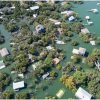
How Best to Tackle Inequality in the 21st Century? Start with Climate Change
Do you prefer to hear good news or bad news first? I will begin by giving you the (unsurprisingly) bad news. Today’s world is an unequal place. Standards of living vary massively both between and within countries.
Parts of Kenya are Already Above 1.5˚C
Kenya’s getting hotter. Much hotter than the 1.5˚C increase that has been deemed acceptable by global leaders, and it is too hot for livestock, wildlife and plants to survive. Thousands of households, dependent on farming and livestock, are at risk too.
Heatwaves are a ‘New Normal’, Says Red Cross
It is barely the middle of the month, but the verdict is in: July has been hot.
Want to Inspire More People to Act on Climate Change? Broaden the Framing
“It has never happened before,” is a sentence that is becoming excessively common in the news due to a changing climate where new extremes are becoming normal.
Rwanda Prepares the Foundations for Climate-Resilient Cities
How do you plan a resilient city? A city that can withstand climate change impacts, and the natural disasters that it produces at increased frequencies. And how do you protect the city, its individuals and communities, its business and institutions from either the increased flooding or prolonged droughts that result? It’s a complex question with an even more complex solution, but one that the central African nation of Rwanda is looking to answer.« Previous Page — Next Page »





As unsustainable human consumption and production systems are driving changes in average temperatures and weather patterns, "abnormal" is increasingly becoming the norm. So far, a lack of financing has been standing in the way of a comprehensive global plan for climate adaptation, and a global financial crisis has contributed to an increasing reliance on public-private partnerships. Our Climate Change page provides you with the latest news about international and local efforts to address what's frequently been called "the challenge of our time", the forces behind the climate change and the impact it has on the world's most vulnerable populations. Along the way, we bring you stories on growing citizen awareness, new scientific data, and emerging climate policies towards sustainable development.

The Week with IPS

Tracking global progress towards a sustainable world

