
Friday, November 6, 2026



News and Views from the Global South
Environment

Does WFP Deserve the Nobel Peace Prize?
On 10 December, representatives for the World Food Programme (WFP) will in Norway receive the Nobel Peace Prize at the Oslo City Hall. This is taking place while the COVID-19 pandemic is causing lock-downs and suffering all over world, limiting agricultural production and disrupting supply chains.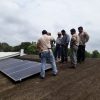
Green Recovery in Mexico – A Citizen’s Plea
The alarms warning against climate inaction have sounded for years. Almost a year into the hardest pandemic and maybe the worst economic recession my generation has seen, expert voices everywhere are claiming this to be the golden opportunity to do something to right our course and even find a silver lining in this unfortunate situation, by funding the economic recovery of COVID-19 with a green stimulus package.
Could the Finance Sector Hold the Key to Ending Deforestation?
At the beginning of 2020, there were hopes that this would be a ’super year for nature’. It has not turned out that way. Tropical forests, so crucial for biodiversity, the climate and the indigenous communities who live in them, have continued to be destroyed at alarming rates. In fact, despite the shutdown of large parts of the global economy, rates of deforestation globally have increased since last year.
Farmers Will (Again) Feed the World
Wealthier countries struggling to contain the widening COVID-19 pandemic amid protests over lockdowns and restrictions risk ignoring an even greater danger out there – a looming global food emergency.
Vietnam and Cambodia: Leveraging Support to Enhance Climate Ambition
The COVID-19 pandemic has disrupted nearly every facet of our lives and delayed what was slated to be a landmark Conference of the Parties (COP26). This pivotal year marks the first due date for countries to submit revised national climate plans per the five-year cycle required by the Paris Agreement. Remarkably, countries are still moving forward with renewed urgency. And many countries are integrating green recovery into their COVID-19 responses, further contributing to climate action. While many countries have positive stories to tell, both of our nations, Vietnam and Cambodia, are sterling examples of nations taking strong, decisive action, particularly with support through the NDC Partnership. Just last month, the people of Vietnam submitted their updated national climate plan and, in short order, the people of Cambodia will do likewise.
Bringing Clean Water On Tap To Rural Villages In Polynesian Island Nation Of Tuvalu
Rural communities on one of the nine islands that make up the Polynesian nation of Tuvalu are anticipating how life will change when they are connected to piped clean water for the first time.

Eswatini makes Progress on NDCs thanks to Crucial Partnership Support
Barry de Maine, the director of Green Cross Pharmacy, lost about $ 7,675 worth of stock when The Mall, the largest shopping centre in Mbabane, was flooded back in 2003. But when the flash floods hit again this year, he had already installed a flange to stop water from coming in. “This is the best I could do under the circumstances,” De Maine told IPS, adding: “Otherwise since we started experiencing floods at The Mall (17 years ago) nothing has been done.”
Secretive Mega-Trade Deal Rules Could Harm Asia’s Covid-19 Recovery
Fifteen countries will sign a mega-trade deal at the ASEAN conference this weekend imposing secretive restrictions on how governments help workers through the pandemic, trade union leaders and parliamentarians have warned.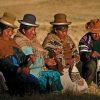
Global Summit of Development Banks Fails to Learn from Destructive Past
This week, 450 public development banks from around the world met for the Finance in Common Summit at the Paris Peace Forum. They gathered to discuss how they can direct their combined investments of over USD 2 trillion - 10% of total investments in the world - “to support the transformation or the global economy” and “build new forms of prosperity that take care of people and the planet.”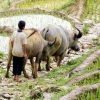
Vietnam Takes the Lead on Indo-Pacific Economic Integration
This was the year that Vietnam was poised to make progress on its rise as a regional leader. Under the auspices of Vietnam’s ASEAN chairmanship, a breakthrough in global trade has been achieved despite rising protectionism and a global pandemic.
Despite Conflict and COVID-19, Children Still Dream to Continue Their Education in Afghanistan
As if four decades of war were not enough, then came the pandemic. For each of the past five years, Afghanistan has been identified by the United Nations as the world’s deadliest country for children and, despite progress made in peace talks between the government and the Taliban, child and youth casualties from the ongoing conflict continue to mount in 2020.
Is Development for the World Bank Mainly Doing Business?
The World Bank has finally given up defending its controversial, but influential Doing Business Report (DBR). In August, the Bank “paused” publication of the DBR due to a “number of irregularities” after its much criticized ranking system was exposed as fraudulent.
Chile’s Energy Revolution Has an Achilles’ Heel
The Atacama Desert, a giant reservoir of solar power, is the battering ram of the transformation undertaken by Chile to decarbonise its energy mix, in a country with enormous potential in non-conventional renewable sources.
Q&A: How Desert Dust Storms Supply Vital Nutrients to the Oceans
When sand and dust storms (SDS) rage in the Sahara Desert, more than 10,000 km away in the Caribbean Sea the very same storms have a range of effects on the 1,360 species of shorefish that populate the waters there.

From Paraguay to Italy: Development at All Costs
I am speaking with Gladys and Raúl about civic space in Paraguay, when Raúl suddenly tells me about the fires. Thick smoke has reached the capital Asunción where he is based. In October, Paraguay became Dante’s Inferno.
Driving Climate Change from the Top in the Dominican Republic
When President Luis Abinader arrived at his inauguration in an electrically driven car as a symbolic gesture of his Government’s intentions to make sustainable development one of its main objectives – he signalled the start of addressing climate change commitments in the country.
Economic Trends and What’s Important in Life
US third quarter GDP numbers released two weeks ago delighted stock markets and President Trump. Output had picked up by 7.4%, annualised as 33.1%, the largest quarterly economic growth on record, almost double the old record of 3.9% (annualised as 16.7%) in the first quarter of 1950, seven decades ago.
Q&A: COVID-19 has Pushed Women Peacebuilders from Key Leadership Roles
Women need to be given roles as negotiators, not just offered representation through advisory groups, Agnieszka Fal-Dutra Santos from the Global Network of Women Peacebuilders (GNWP) told IPS.
The rise in plastic pollution during Covid-19 crisis
Ever since the pandemic began this year, countries across the globe have been striving to protect their people from the virus through various preventive measures where protective gear also known as PPE are in high demand. On the contrary, this has dramatically increased the unsustainable use of plastic posing significant risk for the environment. Personal Protective Equipment (PPE) which includes masks, gloves and goggles have become indispensable plastic products for everyone currently witnessing the coronavirus pandemic. The global health crisis has given rise to the consumption of PPE at a staggering rate, which is considered a shield for combatting the virus. PPE is playing a key role in protecting people, especially the frontline workers, who are fighting day and night to cure millions of patients ever since the outbreak started. This has led to some tough questions for those of us who are continually advocating for environmental protection and sustainability— how are we going to manage the devastating impact of plastic waste generated due to Covid-19?
Escaping the ‘Era of Pandemics’: experts warn worse crises to come; offer options to reduce risk
Future pandemics will emerge more often, spread more rapidly, do more damage to the world economy and kill more people than COVID-19 unless there is a transformative change in the global approach to dealing with infectious diseases, warns a major new report on biodiversity and pandemics by 22 leading experts from around the world.
Distributed Generation Provides Hope of Energy for the Poor in Brazil
"Showing solidarity is consuming the energy generated in your own municipality" - this is the motto of a project of distributed electricity generation in one of Brazil's many poor neighbourhoods.« Previous Page — Next Page »





Through our global network of local writers, we are continuing our award-winning coverage of global and local environmental challenges, with a focus on the people for whom the ecosphere matters in a direct way: rural dwellers who have little means to protect themselves against adverse conditions; communities that need to switch to sustainable development in order to survive; poor women and children, who are the most vulnerable in natural disasters. Sponsored by the United Nations Environment Program (UNEP), the United Nations Development Program (UNDP) and The World Bank (WB), IPS also maintains the award-winning Tierramérica, a specialised information service on environment and development.

The Week with IPS

Tracking global progress towards a sustainable world


