
Friday, November 6, 2026



News and Views from the Global South
Environment

Multilateralism Versus Regionalism: Which Path Should African Countries Pursue to Expand Trade and Investment Opportunities?
Increasingly, the ability of multilateralism to address contemporary global issues such as climate change and international trade is being questioned. In the case of international trade, WTO Members have thus far not been able to conclude the Doha Round, which was launched in November 2001. The Round was supposed to have been concluded on 1 January 2005, but it has been beset by persistent differences among the WTO Members. Whereas most developing countries believe that the Round is still active and have called for the fulfilment of all Doha mandates, several developed countries are of the view that the Round has run its full course and overtaken by developments in the global economy. They note that three out of the ten top economies in the world are developing countries – Brazil, China and India – and that several developing economies are also competitive in certain sectors of the global economy and that by granting significant flexibilities in the negotiations to these competitive developing economies, the Round's mandates are no longer valid and that differentiation among developing countries should be part of the broader on-going discussion on WTO reform.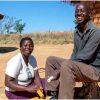
Biofortified Crops Improve Farmers’ Livelihoods in Zimbabwe
Steven Seremwe, who is 57 years old, was retrenched from his job as an administrator at Lake Shore Missions in 2012. He decided to focus on farming, and he started growing various crops—white maize, sugar beans, and sweet potatoes, among others—for consumption and sale.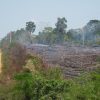
Nature Losses Threaten Emerging Economies
More than half of worldwide GDP is moderately or highly dependent on nature, putting biodiversity loss among the top five risks to the global economy, according to a report presented at the World Economic Forum (WEF) in Davos, Switzerland.
Blue Innovation in the Commonwealth
With 95 per cent of the ocean still unexplored by humans, we are only just beginning to understand its profound influence on life on earth, including its effect on global climate and ecosystems.
Global Inequality Continues to Grow: UNDESA Report
More than 70 percent of the global population is currently living in parts of the world where income inequality has grown, according to a World Social Report 2020 launched by United Nations Department of Economic and Social Affairs (DESA).
Will 2020 World Economic Forum Deliver on Combating Climate Change?
For the first time, the world’s elites meeting this year at Davos have listed environmental issues as their top concerns about the next decade.
Empowering Women in Poor Communities & Building Resilience Against Climate Pressure
As global temperatures continue to rise, vulnerable populations around the world are facing increasingly complex climate risks – with ongoing droughts in Zimbabwe and floods devastating Indonesia's capital, Jakarta.
BIOGAS: Cow Dung Holds the Key to Nepal’s Green Economy
Nepal’s future may not be in hydropower, as most assume, but actually in the dung heap. A new industrial-scale biogas plant near Pokhara has proved that livestock and farm waste producing flammable methane gas can replace imported LPG and chemical fertiliser.
Climate Change and Financial Risk
Climate change is already a reality. Ever-more-ferocious cyclones and extended droughts lead to the destruction of infrastructure and the disruption of livelihoods and contribute to mass migration.
Climate Change: A Tale of Weather Extremes with Mixed Fortunes for Zambia
It is early Saturday morning and Planeta Hatuleke, a small scale farmer of Pemba District in Southern Zambia, awakens to the comforting sound of rainfall. As the locals say, the “heavens have opened” and it is raining heavily after a prolonged dry spell.
In Dealing With Climate Change: Foresight is Key
United Nations World Food Program recently released 2020 Global Hotspots Report. According to the report, millions of citizens from Sub-Saharan African countries will face hunger in the first half of 2020 for several reasons including conflict, political instability and climate-related events such as below-average rainfall and flooding.
Bushfires Hasten the Death Knell of many Australian Native Animals and Plants
The chatter of cockatoos and lorikeets has given way to an eerie silence in smoke enveloped charred landscapes across south-eastern Australia. The unrelenting bushfires have driven many native animal and plant species to the brink of extinction and made several fauna more vulnerable with vast swathes of their habitat incinerated.
Deep clean: How ‘blue finance’ can save our oceans
Cleaning the world’s oceans and keeping them clean is a gargantuan task that will involve far-reaching projects backed by innovative forms of financing
Australia’s Wildfires Part of a Vicious Cycle of Food & Fire
“Unprecedented.” “Hell on Earth.” “Catastrophic.” In Australia, these terms are being used to describe 17.9 million acres of burned land so far. While fires of this magnitude are certainly unprecedented, they’re far from unexpected.
The United Nations Reforms-From Ideas to Actions
One of the highlight activities as the United Nations commemorates its 75th anniversary this year will be the launch of an “annual temperature check” on Sustainable Development Goals (SDGs), progress. With only ten years left to the final whistle for the Goals, this activity that will take place each September will provide a snapshot of what’s working, and where countries need more action.
Australia’s Bushfires Bring Mounting Pressure to Reduce Greenhouse Gases
As nature's fury wreaked havoc across Australia, reducing to ashes all that came in its way - people, flora, fauna, picturesque historic towns and villages once popular with local and overseas tourists – it was unlike anything the country had witnessed before. The staggering scale and intensity of the devastation could best be summed up as apocalyptic.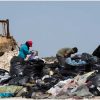
Not all Trade is Good – the Case of Plastics Waste
Currently, approximately 300 million tons of oil-based plastic waste are produced every year. A significant amount of plastic waste ends up in the oceans, having a detrimental effect on marine ecosystems and coastal communities. Most of this waste originates from the Asia-Pacific region.
2020: a Year Full of Danger
Let’s face what lies ahead with open eyes: 2020 is going to be a very tough year for the world, and developing countries in particular. The infant decade has already begun with the harbingers of climate disaster as thousands fled to beaches in Australia from raging bush fires, and the Middle East braced for more conflict after a U.S. air strike in Baghdad killed Iran’s top general.
Reflections for a New Year
In a world shaken by so many problems, it is difficult to look at 2020 and not make some kind of holistic analysis. While enormous progress has been made on many fronts, it is clear that the tide has turned, and we are now entering – or have already entered – a new low point in the history of humankind..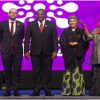
2020 Is the Decade of Action & It Has to Be a Sprint
Happy New Year, Kenya. 2020 marks a decade of action towards the realization of the Sustainable Development Goals by 2030. Peace and development are inextricably linked, with each making the achievement of the other far more likely. This puts the conflict-prevention and development work of the UN at the heart of the agenda in East Africa, but in a multi-agency and programme environment, making meaningful progress is challenging.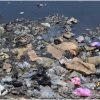
Plastic: The Largest Predator in Our Oceans
Plastic pollution is currently the largest global threat to marine life. Each year, 10-20 million tonnes of plastic ends up in our oceans, killing approximately 100,000 marine mammals and over a million seabirds.« Previous Page — Next Page »





Through our global network of local writers, we are continuing our award-winning coverage of global and local environmental challenges, with a focus on the people for whom the ecosphere matters in a direct way: rural dwellers who have little means to protect themselves against adverse conditions; communities that need to switch to sustainable development in order to survive; poor women and children, who are the most vulnerable in natural disasters. Sponsored by the United Nations Environment Program (UNEP), the United Nations Development Program (UNDP) and The World Bank (WB), IPS also maintains the award-winning Tierramérica, a specialised information service on environment and development.

The Week with IPS

Tracking global progress towards a sustainable world


