
Sunday, November 8, 2026



News and Views from the Global South
Environment

New GCF Project Signals Paradigm Shift for Water-Scarce Barbados
At the start of 2017, the Caribbean Drought and Precipitation Monitoring Network (CDPN) warned eastern Caribbean countries that they were facing “abnormal climate conditions” and possibly another full-blown drought.
After More Than a Decade, Rights of Indigenous Peoples Not Fully Realized
First, I want to talk about how we got here. It was nearly 100 years ago, when indigenous peoples first asserted their rights, on the international stage. But, they did not see much progress. At least until 1982 - when the first Working Group on Indigenous Populations was established.
DR Congo’s Mai-Ndombe Forest ‘Savaged’ As Landless Communities Struggle
Thousands of logs loaded into makeshift boats at the port of Inongo at Lake Mai-Ndombe stand ready to be transported to Kinshasa, the capital of the Democratic Republic of Congo (DRC).
Food Is the Answer: Perugia International Journalism Festival
The twelfth International Journalism Festival on April 12-15 has drawn 710 speakers from 50 different countries, becoming the biggest journalism festival in Europe.
Caribbean Eyes Untapped Potential of World’s Largest Climate Fund
The Caribbean Community Climate Change Centre (CCCCC) also known as the 5Cs, is looking for ways to boost the region’s access to the Green Climate Fund (GCF).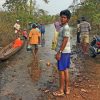
Drowning for Progress in Cambodia
Suddenly the road ends. The cart track disappears under the water. A vast lake stretches out in front of me. I have to transfer from a motorbike to a canoe. "Tuk laang," my guide says coolly. "The water is rising."
How Global Emissions Have Changed Since 1850
Which countries have emitted the most greenhouse gases? The quick answer is, "It depends." A more definitive response is tougher than you may expect. Many factors inform the answer.
How Citizen Power Ignited Seoul’s Energy Innovations
In a bid to reduce its nuclear energy dependence, Seoul embarked on a massive energy reduction initiative—shaped by citizen participation—in 2012.
Bridging the Humanitarian Needs with Long-term Resilience in Dominica
Six months ago, on 18 September 2017, Category 5 Hurricane Maria struck Dominica wreaking unimaginable disaster. Thirty-one people died, thirty-three more remain missing. Roads, bridges, schools, hospitals and over 40 percent of homes were destroyed or severely damaged.
Conflicts Force Up Global Hunger Levels
Largely driven by conflict, the number of hungry people has dramatically increased around the world, reversing decades of progress, according to a new report.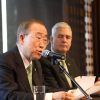
Former UN Chief Takes the Helm of Global Green Growth Institute
In the face of climate change and growing energy demand in developing countries, Ban Ki-moon, the new president and chair of the Global Green Growth Institute (GGGI), unveiled his vision for a more sustainable path by helping countries in their transition to greener economies and achieving the Sustainable Development Goals (SDGs).
Pakistan Needs Global Climate Funds to Combat Shifting Weather Patterns
As shifting weather patterns and extreme climates become the norm, access to climate funds are deemed essential for developing countries, such as Pakistan, that are facing the brunt of climate change.
New Platform Will Support Youth Projects on Water and Climate
Young people around the globe with good ideas on how to deal with water and climate challenges now have a platform to show their projects to the world and attract funding and other contributions to realise their dreams.
Role of Energy Efficiency in Limiting Climate Change
Greenhouse gases are produced as a by-product of the use of fossil fuels to supply light and heat, produce food, manufacture products and transport people and goods. These gases congregate in the upper atmosphere and result in global warming through absorption of sunlight reflected from the earth’s surface. At the 21st meeting of the Parties to the UN Framework Convention on Climate Change in Paris, it was agreed to limit the average increase in global temperature to 2°C [1].
Working Together Is Key to Meeting Water Targets by 2030
Mutual collaboration and coordination among the various stakeholders are tools to accelerate the actions necessary to meet the 6th Sustainable Development Goal (SDG) in the 2030 Agenda, which states the need to ensure access to clean water and sanitation for all.
A Whole New Decade for Water
As old and new challenges continue to threaten its access, the UN has dedicated the next decade in order to protect a crucial but fragile natural resource: water.
Is Desalination an Answer to the Water Crisis?
On World Water Day, March 22, universal access to clean water continues to be a privilege, when it should be a right. Experts predict that by 2030 the global water demand will exceed supply by 40%.
We Must Take Care of Nature, Because Without Rain There Is No Fresh Water
Confidence in large rivers and giant aquifers plummeted in many parts of the world, in the face of the expansion of water crises after intense and prolonged droughts in the last decade.
Restoring U.S. Aid Crucial to Avoid a Water Catastrophe in Gaza
World Water Day (March 22) could not come at a more critical time for the people of Gaza who are facing a humanitarian catastrophe The recent decision by the United States to reduce funding for the United Nations Relief and Works Agency for Palestine Refugees in the Near East (UNRWA), jeopardizes its role as a critical source of clean drinking water when Gaza’s supplies slow to a drip.
Why You Should Care About the Water Crisis
For the past weeks, many have been anxiously tracking the approach of Cape Town’s Day Zero: the day its taps will run dry. To everyone’s relief, current predictions are that careful conservation may stave off such a catastrophe in the coastal South African city until the rains arrive.
High and Dry: Can We Fix the World’s Water Crisis?
April 12 is expected to be the infamous “Day Zero” in South Africa’s second largest city of Cape Town, a tourist hub which attracts millions of visitors every year.« Previous Page — Next Page »





Through our global network of local writers, we are continuing our award-winning coverage of global and local environmental challenges, with a focus on the people for whom the ecosphere matters in a direct way: rural dwellers who have little means to protect themselves against adverse conditions; communities that need to switch to sustainable development in order to survive; poor women and children, who are the most vulnerable in natural disasters. Sponsored by the United Nations Environment Program (UNEP), the United Nations Development Program (UNDP) and The World Bank (WB), IPS also maintains the award-winning Tierramérica, a specialised information service on environment and development.

The Week with IPS

Tracking global progress towards a sustainable world


