
Friday, November 13, 2026



News and Views from the Global South
Environment

Conservationists Call for Ugandans to Stop Eating Chimps
Conservationists struggling to protect the remaining population of Ugandan chimpanzees have raised concerns that people around wildlife reserves in the west of the country have taken to eating the primates.
U.S. Outlier in New Push to Reduce Gas Flaring
An international coalition led by the World Bank is calling for state-backed and private oil producers to reduce “gas flaring” by an additional 30 percent over the next five years, saying that doing so would be equivalent to taking 60 million cars off of the roads.
Mexico Could Say Goodbye to Imported Maize
It has been many years since Mexico, the birthplace of maize, has been self-sufficient in this staple food that plays a central role in its cuisine and culture. But new studies indicate that it could produce enough maize to meet its needs within 10 to 15 years.
Climate Change, the Taboo Phrase in U.S. Electoral Politics
The United States endured its hottest summer in history this year, with droughts and wildfires ravaging the country. And according to a new report from the global reinsurance giant Munich Re, insurance losses related to extreme weather have nearly quadrupled in the U.S. since 1980.
Worms, Termites, Microbes Offer Food Security
Worms and termites are not likely to win hearts and minds, but they, along with lichens and microbes, are vital to food security, say biodiversity specialists who attended this month’s United Nations conference on the Convention on Biological Diversity (CBD) in this south Indian city.
Q&A: “Developing Countries Are Doing Their Part for Biodiversity”
Developing countries are investing enormously in preserving biological diversity, and it is unimaginable that the wealthy nations will not fulfill their obligations to provide funding for these efforts, Brazilian environmental negotiator André Aranha Corrêa do Lago told Tierramérica*.
Palau Proves Sharks Worth More Alive Than Dead
Sharks have a safe haven the size of France, and the Republic of Palau that protects them is making millions of dollars from shark tourism.
"Developing Countries Are Doing Their Part for Biodiversity"
We cannot isolate biological diversity by geographical boundaries, says Brazilian negotiator André Aranha Corrêa do Lago in this interview.
Companies Study Climate Risks and Opportunities
Initiatives undertaken by companies to reduce their emissions, mainly through greater energy efficiency, pay for themselves within three years, according to Juliana Campos Lopes of the Carbon Disclosure Project.Ecobreves – BRAZIL: Clones Could Save Endangered Species
The Brazilian government's agricultural research agency, EMBRAPA, has begun to work on cloning animals in danger of extinction.Ecobreves – HONDURAS: Peasant Farmers Adopt Organic Fertilizer
Small farmers in southern Honduras have begun to use organic fertilizer to improve their crops while promoting the creation of family farms in nearby villages.Ecobreves – ARGENTINA : Alarm Raised Over Deforestation in Patagonia
Local residents, environmentalists and Mapuche indigenous communities have raised the alarm over two major real estate development projects in Villa La Angostura, in the southern Argentine province of Neuquén, which would involve the destruction of 1,100 hectares of forests.Ecobreves – MEXICO: Artificial Photosynthesis Being Explored
The Mexican National Council on Science and Technology (CONACYT) has launched an initiative to imitate natural photosynthesis for the purpose of generating alternative fuels and reducing carbon dioxide (CO2) emissions.
The Face of Food Security Is Female
In a major endorsement for investment in women - the bulk of food growers in the developing world - United Nations Secretary General Ban Ki-moon said food security could not be achieved without women, and that the world's hungry also needed leaders to prioritise actions.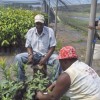
Amid Food Crisis, Caribbean Agriculture Going to Seed
With the average age of a farmer in the Caribbean now 62 years old, there is growing concern that commercial agriculture is on a path to extinction – a dire scenario for a region already shouldering a massive food import bill.
‘Urban Planning Must Factor in Biodiversity’
“With more than 60 percent of the world projected to be urban by 2030 why not prepare for it and build cities that include biodiversity preservation into planning?” asks Kobie Brand of ICLEI Local Governments for Sustainability in Cape Town, South Africa.
Shadow Over Aichi Biodiversity Targets
With negotiations to mobilise resources for preservation of biodiversity at a major United Nations conference going nowhere, the Group of 77 and China have hinted at possible suspension of the ‘Aichi targets’ under the Nagoya Protocol.AZERBAIJAN: Baku Mulls “Green Tax” on Corporate Polluters
Azerbaijani officials appear to buy into the idea that taxation policy can be an effective way of managing the environment.
India to Conserve Biodiversity at Grassroots
India’s National Biodiversity Authority (NBA) is actively promoting decentralised grassroots livelihoods as the best way to conserve biodiversity as mandated by the Nagoya Protocol on access and benefit sharing (ABS).
Some Caribbean Hotels Back Away from Battered Coastlines
The postcards portray sand, sea and sun. But key players in the Caribbean tourism industry are warning that it's time to shift gears away from the region's threatened coastlines and instead promote inland attractions like biodiversity.
Communities Organise to Confront Climate Change in El Salvador
Armed with chainsaws, machetes and shovels, local residents of El Salvador’s Lower Lempa River Basin, near the Pacific Ocean, are unblocking the flow of rivers and pruning the branches of trees on riverbanks to keep them from falling into the chocolate-colored water.« Previous Page — Next Page »


Through our global network of local writers, we are continuing our award-winning coverage of global and local environmental challenges, with a focus on the people for whom the ecosphere matters in a direct way: rural dwellers who have little means to protect themselves against adverse conditions; communities that need to switch to sustainable development in order to survive; poor women and children, who are the most vulnerable in natural disasters. Sponsored by the United Nations Environment Program (UNEP), the United Nations Development Program (UNDP) and The World Bank (WB), IPS also maintains the award-winning Tierramérica, a specialised information service on environment and development.

The Week with IPS

Tracking global progress towards a sustainable world


