
Saturday, November 14, 2026



News and Views from the Global South
Environment

Honduras Committed to Protecting Marine Treasures
Honduras, in the heart of Central America, normally makes headlines for its political upheavals and violence. But sometimes there is good news, too. It is one of only a few countries with a shark sanctuary off its coasts, and it has just created a protected area around a reef of a coral species formerly on the brink of extinction.
Setting Goals to Protect Half the Planet
The high seas, crucial regions of the world's oceans that are beyond national jurisdiction, account for 45 percent of the planet, but are today under severe threat from overfishing and pollution.
Indigenous Message to Rio+20: Leave Everything Beneath Mother Earth
Indigenous leaders from all over South America are making their way by foot, canoe and eventually on buses to be part of the Kari-Oca Caravan to Rio de Janeiro, to talk to world leaders at the United Nations Conference on Sustainable Development, Rio+20.
Defining Green Economy May Stymie Rio Summit
The thematic battle at the U.N. Conference on Sustainable Development (UNCSD) in Brazil next week will be primarily around the new concept of a "green economy" - and how best to define it.
Q&A: “We All Have to Start Being City Changers”
Building the cities of the future requires not only smarter planning but a profound shift toward greater equity and social justice, says Joan Clos, executive director of the U.N. Human Settlements Programme, or UN-HABITAT.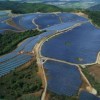
Biggest Economies Still Lagging on Renewables
On the eve of the Rio+20 Summit in Brazil, the U.S.-based Natural Resources Defense Council (NRDC) released a report Monday ranking the world's biggest countries on their use of renewable energy.
Rio+20: Transforming Political Platitudes into Economic Realities
When world leaders endorse the final plan of action, titled "The Future We Want, at the Rio+20 summit in Brazil next week, a lingering question may remain unanswered: how best can the United Nations transform political platitudes into economic realities?
Q&A: “Today’s Food System Is Failing Small Farmers”
With heads of state from more than 120 nations and tens of thousands of civil society and international development experts gathering for the U.N. Summit on Sustainable Development next week, it is accepted wisdom that rethinking agriculture is one of most critical issues facing this and future generations.
Will Water Dry Up at Summit on Sustainable Development?
The headline in a New York newspaper last March captured the essence of a future potential threat to political stability the world over: "U.S. Report Sees Tensions Over Water."
MEXICO: Yearly Floods the New Reality for Rural Women
Year after year, women in rural areas of the southeastern Mexican state of Tabasco have to get ready for floods that threaten their homes, crops and livestock.
Honduras Committed to Protecting its Marine Treasures
Given the abundance and variety of its corals, Honduras could serve as a gene bank for these species for the entire Mesoamerican region.Ecobreves – CHILE: Finalists Announced for Environmental “Anti-Prize”
The Chilean branch of international environmental watchdog Greenpeace is running its annual competition for the awarding of “anti-prizes” to the government authorities, politicians and businessmen who have been responsible for the worst environmental damages in the previous year.Ecobreves – BRAZIL: Thousands of Species of Fungus in the Atlantic Forest
A study by the Luiz de Queiroz Higher School of Agriculture at the University of São Paulo has identified almost 1,840 species of fungus in the soil of the Mata Atlântica, a tropical forest biome on the eastern coast of Brazil.Ecobreves – VENEZUELA: More Protection for Trees in Caracas Demanded
Local residents and environmentalists are angry that a dozen trees were cut down to clear the way for a new mausoleum on the north side of Caracas to house the remains of Venezuela’s independence leader and founding father, Simón Bolívar.Ecobreves – HONDURAS: Children Head Up Environmental Patrols
Girls and boys from ten schools in Tegucigalpa are collecting and recycling trash and using the proceeds to pay for their own school snacks, as well as taking part in patrols that educate the public and ensure that garbage is deposited in the proper place.
Dam Threatens Turkey’s Past and Future
Hasankeyf, a small village in southeastern Turkey, has been under threat for 15 years. Home to approximately 3,000 people, the site is one of the oldest continuously inhabited human settlements, with an archaeological record going back at least 9,500 years.
How Would You Measure Success at the Rio Summit?
When the heavily hyped three-day U.N. Conference on Sustainable Development (UNCSD) comes to a close in Rio de Janeiro Jun. 22, what would be the yardstick to measure its successes and failures?Chile’s Smog Still Deadly
"We are facing a very alarming situation, and solutions are urgently needed," said Cecilia Sepúlveda, the dean of the University of Chile medical school, after it was announced that 4,200 people a year in this country die from causes directly attributable to smog and other kinds of pollution.
Establishing Environmental Flows in the Zambezi
When Jose Chiburre was a boy growing up in Mozambique, he would often challenge his friends to a swim across the Incomati River. That was in the 1970s, when the river was 300 metres wide in the dry season: today, the race would be over before it begins.
Women and children need climate change education
 70% of smallholder farmers in sub-Saharan Africa are women. Many of these are semi-illiterate, yet they are the most affected by changes in climate.
New World Bank Environment Strategy Boosts Private Sector Role
The World Bank this week released its new environment strategy for the next decade, 2012 through 2022, saying the policy framework was crafted in response to "calls from governments and the private sector for new approaches to development in light of unprecedented environmental challenges".« Previous Page — Next Page »


Through our global network of local writers, we are continuing our award-winning coverage of global and local environmental challenges, with a focus on the people for whom the ecosphere matters in a direct way: rural dwellers who have little means to protect themselves against adverse conditions; communities that need to switch to sustainable development in order to survive; poor women and children, who are the most vulnerable in natural disasters. Sponsored by the United Nations Environment Program (UNEP), the United Nations Development Program (UNDP) and The World Bank (WB), IPS also maintains the award-winning Tierramérica, a specialised information service on environment and development.

The Week with IPS

Tracking global progress towards a sustainable world


