
Saturday, October 31, 2026



News and Views from the Global South
Environment

Hunger and Heightened Insecurity Pushes Sudan to the Brink of Collapse
After nearly two years of extended warfare and protracted crises as a result of the Sudanese Civil War, Sudan remains the world’s biggest internal displacement crisis. According to the United Nations High Commissioner for Refugees (UNHCR), heightened insecurity, widespread famine, economic strife, and climate shocks threaten the lives of approximately 25.6 million people.
Civil Society’s Reform Vision Gains Urgency as the USA Abandons UN Institutions
Today’s multiple and connected crises – including conflicts, climate breakdown and democratic regression – are overwhelming the capabilities of the international institutions designed to address problems states can’t or won’t solve. Now US withdrawal from global bodies threatens to worsen a crisis in international cooperation.
Forest Guards Risking Their Lives To Keep Malawi’s Forests Standing
In Malawi, being a forest guard isn’t a glamorous, sought-after job. And it has often been quiet, enjoying almost no publicity – until recently amid the worsening crashing down of the country’s forests, which is making the occupation increasingly perilous. In 2024 alone, a total of eight forest rangers got killed in separate incidents while in the line of duty, according to the Ministry of Natural Resources, which is responsible for the management of 88 forest reserves and 11 plantations across the country.
Global Climate Action Progressing, but Speed and Scale Still Lacking
2025 marks the tenth anniversary of the Paris Climate Agreement. One of its chief architects, Christiana Figueres, says the world is heading in the right direction but warns that urgent action is needed to close critical gaps. The pact, adopted in 2015 by 195 nations, set out to limit global warming to "well below 2°C" above pre-industrial levels, striving for 1.5°C. But in 2024, the world shattered records as the hottest year ever, surpassing that crucial threshold.
Water and Food Security in Europe and Central Asia: A Shared Challenge for a Sustainable and Just Future
Degrading soil, air pollution, vanishing biodiversity, emerging plant and animal health issues and more are coming together in the current situation of multiple crisis. Ensuring water security is just one, among the many challenges individuals, countries, and the world faces. Yet, we shouldn’t forget that water makes up the largest percentage of our bodies and the same applies to animals, plants and the planet’s surface. The threat of water insecurity is, as we all see, not a petty problem, but one of the greatest challenges of our century.
Latin America & the Caribbean in 2024: Renewable Energy and Early Warning Systems Offer Hope Amid Climate Extremes
Hope in the face of climate extremes. That is the overarching message about the State of the Climate in Latin America and the Caribbean in 2024.
The Giant Plastic Tap: How art fights plastic pollution
"The size of the faucet highlights the magnitude of the problem. It makes the problem impossible to ignore. We're used to throwing things 'away'—but when we're confronted with what happens when 'away' is not an option, I think it creates an emotional wake-up call," says Benjamin Von Wong.
UNICEF Report Warns of Rising Rates of Child Mortality without Proper Funding
Despite levels of child mortality and stillbirths having significantly decreased since 2000, increasingly unequal and limited access to basic services around the world endangers millions of children around the world, a new report finds.
Building Resilience in Least Developed Countries – A Pathway to Sustainable Transformation
As the world grapples with overlapping crises—climate change, economic instability, and food insecurity—the 44 Least Developed Countries (LDCs) face existential threats that demand urgent, collective action.
Bangladesh’s Ethnic People Safeguarding Forests and Wildlife
Kishore Kumar Chakma, a young man from an ethnic community in Rangamati district, voluntarily guards a village common forest (VCF) so that none can hunt wild animals and fell trees from it.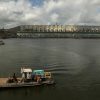
Royalties, a New Indigenous Right for Hydroelectric Damages in Brazil
Indigenous peoples in Brazil have won a new right: a share in the profits of hydroelectric plants that cause them harm when built on or near their lands.
Strengthening Indigenous Peoples and Local Communities’ Knowledge and Access Opens up Opportunities for Climate, Biodiversity and Desertification Action
The central role Indigenous Peoples and local communities in addressing climate change, biodiversity loss and desertification has gained widespread recognition over the past decade. Indigenous Peoples’ close dependence on resources and ecosystems, exceptional tradition, and ancestral knowledge are invaluable assets for the sustainable management of our planet’s natural resources.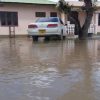
The Ocean Creeps In: Tanzanian Coastal Communities Fight a Losing Battle
The first time Jumanne Waziri tasted salt in his morning tea, he thought his wife had made a mistake. “Why did you put salt instead of sugar?” he asked, setting his cup down in their home in Ununio, a quiet suburb north of Dar es Salaam.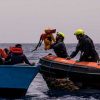
A Test of Humanity: Migrants’ Rights in a World Turning Inward
The United Nations Refugee Agency faces devastating cuts that may eliminate 5,000 to 6,000 jobs, with potentially catastrophic consequences for millions of people fleeing war, repression, hunger and climate disasters. This 75-year-old institution, established to help Europeans displaced by the Second World War, now confronts an unprecedented financial crisis, primarily due to the US foreign aid freeze – and the timing couldn’t be worse.
Seeds of Survival, Amid Conflict Sudan Is Saving Its Agricultural Future
Sudan’s diverse crops and agricultural heritage are at risk of being lost. The ongoing conflict in Sudan is claiming lives and threatening livelihoods and food security. In the chaos of conflict, scientists like Ali Babiker are fighting to protect Sudan’s future food security—not with weapons, but with seeds.
World Meteorological Day
Closing the Early Warning Gap to Save Lives
The World Meteorological Organization (WMO) is urging nations to increase investments in their meteorological and hydrological services and build robust early warning systems (EWS) to safeguard communities from the mounting threats posed by climate-related disasters. 
World Day for Glaciers
Glaciers Are in Threat, May Not Survive the 21st Century
Many glaciers in the world will not survive the 21st century, according to reports published by the United Nations. Five of the past six years have experienced the most rapid glacier retreat on record; 2022-24 was the largest three-year loss of glacier mass. 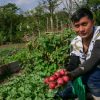
Food Security and Water, a Priority for Border Towns in Central America
The hope of Salvadoran Cristian Castillo to harvest tomatoes in a municipality of the Central American Dry Corridor hung by a thread when his well, which he used to irrigate his crops, dried up. However, his enthusiasm returned when a regional project taught him how to harvest rainwater for when the rains begin in May.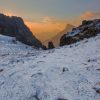
A Weapon in the Fight for Water Security: Preserving the Glaciers
World Water Day, celebrated on March 22 every year, raises awareness about the importance of water and advocates for the sustainable management of freshwater resources. The theme for 2025 focuses on glaciers — those grandiose ice masses that are a crucial part of the world's water resources.
Glaciers Of The SADC Region – A Wake-Up Call For Climate Action
World Water Day calls us all to promote the essential element of life: water. But we must also look this year at the rapidly vanishing sources of freshwater that we depend on, especially glaciers. Although glaciers may be remote for many of us, they are an essential component of the water cycle, nourishing rivers and lakes that are important for millions of people around the world. As precious resources with sources under threat, glaciers in the Southern African Development Community (SADC) region are an area of focus.
How Rare Rhino, Tiger Conservation Has Locked Out Indigenous Communities
While a local community prides itself on caring for a sensitive biodiverse region, and despite centuries-long stewardship of the Kaziranga, a UNESCO World Heritage Site, the authorities rebuff—sometimes aggressively—their attempts to remain involved.« Previous Page — Next Page »





Through our global network of local writers, we are continuing our award-winning coverage of global and local environmental challenges, with a focus on the people for whom the ecosphere matters in a direct way: rural dwellers who have little means to protect themselves against adverse conditions; communities that need to switch to sustainable development in order to survive; poor women and children, who are the most vulnerable in natural disasters. Sponsored by the United Nations Environment Program (UNEP), the United Nations Development Program (UNDP) and The World Bank (WB), IPS also maintains the award-winning Tierramérica, a specialised information service on environment and development.

The Week with IPS

Tracking global progress towards a sustainable world


