
Wednesday, October 7, 2026



News and Views from the Global South
Environment
Race Against Time as Hunger, Poverty Rise Amid Growing Global Uncertainties
Nearly one in 11 people in the world and one in five people in Africa go hungry every day, a crisis primarily driven by chronic inequality, climate change, conflict and economic instability. At the current pace, hunger and extreme poverty rates show little sign of drastically receding by 2030.
Not an Option. A Call for Action
A global alert is not an option. It requires global action. Over the past three years, the number of crisis-impacted school-aged children in need of urgent quality education support has grown by an alarming 35 million, according to Education Cannot Wait’s new Global Estimates Report.
Climatic Change Pushes Pakistan’s Promising Trout Fish Farming Towards Brink of Collapse
Pakistan’s once-thriving trout fish farming industry, a vital source of livelihood for communities in the country’s mountainous northern region, is now on the verge of collapse due to the devastating impacts of climate change.
Shaping Conditions for Fair, Equitable and Enduring Climate Finance
The global commitment to fair climate finance is at a crossroads. COP29 concluded with a disappointing New Collective Quantified Goal on Climate Finance (NCQG), leaving developing nations at risk of being left behind. With the U.S. withdrawing from the Paris Agreement and slashing development aid, prospects for more ambitious fair climate finance are getting out of sight.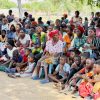
Namibia’s Drought Crisis: Building Resilience for Women and Girls
Communities in the Kavango West region of northern Namibia have firsthand experience of the severe impacts of climate change. The dry, cracked soil and emaciated livestock provide a constant reminder of the lack of access to water in this part of the country.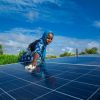
Decoding Africa’s Energy Journey: Three Key Numbers
At night, when the world lights up, large swathes of Africa remain cloaked in darkness—a stark reminder of the continent’s lack of reliable access to electricity.
WFP, FAO Warn of the Severity of the Climate Crisis and Food Insecurity
Over the past few years, climate shocks have become more frequent and have devastated economies and agriculture systems, exacerbating widespread malnutrition and hunger. It has become increasingly apparent that the utilization of sustainable agriculture practices and disaster risk management systems are crucial to fulfill growing needs as natural resources continue to dwindle.
The Challenge of the “Carbon Aristocracy”
For centuries, innumerable countries were ruled by an entrenched, typically inherited, political class: the “aristocracy.” The term comes from the Ancient Greek words “aristos”, meaning best, and “kratia,” meaning power. As a result of long and hard-fought democratic struggles, these aristocracies have largely dwindled worldwide (albeit, not everywhere).
Benin: An African Pioneer
Benin faced a number of negative spillovers in 2022: a deteriorating regional security situation at its northern border, the lingering scars of COVID-19, and higher living costs amid the war in Ukraine.
Mexico’s New Economic Plan Lacks Energy
This January, Mexico has embarked on a new industrial path for the next six years, where the viability of its energy component faces fundamental challenges that put it at risk.
‘Areas Essential to the Global Climate Are Being Threatened by Economic Projects’
CIVICUS discusses activism against oil auctions in the Democratic Republic of the Congo (DRC) with François Kamate, founder and coordinator of the young environmental volunteer movement Extinction Rebellion Rutshuru.
Can We Still Solve Climate Change?
When it comes to climate change, the awful news has been coming thick and fast. We now know that in 2024, the Earth’s average temperature exceeded 1.5°C above pre-industrial levels for the first time.
Explainer: Why Glaciers Are Alive, Life-Giving and Worth Preserving
The United Nations declared 2025 as the International Year of Glaciers’ Preservation to promote awareness about the role of glaciers, snow and ice. The climate system and global hydrological cycle are dependent on accumulated water in solid form as glaciers, snow and ice. Because of the global temperature rise and its impact on the Earth’s cryosphere, socio-economic and environmental effects are being observed.
Avatars of Extinction: ‘Endlings’ and the Protection of the Species That Remain

George the Pinta Island tortoise and Martha the passenger pigeon achieved fame as 'endlings’ - the last individuals of their species. Their passing is tragic, but can their fate perhaps help us to protect other threatened species?

Can We Still Solve Climate Change?
When it comes to climate change, the awful news has been coming thick and fast. We now know that in 2024, the Earth’s average temperature exceeded 1.5°C above pre-industrial levels for the first time.
Cooking up Success: Solar Kitchen Initiative Aims to Expand Access to Clean Energy in Angola
Access to energy is essential for sustainable development, but for many rural communities, it’s still out of reach. In Angola, according to the 2019-2020 agricultural census, most rural villages lack access to electricity.
Report Exposes Silent Global Emergency as More Crises-Affected Children Need Urgent Education Support
A report released today on the International Day of Education sounds alarm as the number of school-aged children in crisis worldwide requiring urgent support to access quality education reaches a staggering 234 million—an estimated increase of 35 million over the past three years fueled by intensifying armed conflict, forced displacements, more frequent and severe weather and climatic events, and other crises.
Could Trump Really Blow up the Global Trade System?
Trump’s trade policy blends aggressive tariffs, legal manoeuvring and transactional diplomacy. But could he really blow up the global trade system?
Let the Kite Fly High
The global plastics negotiation process, launched in 2022 under a resolution by the UN Environment Assembly, represents an unprecedented effort to combat the escalating plastic pollution crisis.
Food Systems Worsen Diets, Health
Corporate-dominated food systems are responsible for widespread but still spreading malnutrition and ill health. Poor diets worsen non-communicable diseases (NCDs), now costing over eight trillion dollars yearly!
Still Hopes for a Future Plastic Treaty– But it Won’t be Easy
The last few weeks of 2024 were a disappointment for those who strongly believed that planet Earth is in need of bold actions. First, there were the frustration stemming from what could be defined at minimum as unconvincing outcomes of both COP 16 on Biodiversity and COP 29 on Climate.« Previous Page — Next Page »





Through our global network of local writers, we are continuing our award-winning coverage of global and local environmental challenges, with a focus on the people for whom the ecosphere matters in a direct way: rural dwellers who have little means to protect themselves against adverse conditions; communities that need to switch to sustainable development in order to survive; poor women and children, who are the most vulnerable in natural disasters. Sponsored by the United Nations Environment Program (UNEP), the United Nations Development Program (UNDP) and The World Bank (WB), IPS also maintains the award-winning Tierramérica, a specialised information service on environment and development.

The Week with IPS

Tracking global progress towards a sustainable world


