
Friday, November 20, 2026



News and Views from the Global South
Environment
Canada Seeks to Drop Native Peoples from New Biodiversity Pact
Blame Canada if countries fail to agree to a new binding treaty to curb the rapid loss of plant, animal and species that form the intricate web of life that sustains humanity. That is the view of indigenous representatives from Canada in response to a late night move by the Canadian delegation to strike a reference to indigenous peoples' rights at the U.N. Convention on Biological Diversity (CBD) members' conference here.
PAKISTAN: After the Bitterness of the Floods Comes ‘Sweet Water’
Pakistan’s recent catastrophic floods has had many alternately worried and depressed, but the indigenous community that calls the mudflats between the creeks of the Indus delta home has been having a decidedly far different reaction.
Malawi Herbalist Joins Fight Against Deforestation
Decades of shifting cultivation by rural farmers have threatened forests in the district of Karonga in northern Malawi. The loss of forest cover has also threatened the livelihood of Benjamin Kalowekamo, a herbalist who depends on local plants to mix his healing concoctions.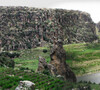
PERU: Neighbouring Regions Clash Over Water Diversion
With one death and several injured to show for it, two regions in southern Peru remain tangled in conflict over water from one of the country's main rivers. A project would divert some of the river's flow from the Cuzco region to neighbouring Arequipa.
North-South Divide Again Clouds Biodiversity Talks
The accelerating destruction of natural habitats will take millions of years to recover from, scientists have warned. This may be the last chance to apply the brakes, Achim Steiner, executive director of the U.N. Environment Programme, reminded delegates representing the 193 member countries of the U.N. Convention on Biological Diversity (CBD).
PERU: A Highway Built to Be Flooded
Construction workers are fighting the clock to finish the last stretch of the Southern Inter-Oceanic Highway, in southeastern Peru, apparently unaware that about 100 kilometres of this road connecting to Brazil will be covered by water once the Inambari hydroelectric dam is built nearby.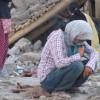
INDIA: Extreme Weather Sows Uncertainty in Farmers’ Lives
When dark clouds waft above, hearts pound in fear and nightmarish thoughts strike the minds of the inhabitants of this desert town, which lies more than 3,048 metres above sea level in the northern Indian province of Ladakh.CUBA: The Environment Plays the Lead in Low-Budget Cinema
Scientists and experts took on the challenge of sharing their environmental concerns with filmmakers at the Third Thematic Showcase of the Humberto Solás Low-Budget Film Festival in the Cuban capital.
Biodiversity at the Cliff’s Edge
What nature gives us is often taken for granted, but if its basic elements disappear, human life on Earth would not be possible. The mission of the biodiversity summit under way in Nagoya is to reverse the headlong rush towards the precipice.
Making a Living from Lumber Without Destroying the Amazon
Forest management helped multiply 20-fold the value of native forests in the Brazilian Amazon state of Acre. But how do those who dedicate themselves to sustainable extraction of Amazon lumber get by?
A Highway Built to Be Flooded
A stretch of the brand-new Inter-Ocean Road Corridor in the Peruvian Amazon is to be flooded by a hydroelectric dam.Ecobreves – ARGENTINA: Opposition to Chinese Plan for Patagonia Soy
Environmental and citizen groups in the southern Argentine province of Río Negro are sounding the alarm against China's multi-million-dollar plan to expand soybean production in the area.Ecobreves – HONDURAS: Taking Steps to Protect Emerald Hummingbird
Honduran officials have set limits for a stretch of highway in the northern department of Yoro, home to the endangered emerald hummingbird (Amazilia luciae).Ecobreves – BRAZIL: Cerrado Savannah Fires Increase 350 Percent
Fires in the Cerrado, the Brazilian savannah, jumped 350 percent this year compared to the 2009 total, according to a study by INPE, the national space research institute, released Oct. 8. So far this year there have been 57,700 fires.
Chile Measures Its “Water Footprints”
How many litres of water are needed to produce one kilogram of table grapes? The current effort to measure the "water footprint" of this and other Chilean exports could give us some answers by year's end.ENVIRONMENT: New Biosafety Treaty Faces Tough Tests Ahead
A new international treaty on the safe use of modern biotechnology has just come into being, but developing countries say the real challenge lies in how its lofty ideas can be transferred into practical realities.
SOUTHERN AFRICA: Strengthen Cooperation to Secure Power
Southern African nations need to agree on a common operational system to manage energy in the region, environmental experts advise. If they don’t, the region could experience power shortages and resulting economic deficits.Okavango’s Resurgent Floods Test Disaster Management
Despite early warnings about higher-than-usual flooding of the Okavango Delta in 2010, homes, fields, latrines and boreholes in the delta were flooded.
HUNGARY: ‘Former Reds’ Behind Red Mud
As the Hungarian government continues its efforts to limit the consequences of a tragic toxic leak last week, it has also used the opportunity to attack a supposed former communist-turned capitalist oligarchy that allegedly runs the country's economy.FOOD-GUATEMALA: Bad Omens for 2011
Guatemala needs to take steps to prepare for even worse problems of hunger in 2011, caused by climate change and farmers' heavy dependence on a few basic crops like corn and beans, experts warned on the occasion of World Food Day, celebrated Saturday.
Lesotho Could Beat Drought With Irrigation
Bonang Charles's fields are a richly green rarity in October's parched landscapes along the Phutiatsana River. It's a vivid demonstration of the limited reach of irrigation to Lesotho's small-holder farmers.« Previous Page — Next Page »


Through our global network of local writers, we are continuing our award-winning coverage of global and local environmental challenges, with a focus on the people for whom the ecosphere matters in a direct way: rural dwellers who have little means to protect themselves against adverse conditions; communities that need to switch to sustainable development in order to survive; poor women and children, who are the most vulnerable in natural disasters. Sponsored by the United Nations Environment Program (UNEP), the United Nations Development Program (UNDP) and The World Bank (WB), IPS also maintains the award-winning Tierramérica, a specialised information service on environment and development.

The Week with IPS

Tracking global progress towards a sustainable world


