
Friday, November 20, 2026



News and Views from the Global South
Environment
MEXICO: Native Tourism Businesses Need to Sell Themselves Better
Native tourism companies dedicated to the preservation and promotion of indigenous culture and to sustainable development face a number of hurdles, especially in terms of marketing and commercialising their services.
Heat Rises, Fishing Falls in the Venezuelan Caribbean
In the Southern Caribbean, along the Venezuelan coast, fishing is on the decline, surface waters are warming, rivers discharge tonnes of waste into the sea -- the waves seem to be licking the wounds left by these phenomena and devastating fishing practices like bottom trawling.ASIA: Irrigation Systems Deserve a Second Look, Say Experts
Asia’s search for ways to feed over one billion new mouths in the next 40 years is prompting experts to call for renewed faith in its wide network of irrigation systems in order to ensure adequate food production.Tackling Climate Change Could Save Biodiversity
A major change in the direction of economic development is essential to avoid the catastrophic unraveling of Earth's ecosystems that support all life, a new global analysis published in the journal Science revealed Tuesday.JAMAICA: Trading Ecology for a Highway
A construction project in Kingston's protected Palisadoes wetlands is pitting Jamaican environmentalists against the government in a showdown activists say will end up in the courts.
Despite Heavy Oil, Louisiana Keeps Fisheries Open
Massive slicks of weathered oil were clearly visible near Louisiana's fragile marshlands in both the East and West Bays of the Mississippi River Delta during an overflight that included an IPS reporter on Oct. 23. The problem is that, despite this, the Louisiana Department of Wildlife and Fisheries has left much of the area open for fishing.
Brazilian Communities Find Ways to Live in Semiarid Environment
No longer is the image of women trudging through fields carrying heavy water vessels on their heads just a "quaint" scene of Brazil's semiarid northeast, for outsiders.
VENEZUELA: Hunger Strike Off as Gov’t Agrees to Talks on Native Demands
An 81-year-old Jesuit missionary in Venezuela ended a week-long hunger strike Monday after the government agreed to high-level talks to negotiate the release of three indigenous prisoners facing murder charges and to discuss land claims by Yukpa communities.
CLIMATE CHANGE: Geoengineering for a Desperate Planet
Delegates to the world summit on biodiversity here are calling for a moratorium on climate engineering research, like the idea of putting huge mirrors in outer space to reflect some of the sun's heating rays away from the planet.
Europe to Slow Down on Food
The Slow Food movement has won significant support from the European Union. Dacian Ciolos, the European Union Commissioner for Agriculture, spoke to IPS in support of the movement at Terra Madre, a biennial reunion of promoters of the Slow Food movement.
Palau Announces Massive Marine Sanctuary
One of Japan's closest allies declared over the weekend that all of its oceans - more than 600,000 square kilometres - would be a sanctuary for whales, dolphins, dugongs, sharks and other species.
Geoengineering for a Desperate Planet
Climate change made its way into the biodiversity summit in Nagoya, Japan, as debate topics included the effects of geoengineering on the Earth's ecosystems.Ecobreves – BRAZIL: Construction Makes Use of Sugarcane Ash
Waste from sugarcane is being put to good use -- its ashes incorporated into building materials, based on a formula developed by researchers at Brazil's University of São Carlos.Ecobreves – HONDURAS: FAO Delivers Food Aid
The United Nations Food and Agriculture Organization (FAO) will create a fund of one billion dollars for Honduras for the next four years, announced Carmelo Rizzo, the Honduran representative to that agency.Ecobreves – CUBA: Prehistoric Fossils Discovered
Cuban scientists have confirmed the discovery of fossil remains from the prehistoric era in Sima del Cotunto, located on the western border of Viñales National Park, 162 kilometers from the national capital.Ecobreves – VENEZUELA: Valencia Lake Overflows and Contaminates
Valencia Lake, with an area of 375 square kilometers and situated west of Caracas, has overflowed as a result of recent heavy rains and threatens about 1,000 homes towards the east in the city of Maracay.
BRAZIL: Environment Meets Development en Route to the Pacific
Acre, the small Brazilian state that is a symbol of the struggle to preserve the Amazon rainforest, is facing the challenge of ensuring that the development ushered in by two paved roads that will link the state to both the Atlantic and the Pacific oceans will be sustainable.Hard to Put a Price-tag on Healthy Rivers
Damming a river may bring electric power, but it often comes at the price of high-quality food fisheries, experts say. When dams are proposed for power, flood control or irrigation, the often devastating impacts on fisheries in rivers and lakes are ignored or discounted.
Could Water-Efficient Maize Boost Africa’s Food Security?
As controlled field trials of a genetically modified (GM) crop are about to begin in five African countries amidst promises of improved crops grown under poor conditions, critics are charging organisations with selling out the interests of African farmers.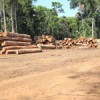
BRAZIL: Making a Living from Lumber Without Destroying the Amazon
The Zolinger family, a typical example of those who migrated from southern Brazil to the Amazon in search of land and fortune, now has a second chance in the lumber industry, after contributing to the devastation of the forests in Rondônia state, where they settled in 1979.GUATEMALA: Spreading Expertise on Integrated Waste Management
Guatemala has more than 700,000 clandestine garbage dumps. But a growing network of public and private sector employees are receiving training in integrated waste management that they in turn pass on to others, as part of a unique cooperation initiative with Mexico and Germany.« Previous Page — Next Page »


Through our global network of local writers, we are continuing our award-winning coverage of global and local environmental challenges, with a focus on the people for whom the ecosphere matters in a direct way: rural dwellers who have little means to protect themselves against adverse conditions; communities that need to switch to sustainable development in order to survive; poor women and children, who are the most vulnerable in natural disasters. Sponsored by the United Nations Environment Program (UNEP), the United Nations Development Program (UNDP) and The World Bank (WB), IPS also maintains the award-winning Tierramérica, a specialised information service on environment and development.

The Week with IPS

Tracking global progress towards a sustainable world


