
Friday, November 20, 2026



News and Views from the Global South
Environment
EUROPE: New Permits to Pollute Sought
Extra permits to pollute the atmosphere would be given to corporations that invest in areas surrounding tropical rainforests under plans drawn up by one of Europe's most influential pressure groups.
Locally-Run Protected Areas Could Reverse Fisheries’ Death Spiral
Local fishers objected to the creation of a new no-fishing marine protected area off the coast of Belize in 1996. Today they are benefiting from the bounty of fish spilling out of the Laughing Bird Caye National Park. Tourism has also boomed, illustrating the multiple benefits and value of marine protected areas, according to a new series of reports released Wednesday by Conservation International (CI).
TRADE: It’s the End of the Export-Led Growth Model, Says UNCTAD
While the recovery from the financial and economic meltdown remains fragile in especially the developed world, the outlook for Africa inspires optimism, according to UNCTAD. The agency also believes the crisis might be the death- knell for the export-led economic growth model -- especially African countries should leave it behind.OPEC – Fifty Years Regulating Oil Market Roller Coaster
Half a century after OPEC came into being, the world is very different, thanks partly to the actions of this organisation, the first to be formed in the developing South specifically to protect an export product.BIODIVERSITY: Japan Cooks Up New Ideas as Fish Consumption Depletes Stocks
A processed fish cake, made of a mixture of deep sea fish species pounded into paste and sold either deep fried or frozen, is the brain child of Takuhira Kaneko, head of Act for Company, which trades in fish and located in western Fukuoka city in Japan.Summit Failure on Water, Sanitation Would Be Recipe for Disaster
A weeklong international conference here has transmitted a strong political message to next week's U.N. summit meeting of world leaders: what good is the fight against poverty, hunger, maternal mortality and child deaths if water and sanitation are not given the high priority they deserve?Irrigation Transforms Lives in Southern Zimbabwe
More than a million people will need food aid in Zimbabwe this year. As the government looks to boost agriculture production, one rural community is leading the way by using irrigation schemes to improve food security and income.ZIMBABWE: Big Market, Bigger Challenges for Matabeleland Farmers
Most fruits and vegetables sold in Bulawayo are imported from South Africa, because farms immediately around Zimbabwe's second city cannot meet demand. Locals are paying high prices as a result.EUROPE: Getting Into a Stew over Mackerel
The British have a fascination for the rich, fatty meat of the mackerel, that summertime extravagance often served as pates and salads at fashionable pubs and restaurants. A far cry from the humble cod that is a staple of the more downmarket chip shops on the nation's high streets.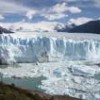
Fighting for Argentina's Glaciers as They Retreat
In two decades, Argentina's glaciers have lost an average of 10 to 15 percent of their area.Ecobreves – CHILE: Farmers Fight Brazil-Financed Thermoelectric Plant
A delegation from the Totoral Agricultural Community of the northern region of Copiapó delivered a letter Sep. 8 to Brazil's ambassador in Chile, Mario Vilalva, requesting the Brazilian government withdraw support for the Castilla thermoelectric plant, being built by Brazilian entrepreneur Eike Batista.Ecobreves – HONDURAS: Renewable Energy Contracts Questioned
Communities in the northwestern Honduras and Catholic groups have challenged the decision by Congress to grant 40 renewable energy contracts to companies they say are polluters.Ecobreves – CUBA: Testing Plant-Based Cancer Med
Three hospitals in Santiago, Cuba, began to administer a medication made from the anamú (Petiveria alliacea) plant, also known as guinea henweed, to fight cellular immunodeficiency among patients with cancer and other illnesses.Ecobreves – BRAZIL: Sugarcane Provides 18 Percent of Energy
Nearly half the energy consumed in Brazil comes from renewable sources, thanks in large part to sugarcane, according to the Sustainable Development Indicators of the Brazilian Institute of Geography and Statistics (IBGE).Ecobreves – VENEZUELA: Toxic Cloud Over Ciudad Guayana
A cloud of waste particulates is soaring this month over Ciudad Guayana, a city located 600 kilometers southeast of Caracas.BP Report on Oil Spill Disaster Met with Scepticism
The report released Wednesday by energy giant BP of its internal investigation into the catastrophic explosion in April of the Deepwater Horizon oil rig and the subsequent spill from the Macondo oil well has been met with criticism by watchdog groups who question the company's motives.Africa’s Water Security Hinges on Better Infrastructure
As Africa continues its seemingly endless struggle for water security, why is the beleaguered continent lagging behind Asia and Latin America - despite commitments and declarations by political leaders?Local Decisions Have Big Impact on Ecosystems
What do New York City, Vienna, Quito and Rio de Janeiro have in common? They all get their high quality drinking water through aqueducts connected to protected areas in nearby hills and mountains.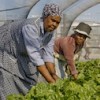
SOUTH AFRICA: Greening Project Creates Income and Food Security
Frances Mandla is visibly filled with pride. Together with her colleague, Nouniform Nqevu, she stands tall and smiling in front of a wide bed of lush spinach. The harvest will be their ticket to a better life. A life where there is enough money to buy food, clothes and pay school fees.
Harvesting Water to Save Crops and Lives
Peter Kivuti, a 51-year-old farmer from Eastern Kenya, never relied on meteorological weather predictions all his life - until three years ago. It was then that rainfall in the region become less predictable.
MEXICO: Responsible Tourism in a Lost Rural Paradise
It's a mixture of volunteer work and tourism. The visitor pays to spend a few weeks in contact with nature and carry out the chores of an organic farm. The idea behind it all is to cultivate environmental awareness.« Previous Page — Next Page »


Through our global network of local writers, we are continuing our award-winning coverage of global and local environmental challenges, with a focus on the people for whom the ecosphere matters in a direct way: rural dwellers who have little means to protect themselves against adverse conditions; communities that need to switch to sustainable development in order to survive; poor women and children, who are the most vulnerable in natural disasters. Sponsored by the United Nations Environment Program (UNEP), the United Nations Development Program (UNDP) and The World Bank (WB), IPS also maintains the award-winning Tierramérica, a specialised information service on environment and development.

The Week with IPS

Tracking global progress towards a sustainable world


