
Friday, November 20, 2026



News and Views from the Global South
Environment
SOUTH AFRICA: Coal – A New Solution to Fuel Problems?
A new solution to power and fuel problems worldwide may be developed by using a resource long characterised as dirty and non-renewable: coal.IRAQ: After False Promises, the Heat Is On
Iraqis promised development with the ouster of Saddam Hussein and the arrival of the U.S. are now suffering lack of development as never before. And where it hurts every moment is through the collapse of power supply.
MOZAMBIQUE: BHP Billiton Plans Six Month Bypass of Smelter Smokestack Scrubbers
Civil society groups are challenging a six-month authorisation granted aluminium giant BHP Billiton to emit potentially dangerous fumes from its Mozal smelter into the air without treating them first.
Arctic Ice in Death Spiral
The carbon dioxide emissions from burning fossil fuels have melted the Arctic sea ice to its lowest volume since before the rise of human civilisation, dangerously upsetting the energy balance of the entire planet, climate scientists are reporting.
AFRICA: Liberalised Services Still Require Proper Regulations
With African countries' trade remaining inordinately dependent on natural resources exports, their economies could benefit from liberalisation of trade in services but only as long as proper domestic regulatory frameworks are put in place, some trade experts argue.
Renewable Energy a Remedy for Economic Crisis
Spain is one of the world's leading producers of photovoltaic energy, with installed potential of 3,200 megawatts.Ecobreves – BRAZIL: New Weapon Against Mercury Contamination
Removing mercury from water, petroleum and natural gas, without leaving additional toxic waste, is now possible with a technique developed at the Alberto Luiz Coimbra Institute for Engineering Research, at the Federal University of Rio de Janeiro.Ecobreves – MEXICO: Environmental Budget Cuts Face Criticism
The 2011 budget for Mexico's Secretariat (ministry) of Environment and Natural Resources is insufficient to tend to existing and urgent needs, according to the watchdog group Greenpeace Mexico.Ecobreves – HONDURAS: China to Finance Ambitious Hydroelectric Project
The government of Honduras announced the construction of the Patuca I, II and III hydroelectric dam, over the course of three years beginning January 2011 at a cost of one billion dollars financed by a Chinese firm.Ecobreves – ARGENTINA: Infrastructure Plan Ignores Town
Residents of a town of 400 people in the northeastern Argentine province of Chaco faced repression and legal charges for their opposition to an electrical transmission line through their community.
INDIA: Jatropha Boom Yields Tough Lessons
With a gas-guzzler of an economy, India had been spending tens of billions of dollars annually to import petroleum. And so its 2009 policy on biofuels mandated that by 2017, India would have enough biofuel production to cover at least 20 percent of the country’s oil consumption.
ARGENTINA: Fighting to Save Glaciers as They Retreat
Argentina's glaciers, along with Chile's the most extensive of South America, manifest the damage caused by climate change, while they also face threats from mining and major transportation infrastructure projects. A law to protect them has been postponed yet again.ARGENTINA: "A Casino Is Not Progress"
A small fishing community in the northern Argentine province of Chaco is pressing for a sustainable development programme to preserve their simple way of life and the natural habitat, and fighting a mega-investment project that would draw upscale tourism instead of the people who now come to seek peace and quiet on the weekends.Expectations Scaled Back for Cancun Climate Summit
When, following months of hype, ministers and negotiating teams arrived in Copenhagen last December for a summit on climate change, the expectations for what could be accomplished were unrealistic and made the successes that did occur seem less important than they were, says the climate chief of Mexico, which will host this year’s successor to the Copenhagen summit.
BRAZIL: Development Trumps Environment on Election Agenda
With Brazil's elections only about a fortnight away, there is already a clear winner: "developmentalism." This position espoused by the two main presidential candidates has relegated pressing environmental issues to a lowly place on the campaign agenda, in spite of the fact that the third contender represents the Green Party (PV).
AFRICA: “Future Lies in a Free Trade Area From Cape To Cairo”
African governments’ ambitious plan for a tripartite free trade area (FTA), stretching from South Africa to Egypt, could be more realistic than getting existing ineffective regional customs unions on the continent to work.
Record Temperatures Killing Caribbean Corals
The waters of the Caribbean Sea are the warmest on record and the region's imperilled corals are bleaching and beginning to die, experts warn.
HAITI: Hurricanes and the River Flowing
In the evening the lowering clouds burst. Through the night they loosed their torrents on the southeastern coast of Haiti.MALAYSIA: Plan to Use ‘Killer’ Mosquitoes vs Dengue Draws Fire
Genetically modified ‘terminator’ mosquitoes are the latest weapons that the Malaysian government wants to use against the deadly dengue fever, but activists and environmentalists say the public health risks of introducing a new ‘artificial’ strain of mosquito are far too high.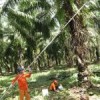
BRAZIL: Small-scale Palm Oil Production Is Women’s Work Too
"This isn't women's work," they told her. But Benedita Nascimento is now one of the most outstanding success stories of a family farming programme involving palm oil production in Brazil's eastern Amazon jungle.
Restoring Ethiopia’s Forest Cover
Mesfin Mengistu has been growing trees on his two-hectare farm in Menagesha Woreda for years.« Previous Page — Next Page »


Through our global network of local writers, we are continuing our award-winning coverage of global and local environmental challenges, with a focus on the people for whom the ecosphere matters in a direct way: rural dwellers who have little means to protect themselves against adverse conditions; communities that need to switch to sustainable development in order to survive; poor women and children, who are the most vulnerable in natural disasters. Sponsored by the United Nations Environment Program (UNEP), the United Nations Development Program (UNDP) and The World Bank (WB), IPS also maintains the award-winning Tierramérica, a specialised information service on environment and development.

The Week with IPS

Tracking global progress towards a sustainable world


