
Friday, November 20, 2026



News and Views from the Global South
Environment
BRAZIL: Oil Palm Industry Seeks to Atone for Its Sins
"Better 'dendê' than cattle," says Violeta dos Reis, who cooks and serves meals in the small eatery she runs with her husband in the community of Arauaí in Brazil's northern Amazon jungle. In this rural area, a new world is opening up for poor farmers.Geoengineering May Represent Earth’s Best “Plan B”
Beyond Copenhagen and Cancún, a different climate debate has been brewing. The outcome of this debate, however, will affect far more than the climate, and that is precisely why it is so contentious.Fatal Blast Puts Focus on Web of Gas Pipelines
A natural gas explosion in San Bruno, California that almost decimated an entire city earlier this month has fuelled concerns about the outdated, aging, and dangerous gas pipelines that underlie many U.S. cities.
AFRICA: Can Research Strike a Balance Between Food and Fuel Crops?
While researchers and farmers are still divided on the benefits of growing crops for biofuel production as Africa grapples with food security, Senegal is steadily working to balance the growing demands for food and biofuels.
AFRICA: In Search of Lasting Farming Solutions to Climate Change
In the semi-arid Laikipia district of Kenya’s Rift Valley province, research scientist Sarah Ogalleh Ayeri travels from one village to another, documenting methods used by peasant farmers as they attempt to adapt to changing climatic conditions.
Bonaire’s Resilient Reefs Offer Hope for Dying Corals
Scientists are closely examining the reefs of this island just north of Venezuela to determine why it has escaped the devastation that wiped out 85 percent of the Caribbean's corals since the 1970s.
ENVIRONMENT-BURMA: Flood Of Support Rises to Save Inle Lake
Monsoon rains might have brought welcome relief to the inhabitants of Inle Lake, but concerned Burmese groups – both government and non-governmental organisations alike – are rallying to preserve Burma’s second largest lake from drying up again, as it did from earlier this year due to prolonged drought.
CARIBBEAN: Sharing the Pain of Climate Change
With a recent study warning that the Caribbean could lose six percent of its Gross Domestic Product annually to the ravages of climate change, some experts say that a combination of adaptation funding and risk pooling is the region's best hope for the future.ENVIRONMENT-MALAYSIA: Tougher Wildlife Laws Not Enough, Say Activists
After years of losing the war against animal traffickers and poachers, Malaysia has finally responded with the passage of a new wildlife conservation law. But experts say it might be too late for some of this South-east Asian country’s endangered species.
Q&A: ‘Children Mustn’t See Fish Only in Pictures’
A casual visit to any of Europe's major supermarkets could leave a shopper with the impression that there is a boundless supply of fish in the continent's waters. The true picture is far less rosy. With about 88 percent of the European Union's fish stocks overexploited, EU vessels are travelling increasingly longer distances before bringing home their catches.PHILIPPINES: Citizens’ Raids Hauling in Smugglers, Illegal Fishers
Robert Chan shuffles a pile of legal briefs in his temporary office – a wooden cargo vessel that he and a team of volunteer paralegals had apprehended during an operation against smugglers of logs and other forest products from the central Philippine province of Palawan to Malaysia.CLIMATE CHANGE: Staying Afloat With Submarine Rice
South Asian rice farmers are switching to flood-tolerant strains of rice as insurance against inundations.Trinidad Scraps Controversial Smelter
The new government of Trinidad and Tobago wasted little time. In fact, Finance Minister Winston Dookeran took less than 30 seconds of a two-hour budget presentation to announce that the People's Partnership government, headed by the country's first female prime minister, Kamla Persad Bissessar, was scrapping the $66.6 million dollar smelter plant project involving investors from China and Brazil.MEXICO: Soaring Bottled Water Use Highlights Mistrust of Tap Water
More bottled water is consumed per capita in Mexico than in any other country in the world, according to a U.S. consultancy -- a fact that alarms non-governmental organisations because it highlights the lack of access to safe tap water.Water Strategy Key to Cities of the Future
A diverse group of more than 4,500 professionals from the water industry gathered here to send a resounding message: a sharp break from past practices of water distribution and wastewater management is needed to cope with the burgeoning population growth in cities and impending water scarcity.CHINA: Great Green Wall Rises, But Questions Remain
Dubbed "The Great Green Wall," a human-made ecological barrier designed to stop rapidly encroaching deserts and combat climate change is coming up across China. By 2050, the artificial forest is to stretch 400 million hectares – covering more than 42 percent of China’s landmass.Rising Energy Demand Hits Water Scarcity ‘Choke Point’
Meeting the growing demand for energy in the U.S., even through sustainable means, could entail greater threats to the environment, new research shows.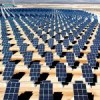
SPAIN: Renewable Energy a Remedy for Economic Crisis
One of the causes of Spain's deep economic crisis is the country's limited ability to export goods with high added value. But the pioneering renewable energy sector has the potential to fill that gap.CLIMATE CHANGE: Averting the Grimmest Scenarios
The catastrophic floods in Pakistan have added urgency to a high-level United Nations summit this week, with delegates from mostly South Asian nations convening Tuesday to call for increased technology transfer from richer countries and to compare strategies to avert the worst effects of climate change.Biodiversity Talks Bog Down over Genetic Resources
While officials meeting in Montreal, Canada failed to finalise a key protocol to the Convention on Biological Diversity (CBD) Tuesday, biodiversity is scheduled to be at the top of Wednesday's agenda of the U.N. General Assembly in New York.
Climate Justice Treks from Cochabamba to Cancun
The "people's" climate agenda that the Bolivian government and civil society produced at an April conference in Cochabamba has made its way to the official United Nations negotiating table. But its inclusion in a binding climate treaty is unlikely, say activists.« Previous Page — Next Page »


Through our global network of local writers, we are continuing our award-winning coverage of global and local environmental challenges, with a focus on the people for whom the ecosphere matters in a direct way: rural dwellers who have little means to protect themselves against adverse conditions; communities that need to switch to sustainable development in order to survive; poor women and children, who are the most vulnerable in natural disasters. Sponsored by the United Nations Environment Program (UNEP), the United Nations Development Program (UNDP) and The World Bank (WB), IPS also maintains the award-winning Tierramérica, a specialised information service on environment and development.

The Week with IPS

Tracking global progress towards a sustainable world


