
Friday, November 20, 2026



News and Views from the Global South
Environment
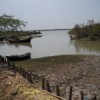
INDIA: Mangroves Face Severe Threat from Human Activities
When a super cyclone devastated the coastal districts of Orissa state in 1999, the government pledged to regenerate 3,000 hectares of mangrove. Or so forest official Chandra Sekhar Kar thought.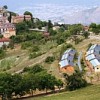
ITALY: Building a Sustainable Future With Straw and Wood
Pescomaggiore village, destroyed by the earthquake that hit the mountain region of L'Aquila in central Italy on Apr. 6, 2009, is now being rebuilt by its 40-odd inhabitants with straw and wood.INDONESIA: Natural Fertiliser from Microbes Boosts Crop Yields
Ten years after an Indonesian agriculturist discovered microbes capable of producing natural fertilisers, farmers attest that they have boosted agricultural production.
Q&A: Diversity the Best Option for Cuban Farmers
Cuban biodiversity scientist Humberto Ríos, one of the six recipients of the 2010 Goldman Environmental Prize, probably won't be able to collect the 150,000 dollars in prize money, though that setback is unlikely to cause him to lose any sleep -- or keep him from singing.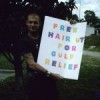
Fears Grow over Oil Spill’s Long-Term Effects on Food Chain
As oil continues gushing from the ocean floor into the Gulf of Mexico, with no sign of stopping until a new well is finished this August, scientists, environmentalists and local residents are beginning to reckon with the reality of a massive annihilation of sea creatures and wildlife.North-South Conservation Divide: “Show Me the Money”
Developing countries rich in plants and animals but poor in financial and technical resources refused to make binding commitments to halt the unraveling of the planet's biological infrastructure at the close of a major meeting Friday at the U.N.'s African headquarters in Nairobi.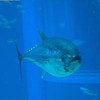
BIODIVERSITY: Imagine a World Without Bluefin Tuna
The bluefin tuna, an "apex predator" fish of the Atlantic Ocean and Mediterranean Sea, is condemned to extinction within two years by the inaction of the industrialised North and international regulatory bodies, predict marine biologists and environmentalists.Ecobreves – MEXICO: Science Mission to the Arctic
An international science team left last week for the Arctic Ocean to study the effects of climate change.Ecobreves – HONDURAS: Emerald Hummingbird Closer to Extinction
The threat of extinction hanging over the emerald hummingbird (Amazilia luciae) is growing, as evidenced in the latest report, which found just 500 mating pairs in its habitat of tropical arid forest in the northern Honduran province of Yoro.Ecobreves – ARGENTINA: Request for More Protected Nature Areas
The Argentine Wildlife Foundation has called upon the government of Cristina Fernández to increase the total coverage of protected areas, which currently remains below the minimum recommended by the Convention on Biological Diversity.
Market-Based Conservation Brewing in Nairobi
A project to create a Green Development Mechanism that would use the market to preserve biodiversity is seeing many of the same criticisms that were volleyed at a similar approach to climate change.PAKISTAN: Lake Disaster Triggers New Displacements
Up until Saturday the Attabad Lake in northern Pakistan had been rising one metre every day and was thus on the verge of breaking its banks, observed Lieutenant General Nadeem Ahmed, chairman of the National Disaster Management Authority (NDMA).
SOUTHERN AFRICA: Developing a Pristine River: The Okavango Basin
The welcome end to wars in the upper reaches of the Okavango River brings new pressures for development and the risk of unwelcome changes to the health of the river. A joint commission to manage the basin is developing tools to avoid this.
AFRICA: Small Scale Farmers Vulnerable to New Wheat Fungus
Smallholder wheat farmers are at risk as new mutations of a wheat-killing fungus have recently been discovered.
More Deepwater Disasters on the Horizon?
Despite a federal moratorium on offshore oil drilling, new permits and controversial environmental waivers for oil rigs continue to be granted, sparking criticism from policymakers and environmentalists.And Not a Drop to Drink for Palestinians
A new desalination facility has come up here on Israel's Mediterranean seashore, to soothe Israel's chronic fresh water shortage. An elaborate network of pipes beneath the beach reaches westward far into the sea. Eastward, it links up with the national water system.
URUGUAY: Environmental Partners
A wide range of strategies are being followed in the southeastern Uruguayan province of Rocha to counteract the environmental damages of activities like soy cultivation, plantation forestry and tourism. But challenges abound.
Fighting Off Criticism, IWC Looks to Rein in Whaling
It may seem odd that an outright ban on whaling would not be the most effective way to prevent the controversial practice, but that is exactly what the International Whaling Commission is betting on.PERU: Native Peoples’ Right to Consultation on Land Use Enshrined in Law
Indigenous peoples in Peru finally have a law that obliges the state to consult them about any project or provision that affects their territory or communities. But it will be difficult to implement, as the body charged with this task is in need of reforms, and additional legislation is needed before it can be fully enforced.EUROPE: Cutting Emissions, and Costs
Deeper cuts to the European Union's greenhouse gas emissions than those approved by its governments would be less expensive than previously thought, according to a new analysis.ENVIRONMENT-SRI LANKA: Saving the Island’s Remaining Coral Reefs
It is Saturday morning and the Pollhena beach, 160 kilometres south of the capital Colombo, is jampacked as usual with local and foreign tourists alike, who are either playing in the sand or bathing in its calm, shallow water, which is gleaming under the sunlight.« Previous Page — Next Page »


Through our global network of local writers, we are continuing our award-winning coverage of global and local environmental challenges, with a focus on the people for whom the ecosphere matters in a direct way: rural dwellers who have little means to protect themselves against adverse conditions; communities that need to switch to sustainable development in order to survive; poor women and children, who are the most vulnerable in natural disasters. Sponsored by the United Nations Environment Program (UNEP), the United Nations Development Program (UNDP) and The World Bank (WB), IPS also maintains the award-winning Tierramérica, a specialised information service on environment and development.

The Week with IPS

Tracking global progress towards a sustainable world


