
Friday, November 20, 2026



News and Views from the Global South
Environment
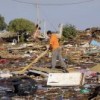
CHILE: Cracks Exposed in Readiness Plan
Inadequacies in technical equipment, specialised human resources, institutional coordination, land zoning and citizen awareness were all laid bare by the major earthquake and subsequent tsunami on Feb. 27 in central and southern Chile.ENVIRONMENT-INDIA: All Eyes on Forest Protection Body
Seemingly unstoppable development has made a mockery of the protected status of this southern Indian region, which houses vast biodiversity and some of the finest examples of moist deciduous and tropical forests.
Cracks in the Readiness Plan of the 'Chilean Miracle'
Chile still lacks experts capable of operating new anti-seismic technologies and the ability to disseminate emergency information among officials and the population.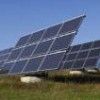
Latin America Builds Another Energy Capital
Generating electricity from the sun and from the wind is taking off with Latin American projects that include the region's own technology and manufacturing.Ecobreves – HONDURAS: Promoting Quake-Resistant Construction
Honduran lawmakers, entrepreneurs and the government's emergency commission, COPECO, are promoting new regulations to ensure construction of earthquake-resistant buildings.Ecobreves – VENEZUELA: Drought Hurts Tourism Marvels
The Catatumbo lightning, an electrical storm that produces 1.6 million bolts each year in northwest Venezuela, disappeared in January as a result of the intense drought that the country continues to suffer.Ecobreves – CHILE: New Clean Air Standards
Chile's National Environmental Commission approved on Mar. 9 a new standard for environmental quality for particulate matter of less than 2.5 microns, the size that is most harmful to human health when inhaled.RIGHTS-GUATEMALA: ‘Our Lives Are Cut Short at a Stroke’
"This is a time of great tension because we know that at any moment, when we least expect it, our lives can be cut short at a stroke," Tito Gálvez, a leader in the Resistance Front for the Defence of Natural Resources and Rights of the Guatemalan Peoples (FRENA), told IPS.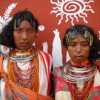
ENVIRONMENT-INDIA: Law on Forest Rights Fails to Deliver
A four-year-old landmark law that was supposed to bring profound changes in the lives of India’s tribal and forest-dwelling peoples has failed to deliver on that promise.BIODIVERSITY: Lucrative Shark Trade Under Scrutiny
As climate change transforms the acidity and oxygen levels of the world's waters with devastating effects for some marine species, others are facing an even more immediate threat from human consumption.ECUADOR: Native Leaders Call for Anti-Government Protests
"This is not the end. It is not even the beginning of the end. But it is, perhaps, the end of the beginning." The words of British Prime Minister Winston Churchill after the 1942 defeat of Germany's forces in Africa are an apt description of the situation between the government of Ecuadorean President Rafael Correa and the powerful Confederation of Indigenous Nationalities of Ecuador (CONAIE).
INDONESIA: Waste Composting Project Blazes Cleaner Path
Battling the pain from a boil on his left thigh, 45-year-old Inggit Tukino pulled his two-wheeled cart through the overcrowded alleys of a slum in Rawabebek, Penjaringan hamlet in here North Jakarta.
EDUCATION-URUGUAY: Gardens of Knowledge
"Nature is wise, and if we take the time to observe it, we can learn so much" is the underlying philosophy of a number of innovative programmes being carried out in Uruguayan schools that are using gardens as a teaching resource, explained Edith Moraes, director of the national Primary Education Board.
TANZANIA: Weather Changes Turn Farming into Gamble with Nature
Changes in weather patterns have turned agriculture into a gamble with nature for Tanzanian farmers. Prolonged droughts and floods have made the lives of small-scale farmers, who don’t have access to irrigation, extremely difficult.FINANCE: Self-Policing of Extractive Industries a “Dismal” Failure
An international initiative that seeks to reform how governments profit from their natural resources should not reduce its existing standards of membership solely because candidate countries have been reluctant or incapable of meeting them, Human Rights Watch (HRW) said on Tuesday.
RIGHTS: “Famine Marriages” Just One Byproduct of Climate Change
The negative fallout from climate change is having a devastatingly lopsided impact on women compared to men, from higher death rates during natural disasters to heavier household and care burdens.
ENVIRONMENT-UGANDA: Landslides – Experts Warn Worst is Yet to Come
Fourteen-year-old Isaac Wadyegere of Bundesi village in Bududa district woke up to a rainy and chilly Monday morning and went to school as usual. But Mar. 1 was not a usual day in eastern Uganda.ECUADOR: Avatar Downfall a Blow for Indigenous Communities
Science fiction blockbuster Avatar was the big loser in the Oscar awards ceremony - not only a blow for director James Cameron but also seen as a symbolic reverse in the struggle to recover Amazon rainforest areas in Ecuador from the effects of oil pollution.
PERU: Suspension of Mining Operation Merely a Placebo
Although the Peruvian government reported that it had suspended the exploration activities of the Afrodita mining company in the country's northern Amazon jungle region to avoid further protests by local indigenous people, officials took no actual steps to bring the firm's work to a halt.
ENVIRONMENT: Violent Backlash Against Climate Scientists
Climate change science has come under full-scale attack in a last-ditch effort to delay or prevent action by the U.S. government against global warming, experts warn.MALAWI: Patrilineal Inheritance Prevents Women’s Access to Land
Mercy Gondwe, 51, from Rumphi in northern Malawi, was married for 34 years. When her husband died in 2008, she assumed she would inherit the land they had been cultivating together since they got married. But this was not the case.« Previous Page — Next Page »


Through our global network of local writers, we are continuing our award-winning coverage of global and local environmental challenges, with a focus on the people for whom the ecosphere matters in a direct way: rural dwellers who have little means to protect themselves against adverse conditions; communities that need to switch to sustainable development in order to survive; poor women and children, who are the most vulnerable in natural disasters. Sponsored by the United Nations Environment Program (UNEP), the United Nations Development Program (UNDP) and The World Bank (WB), IPS also maintains the award-winning Tierramérica, a specialised information service on environment and development.

The Week with IPS

Tracking global progress towards a sustainable world


