
Friday, November 20, 2026



News and Views from the Global South
Environment
DEVELOPMENT-SRI LANKA: Water Woes Fall on Women’s Shoulders
As a wife of a rice farmer and mother of two children aged nine and two, Sanjeevani Bandara’s days are packed with chores. Yet while she used to be able to keep up with all she has to do in a day, this Sri Lankan mother now finds herself struggling to accomplish even the most basic tasks.ENVIRONMENT-MEXICO: Green Areas to the Highest Bidder
Activists in Mexico complain that the deforestation threatening the environmental health of Mexico has been accentuated by the granting of public areas to private companies.EUROPE: Green Finance Wise, or Otherwise
A plan to give the European Union's lending arm a beefed-up mandate for financing the fight against climate change has drawn a sceptical response from campaigners on green and economic justice issues.
Violent Backlash Against Climate Scientists
From death threats to aggressive discrediting in the press, disaster has hit the IPCC, the global scientific panel dedicated to studying climate change - and it is now finding ways to regroup and respond.Ecobreves – BRAZIL: Accelerated Deforestation in Northeast
The Caatinga, the only biome that is exclusively Brazilian and vulnerable due to its arid climate, lost 26,576 square kilometers of forest from 2002 to 2008, with just 53.6 percent of its original forest intact.Ecobreves – HONDURAS: Forest Authority Powerless Against Fires
Officials from the government's Forest Conservation Institute (ICF) declared themselves incapable of controlling forest fires in Honduras, due to lack of human and logistical resources.Ecobreves – ARGENTINA: Movement of Toxic Waste Denounced
The Argentine Environmental Defense Foundation issued an alert about the removal of toxic materials from an abandoned vegetable oil production plant in the central province of Córdoba.Ecobreves – MEXICO: Festival to Promote Green Commerce
A hundred sustainable producers will gather Mar. 13 at Ecofest, the first eco-festival in the Mexican capital, with the goal of promoting consumption of ecological products.
MEXICO: Scientists Reinvent the Corn Tortilla
The process of making corn tortillas - the filling, age-old traditional food throughout much of Mexico and Central America - pollutes huge volumes of water and consumes a great deal of energy.MALAWI: Climate Change Is Changing Farming Methods
As they slept soundly on the night of Feb. 28, a family of four was killed when their house collapsed over their heads in Malawi’s southern district of Chikhwawa.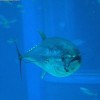
BIODIVERSITY: CITES Faces Political Storm over Tuna Ban
The vast majority of the species protected by the Convention on International Trade in Endangered Species of Wild Fauna and Flora, or CITES, live on land, but as marine species come under increasing pressure from unsustainable fishing and a range of climate change-related threats that focus is beginning to shift.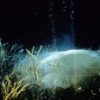
CLIMATE CHANGE: Arctic Shelf Leaking Potent Greenhouse Gas
The frozen cap trapping billions of tonnes of methane under the cold waters of the Arctic Ocean is leaking and venting the powerful greenhouse gas into the atmosphere, new research shows.LATIN AMERICA: Canada Moves to Oversee Mining Firms
Amidst allegations that Canadian mining companies operating in Latin America have been complicit in the murders and harassment of activists, several positive developments in Canada are seen as a source of hope that firms may begin to be held accountable on human rights and environmental questions.
UGANDA: Pressure Mounts to Make Public Oil Agreements
Uganda’s members of parliament (MPs) are pressurising government to make public details of oil production-sharing agreements it signed with various international oil companies.
CLIMATE: The Thirsty Caribbean
Caribbean countries are considering options like desalination plants and cloud seeding to confront a drought that threatens the regional economy and which experts warned about years ago.DR-CONGO: EU Urged to Ban ‘Conflict Minerals’
After the United States senate’s move to stem the flow of money from mineral mines fuelling the brutal civil war in the Democratic Republic of Congo (DRC), the watchdog group Global Witness (GW) is calling on Europe to follow suit.CHILE: Cost of Rebuilding Still Unclear
Chile has begun to think about the costs and challenges of rebuilding a large part of the areas hit by the Feb. 27 earthquake and tsunami, while rescue and aid operations continue.ENVIRONMENT-LEBANON: Coastal Pollution Threatens Fisherfolk
Pollution, oil spills and difficult living conditions are some of the challenges that fishermen in this eastern Mediterranean country face daily.
ENVIRONMENT: Wanted – An Effective Multilateral System
The echoes of failure still sounding from the Copenhagen summit on climate change in December are spurring efforts to reform the international legal framework. Civil society groups are demanding a new, more agile system that is both influential and effective.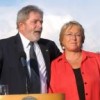
CHILE: A Tidal Wave of Solidarity
Chile has been wrapped in a blanket of international solidarity, while offers of cooperation for the relief of victims and the reconstruction of the country shower down upon it, after the devastating Feb. 27 earthquake and tsunami.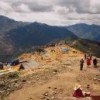
PERU: Relocating Entire Villages for Mines, Dams
Hundreds of Peruvian communities were displaced as they fled the 1980-2000 civil war. Today the government is pushing for urgent passage of a law that would facilitate the relocation of entire villages or neighbourhoods in mineral or energy-rich areas.« Previous Page — Next Page »


Through our global network of local writers, we are continuing our award-winning coverage of global and local environmental challenges, with a focus on the people for whom the ecosphere matters in a direct way: rural dwellers who have little means to protect themselves against adverse conditions; communities that need to switch to sustainable development in order to survive; poor women and children, who are the most vulnerable in natural disasters. Sponsored by the United Nations Environment Program (UNEP), the United Nations Development Program (UNDP) and The World Bank (WB), IPS also maintains the award-winning Tierramérica, a specialised information service on environment and development.

The Week with IPS

Tracking global progress towards a sustainable world


