
Friday, November 20, 2026



News and Views from the Global South
Environment
CHILE: Assessing Quake Damages, Acknowledging Mistakes
While the number of victims of the severe earthquake and tsunami that hit Chile early Saturday has climbed to 723, government officials and experts admit that the catastrophe has highlighted institutional shortcomings and blunders.
PHILIPPINES: Green Measures Expose Bias Against Urban Poor
Edgar Borras sifts through his remaining possessions in a demolished shanty beside a Manila waterway, preparing to bring them to his wife and 12-year-old son who now live in a remote relocation site in a province outside the Philippine capital.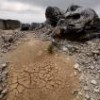
The Thirsty Caribbean
The countries of the Caribbean, facing the worst drought in decades, are adopting strict rationing rules, with jail time for those who violate them.
WANTED: An Effective Multilateral System for the Environment
Governments and civil society groups are recognizing the urgent need to strengthen global institutions to confront the challenges of climate change.
Scientists Reinvent the Corn Tortilla
Mexican scientists are working to make "nixtamalization," the ancestral technique for preparing maize to be made into tortillas, a more environmentally sustainable process.Ecobreves – BRAZIL: Machine for Separating Garbage
A machine invented by students at SENAI, an industrial training center in Concordia, in southern Brazil, can separate out garbage by type, replacing what can be dangerous manual work.Ecobreves – VENEZUELA: A Frog for Al Gore
A frog that measures less than two centimeters long, discovered in the western Venezuelan state of Táchira, was named Allobates algorei in honor of the former U.S. vice-president Al Gore (1993-2001), co-recipient of the 2007 Nobel Peace prize.Ecobreves – CHILE: Environmentalists Wary of New Government
Chilean environmentalists are concerned about the possible measures to be taken by the incoming environment minister María Ignacia Benítez, given her work as a private projects solicitor before the Environmental Impact Assessment System, some of which came under fire from citizen groups.Ecobreves – HONDURAS: Demanding an End to Illegal Logging
Civil society organizations are demanding that Honduran President Porfirio Lobo declare a total ban on lumber activities, in order to halt illegal logging of the nation's forests.US-IRAN: Looming Sanctions Could Hit Major Oil Firms
Earlier this month, Iran's ambassador to India said that his country continues to import gasoline from a private Indian oil refinery, even though the firm, Reliance Industries Ltd., had promised last year that it would stop gasoline exports to Iran, fearing U.S. sanctions.MEXICO: Ecological Smoke from Fuel Efficient Stoves
The lives of many rural women and children in Mexico are changing, and the country's high deforestation rate could be reduced, as inexpensive fuel-efficient cook stoves are being distributed by non-governmental organisations with corporate and government support.RUSSIA: Outpaced by China in Africa
Russian efforts to acquire oil and gas fields in Africa and prospect for minerals on the resource-rich continent have yielded little success over the past decade due to lack of a coherent national strategy, experts say.MALAWI: Extra Money Allocated for Drought Relief
Maize farmer Anita Yunus has lived near the Mulanje Mountain in southern Malawi for over 30 years. And she does not remember there ever being a drought in the area.
URUGUAY: A Return to Mud and Straw
More and more Uruguayans are keen on building ecological homes. The problem is that there is hardly any market or specialised labour for what is known as "bio-building."
PAKISTAN: Smoke-free Stoves A Godsend for Village Women
Forty-something and unlettered, Sona Siddiqi never imagined she would become the most sought-after woman in her village of Ramzan Katiar.
ENVIRONMENT-CHINA: Dam Plans Open Gates to Tough Choices Ahead
The Nu River flows from the Tibetan highlands through China’s western Yunnan province, cutting between two mountain ranges before rushing through Burma into the Andaman Sea. It is home to a third of the country’s ethnic groups and a diverse ecosystem of 7,000 species of plants and 80 rare or endangered animals and fish.NIGERIA: U.S. Concerned About Yar’Adua’s Return
U.S. officials expressed concern here Wednesday that the return of Nigerian President Umaru Yar'Adua, after a three-month stay in a Saudi hospital, could destabilise the oil-rich West African country.ENVIRONMENT: Window of Opportunity (Limited Time Only)
Two months after the Copenhagen conference on climate change, which was widely regarded as a fiasco, the international community is meeting on the Indonesian island of Bali to discuss biodiversity and ecosystems, promote the green economy and carry out institutional reforms.ENERGY: Coal-Fired Power on the Way Out?
The past two years have witnessed the emergence of a powerful movement opposing the construction of new coal-fired power plants in the United States.
CLIMATE-PERU: El Niño Throws a Tantrum
Peru's lack of disaster prevention policies and measures, combined with climate imbalances in South America, have led to the loss of dozens of lives and thousands of homes in this Andean country in the last few months.
HAITI: Secure Shelters Scarce as Rainy Season Looms
A cacophony of murmurs and cries echoed through the neighbourhoods of Haiti's capital city Monday night as a violent aftershock shook people awake. Ten minutes later, another tremor rocked the ground, this time more smoothly back and forth.« Previous Page — Next Page »


Through our global network of local writers, we are continuing our award-winning coverage of global and local environmental challenges, with a focus on the people for whom the ecosphere matters in a direct way: rural dwellers who have little means to protect themselves against adverse conditions; communities that need to switch to sustainable development in order to survive; poor women and children, who are the most vulnerable in natural disasters. Sponsored by the United Nations Environment Program (UNEP), the United Nations Development Program (UNDP) and The World Bank (WB), IPS also maintains the award-winning Tierramérica, a specialised information service on environment and development.

The Week with IPS

Tracking global progress towards a sustainable world


