
Saturday, November 21, 2026



News and Views from the Global South
Environment

Q&A: 'Time to De-Grow'
Serge Latouche, professor emeritus of economic science at the University of Paris-Sud, is one of the main proponents of "the society of de-growth".Ecobreves – BRAZIL: In Pursuit of Illegal Cattle in the Amazon
Seven meatpacking plants and two exporters in the northern Brazilian state of Pará have pledged not to accept meat or livestock from illegally deforested areas of the Amazon.Ecobreves – MEXICO: Transgenic Oversight Agency Awakens Doubts
Mexico has set up an agency to monitor the presence of genetically modified organisms, but environmentalists see it as a cosmetic effort.Ecobreves – ARGENTINA: Applause for Maritime Rules in Antarctica
The non-governmental Whale Conservation Institute of Argentina is celebrating the International Maritime Organization's decision to regulate navigation in Antarctica's waters in order to protect the environment.
Mapping the Riches of the Tropical Andes
The cartography of the biodiverse Northern and Central Andes of South America is the first step towards their environmental conservation.
Tequila Leaves Environmental Hangover
The environmental impact of tequila production is only recently being recognized by the industry, say observers.
TANZANIA: Solutions to Dar's Water Problems in the Pipeline
In the nine months since she moved to the Dar es Salaam neighbourhood of Kinondoni, Anna Christopher has only seen water running from her taps once.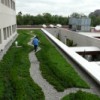
MEXICO: Green Therapy on the Rooftops
In the last two years a Mexico City hospital, kindergarten and municipal government office building have experimented with plant-covered rooftops. Today, workers and visitors are enjoying the benefits.WATER-TANZANIA: Who Pays the Piper?
When John Rubara* and his family moved into their new house in Dar es Salaam's Tabata Kimanga, a fast-growing middle-income neighbourhood in Temeke district, the water company disconnected their supply because the previous owner was in arrears.U.S.: Coal Power Hitting Roadblocks
As more and more states are turning against coal power facilities in the U.S., advocates have been using the legal system to halt new pending plants.CHINA: U.S. Nervous About China's Growing Footprint Across Africa
China’s "no strings attached" financial assistance to developing countries in Africa and Asia has come under scrutiny during the recent high-level talks between Chinese and US leaders.
Q&A: About Peas in a Pod
Slow Food, obviously, is the opposite of fast food. And it's a movement now with more than 100,000 members in 132 countries. But what does "slow food" mean in practical terms?BIODIVERSITY: Tight Controls Could Save Global Fisheries
The global race to catch the last fish left in the oceans has been successfully halted in a few regions and fish stocks have rebounded, a new landmark study has found.
MOROCCO: Farmers Overcome Water Scarcity
Researchers in the central Moroccan region Beni Mellal are introducing new agricultural techniques that increase production while reducing water usage.GERMANY: Nuclear Power Fails, And Nobody Notices
Seven German nuclear plants have failed to generate any electricity this month due to technical breakdowns. They have about half the production capacity of Germany's 17 nuclear reactors, but Germany did not suffer any power shortages.ENERGY: "Nuclear Steals Billions from Other Technologies"
Why is nuclear energy back on the table?ENVIRONMENT: Lavish US Lobbying Pushes Nuclear Energy
Climate change and the resulting need for low-carbon energy sources is driving the current interest in nuclear energy despite the industry's near universal legacy of staggering cost-overruns, technical difficulties and dependence on enormous government subsidies.
ZIMBABWE: Water Rationing Looms in Bulawayo
Bulawayo city council is to tighten a water rationing programme relaxed last year because residents are rapidly pushing up the city's daily consumption by using municipal water supplies for non-domestic activities.LEBANON: Global Warming Makes Mischief Worse
With its long, dry summers, Lebanon's diminishing woodlands are devastated by wild fires every year - and this year is no exception.
U.S.: Levee Uncertainty Weighs on Katrina’s Displaced
Today, the population of New Orleans is still about 175,000 people fewer than it was before Hurricane Katrina hit four years ago next month. Along with concerns about jobs and housing costs, the city's vulnerability to flooding has weighed heavily on the minds of many evacuees, many of whom have not returned.CLIMATE CHANGE: Publics See Warming as Urgent, Govts as Failing
A poll of 19 nations released here Wednesday reveals that majorities in most countries believe climate change should be a high priority for their governments, but relatively few thought that their leaders were doing enough about the problem.« Previous Page — Next Page »


Through our global network of local writers, we are continuing our award-winning coverage of global and local environmental challenges, with a focus on the people for whom the ecosphere matters in a direct way: rural dwellers who have little means to protect themselves against adverse conditions; communities that need to switch to sustainable development in order to survive; poor women and children, who are the most vulnerable in natural disasters. Sponsored by the United Nations Environment Program (UNEP), the United Nations Development Program (UNDP) and The World Bank (WB), IPS also maintains the award-winning Tierramérica, a specialised information service on environment and development.

The Week with IPS

Tracking global progress towards a sustainable world


