
Saturday, November 21, 2026



News and Views from the Global South
Environment
Ecobreves – VENEZUELA: Baby Terecay Turtles Head to Orinoco River
Venezuelan school children released 1,000 young terecay turtles (Podocnemis unifilis) on the banks of the Caura River, a major tributary of the Orinoco.Ecobreves – CUBA: Crop Varieties to Confront Hurricane Threat
Agricultural scientists are working in Cuba to develop crop varieties that can withstand hurricanes and are resistant to other climate adversities as part of a food security strategy.CLIMATE CHANGE: India’s Monsoon Predictions More Uncertain
Predicting the monsoons - a risky proposition despite the deployment of satellites and supercomputers - appears to have become iffier thanks to climate change.U.S.: House Passes Controversial Climate Legislation
Amid furious lobbying on both sides, the U.S. House of Representatives narrowly approved landmark legislation Friday designed to reduce the nation's greenhouse emissions that contribute to global warming 17 percent below 2005 levels by 2020 and 83 percent by 2050.
TECHNOLOGY: Rare Metals Could Trigger Next Trade War
Used in electric car motors and wind turbines, neodymium, a "rare earth metal," is at the epicentre of the race between wealthy and emerging nations to create green technologies, while poorer countries appear to be relegated to spectator status.ENVIRONMENT: Japan to Take Leadership Role Toward Copenhagen
Environment Minister Tetsuo Saito talked to IPS about Japan giving technical and financial support to developing countries and its goal of cutting its greenhouse emissions by 15 percent below 2005 levels by 2020. Japan is the world's fifth- largest greenhouse gas emitter.DEVELOPMENT: Green Energy for All by 2030?
While industrialised countries struggle to switch from climate-damaging, carbon-based energy to greener energy sources, much of the world is desperately energy poor, with 1.6 billion people having no access to electricity and 2.4 billion relying on wood and dung for heat and cooking.ASIA: Dams Across the Mekong Could Trigger a ‘Water War’
For now, the lower stretches of the Mekong River remain a symbol of peace and tranquillity in a region that was once bloodied by war. But for how long?
Q&A: Water Scarcity Threatens Half the Planet
If the world's governments fail to reach an immediate agreement on how to manage water resources by 2030, half the planet's population will not have enough water to survive, scientist Jonathan Baillie told Tierramérica.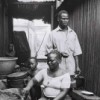
ECONOMY-NIGERIA: Fears of Further Pain
With no formal education, Mama Ibeji may not be tracking the global economic crisis in the newspapers. But from her little roadside restaurant in Makoko, a Lagos suburb, she can tell that all is not well with the Nigerian economy.
ENVIRONMENT-MALAWI: Elephants Out of Harm’s Way
A South African capture team has almost completed the translocation of a herd of elephants from the Phirilongwe forest reserve located in a communal management area in southern Malawi.INDIA: Opposition to ‘Nuclearism’ Builds Up
As India follows up on the historic civilian nuclear agreement it signed last year with the United States by drawing up hard commercial deals, opposition to ‘nuclearism’ is building up among activist groups.
ARGENTINA: Huge Loan to Flow into ‘Open Sewer’ River
Local residents and environmentalists are eyeing with cautious optimism a major loan from the World Bank to the Argentine government to clean up the Matanza-Riachuelo river that runs through Buenos Aires - the country's most polluted waterway.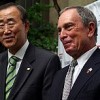
CLIMATE CHANGE: U.N. Launches “Seal the Deal” Campaign
Growing U.S. support for U.N. initiatives is raising hopes among those who want to see the world community take immediate and concrete action to tackle climate change, although their optimism is also tinged with scepticism.EAST TIMOR: UN Helps to Mitigate Disaster Risk
Disasters happen regularly in East Timor, but until now, the institutions called on to deal with them have struggled to effectively react to seasonal events that impact thousands of Timorese lives every year.
ECONOMY-ZAMBIA: Hard Times on the Copperbelt
Nowhere in Zambia is the impact of the global financial crisis being felt harder than in the copper and cobalt-rich province of the Copperbelt.ENVIRONMENT: No Breakthrough Seen in Whaling Stalemate
Environmental groups expressed little hope the participants at the 61st annual International Whaling Commission (IWC) meeting, beginning Monday in Madeira, Portugal, would reach a compromise that would reduce the number of whales killed each year.SOUTH AMERICA: Anti-Nuclear Activists to Form Common Front
Environmental organisations in Chile plan to revive the anti-nuclear movement in the Southern Cone of South America, in response to vigorous lobbying by corporations and politicians in favour of nuclear energy in the region.
Rare Metals Could Trigger Next Trade War
China beat the United States to the punch and has cornered production of rare metals used in environmentally friendly technologies that the world needs to curb climate-changing pollution.
Water Shortage Threatens Half the Planet
The paradox of development means that world population is consuming water to excess, while 2.8 billion people don't have nearly enough, says scientist Jonathan Baillie in this exclusive Tierramérica interview.
Million-Dollar Loan Flows Into Argentine River
The largest loan for environmental clean-up granted to a Latin American country could serve as a test of Argentina's will to recover the toxic Matanza-Riachuelo watershed.« Previous Page — Next Page »


Through our global network of local writers, we are continuing our award-winning coverage of global and local environmental challenges, with a focus on the people for whom the ecosphere matters in a direct way: rural dwellers who have little means to protect themselves against adverse conditions; communities that need to switch to sustainable development in order to survive; poor women and children, who are the most vulnerable in natural disasters. Sponsored by the United Nations Environment Program (UNEP), the United Nations Development Program (UNDP) and The World Bank (WB), IPS also maintains the award-winning Tierramérica, a specialised information service on environment and development.

The Week with IPS

Tracking global progress towards a sustainable world


