
Saturday, November 21, 2026



News and Views from the Global South
Environment
Ecobreves – BRAZIL: World Bank Cancels Loan to Meat Processing Plant
The International Finance Corporation, the private sector arm of the World Bank, rescinded 45 million dollars of financing granted in 2007 to the Grupo Bertin, Brazil's largest beef processing plant.Ecobreves – ARGENTINA: Polluting Mining Company Finances Public Universities
The Foundation for the Defense of the Environment, in the central Argentine province of Córdoba, reported that a mining company whose vice-president has been indicted for polluting is handing out millions of dollars to public universities.Ecobreves – MEXICO: Recession Puts Bike Plan on the Skids
The economic crisis has put the Mexico City government's plan to expand bicycle paths -- which now total 80 kilometers -- on hold. The expansion plan coasted to a halt in late 2007.Ecobreves – HONDURAS: Nearly 4,000 Tons of Garbage Daily
Honduras produces some 3,800 tons of garbage per day, which contributes to the reproduction of flies, mosquitoes and rats, which in turn transmit preventable diseases.ANGOLA: Military Raids Target Restive Oil-Rich Enclave
A new report issued by Human Rights Watch (HRW) Monday calls for the Angolan government to end the arrest and torture of suspected rebels in the oil-rich enclave of Cabinda.
ENVIRONMENT: Earth Can Generate Summer out of Winter
Iceland manages to produce tomatoes, paprika and cucumbers all year round by harnessing geothermal energy locally, even though the growing season is short.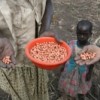
AGRICULTURE-AFRICA: Seeking Diversity, Resilience and Farmer Control
The Alliance for a Green Revolution in Africa (AGRA) claims that its "stress breeding", high-yield seed program and its emphasis on grassroots farmer input will boost agricultural production among poor, small scale farmers. But NGOs and environmentalists say AGRA’s Programme for Africa’s Seed System (PASS) is essentially a top-down, corporate driven approach that further threatens food security on the continent.PERU: Govt Partly Backs Down in Standoff with Native Groups
The Peruvian Congress repealed Thursday two of the most controversial decrees that sparked protests by indigenous groups which ended in bloodshed early this month.ENVIRONMENT-LATIN AMERICA: Green Parties Going It Alone
Fed up of waiting for existing parties to take up the cause of sustainable development and establish appropriate government policies to that end, environmental campaigners in Latin America have begun an increasingly high-profile battle for power in order to carry out their proposals themselves.HEALTH: Climate Change Brings New Diseases
As its name suggests, the West Nile virus, a leading cause of a form of meningitis and a neuro-invasive disease, has until recently been reported mostly in tropical and sub-tropical African regions. But it is now about to become a global virus.
Q&A: ‘Biodiversity Is Essential Ingredient in Agriculture’
The promotion of biodiversity in agriculture needs political backing, Emile Frison, Bioversity International Director-General tells IPS in an interview. This kind of biodiversity can provide food security and promote health, he says.BRAZIL: ‘Historic’ National Commitment to Wind Energy
A commitment signed by federal and state authorities in Brazil Thursday was described by the energy minister as a "historic step" towards promoting wind power.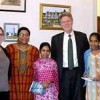
INDIA: US Congressmen Tell Dow to Clean Up Bhopal
A campaign in the United States led by two girl victims from Bhopal, highlighting lingering toxicity left behind by the 1984 gas disaster in their city, has paid off with a group of 27 members of the U.S. Congress asking Dow Chemicals to clean up the site.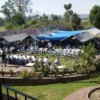
MEXICO: Scientists and Communities Forge Eco-Alliances
Graciela González answers phone calls, organises meetings and gives interviews as part of her work to save a river from ecological disaster. Thousands of kilometres away, farmer Gonzalo Rodríguez helps take air samples in a region polluted by petrochemicals.
POLITICS-GABON: Will Bongo’s Death Signal a New Chapter?
As Omar Bongo Ondimba, the Gabonese president who died at age 73 in Barcelona on Jun. 8, is buried in Franceville in the south-west of Gabon on Thursday, his 41-year-reign as absolute ruler of this oil-producing country of 1.5 million has received mixed reviews.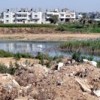
MIDEAST: Attack on Water Brings Sanitation Crisis
'Biddun mey, fish heyya', they say in Arabic for a universal truth: 'Without water, there is no life'.U.S.: Govt Report Calls for Swift Action to Avoid Climate Chaos
Fiercer heat waves and wildfires in the U.S. western states, bigger storm surges along the country’s coasts, and disruptions to energy, water and transportation systems are just some of the expected impacts of climate change, according to a new White House report that marks the first scientific statement from the Barack Obama administration acknowledging that the problem is already directly impacting U.S. citizens.DEVELOPMENT: China Reins in Dam Builders
Beijing has reined in China’s unbridled dam-building spree, issuing warnings to power-hungry developers that stimulating the economy in a time of crisis should not be used as an excuse to forego environmental reviews of big hydroelectric projects.TRINIDAD: Environmentalists Win Round in Smelter Plant Battle
Wayne Kublalsingh could hardly contain himself. Minutes after Trinidad's High Court issued a ruling Tuesday temporarily halting construction of a controversial smelter plant, Kublalsingh ripped open his shirt, revealing a jersey emblazoned with the words: "No Smelter".
Q&A: 'Variety Can Protect Against Famine'
How many varieties of date palm or melon exist? And why should we care? IPS spoke to three 'Guardians of Diversity' so named by Bioversity International for their contribution to conservation.
ARGENTINA: Out of the Frying Pan and Into the Engine
A town in Argentina has launched a programme that requires restaurants and other food producers to hand over their used vegetable oils to be distilled into biodiesel, which will be used to run the city's vehicles and public transportation.« Previous Page — Next Page »


Through our global network of local writers, we are continuing our award-winning coverage of global and local environmental challenges, with a focus on the people for whom the ecosphere matters in a direct way: rural dwellers who have little means to protect themselves against adverse conditions; communities that need to switch to sustainable development in order to survive; poor women and children, who are the most vulnerable in natural disasters. Sponsored by the United Nations Environment Program (UNEP), the United Nations Development Program (UNDP) and The World Bank (WB), IPS also maintains the award-winning Tierramérica, a specialised information service on environment and development.

The Week with IPS

Tracking global progress towards a sustainable world


