
Sunday, November 22, 2026



News and Views from the Global South
Environment
ENVIRONMENT: Dispute over Aluminium Plant Resurfaces
Controversy has arisen yet again over the construction of an aluminium plant in Iceland. In this case the proposed plant will be located at Helguvik in the southwest, and will be powered by geothermal energy rather than hydroelectric power.ENVIRONMENT: A Contest for the Biggest Loser
Toyota, the world's largest automaker, is facing the wrath of U.S. green groups and corporate watchdogs for its constant opposition to legislative proposals aimed at increasing fuel efficiency standards in California and other states.Ecobreves – VENEZUELA: Internships Among Lobsters and Turtles
Lobsters, turtles and shellfish will be the subject of study beginning in April as part of the final stretch of the Venezuelan school year, through an internship program at the biology station that Los Roques Science Foundation maintains in the archipelago of the same name in the Caribbean.Ecobreves – CHILE: Students Keep an Eye on Water
The Chilean Water and Energy Education and Culture Committee, involving the National Environment Commission and five other public agencies, launched the "Let's Take Care of Water" contest on Mar. 25, aimed at primary and secondary students in the capital.
Amazon Ghost Highway Revived
The decision of the Brazilian government to rebuild a highway nearly 900 kilometers long in the middle of the Amazon jungle has reopened a heated environmental debate.
In Search of Not-So-Toxic Mining
The decision of the Peruvian government to limit polluting emissions from the mining industry -- the engine of national economic growth -- is seen by health experts as a tepid effort.Ecobreves – BRAZIL: Supermarkets Help Protect Ozone Layer
Brazil's supermarkets agreed to reduce emissions of substances that deplete the ozone layer, in cooperation with the Environment Ministry and the refrigeration industry.Ecobreves – HONDURAS: Forestry Law in Limbo
The Honduran Forestry Law is adrift because the creation of the forestry conservation institute -- which would apply the law -- has yet to be defined. It would replace the governmental agency Honduran Corporation of Forest Development.MIDEAST: Palestinians Not Helping Themselves Either
A deal currently being discussed by Israel and Egypt would see Israel sever a major tie with the Gaza Strip. Under the agreement, Egypt would become the sole external supplier of power to Gaza, replacing Israel which is today the major provider of electricity to the coastal strip.DEVELOPMENT-MALAWI: Water Utility Over-Stretched and Under-Maintained
Long known as a peaceful and quiet city, especially at night, Blantyre is steadily losing its reputation for tranquility. Residents now find themselves waking up to the hustle and bustle of women carrying metal and plastic buckets as they move around the city most nights and early mornings in search of water.OIL-MEXICO: Floundering in Deep Waters
Billions of barrels of crude are lying under the deep seabed in the Gulf of Mexico, an area divided between Cuba, the United States and Mexico. But while the first two countries are approaching full commercial exploitation, the third is still trying to come up with a plan.
ENVIRONMENT-AUSTRALIA: Lights Out, Action! It’s Earth Hour
Organisers of Earth Hour 2008 estimate that in excess of 30 million people worldwide will take action on Saturday to raise awareness of how small changes can make big differences when it comes to climate change.CAMBODIA: Planned Lao Dam Raises Concerns on the Mekong
The Lao government’s decision earlier this year to press ahead with plans to build the Don Sahong dam on the mainstream of the Mekong River in southern Laos is causing major concern in Cambodia and internationally.
PERU: The Price of Mining Competitiveness
Peru has climbed from the 52nd to the 28th position in an international study on competitiveness in the global mining industry, surpassing Brazil, Argentina, Russia, South Africa and Bolivia. But how much is the local population in mineral-rich zones benefiting from the growth in competitiveness, and how does this phenomenon impact the environment?ENVIRONMENT-CHILE: Experts Call for Stronger Anti-Smog Measures
"It’s as if we were swimming at a beach unfit for bathing. For four or five months a year, the air is unfit to breathe in the Chilean capital, and the government throws out a lifejacket when people are in difficulties, so that they don’t drown," Patricio Pérez of the University of Santiago told IPS.
ARGENTINA-BRAZIL: Planned Binational Dam Under Fire
Feeling the pressure of rising energy demand, the governments of Argentina and Brazil are taking a fresh look at old plans for the Garabí hydroelectric dam on the Uruguay River, which environmentalists say would endanger the flow of this already highly exploited water source.BURKINA FASO: Ensuring That the Origin of Life Isn’t Also the End of It
"Water is the origin of life...I come from Central Africa where we have a lot of water, but it was when I came here that I really understood the meaning of this expression," says Antoinette Dinga Dzongo, the African Development Bank's representative in Burkina Faso, in reference to the need for improved water provision in this West African country.ENERGY-EUROPE: Nuclear Power Debate Heats Up
French President Nicolas Sarkozy and British Prime Minister Gordon Brown are about to agree on a new generation of nuclear power plants in London this week, and plan to export the technology to the rest of the world, according to unconfirmed reports.RUSSIA: Nuclear Deal with Egypt Signed
After years of diplomatic negotiations, Russia and Egypt finally signed an agreement Tuesday that paves the way for cooperation in the civilian nuclear energy sector.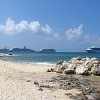
ENVIRONMENT: Floating Cities, But Without a Sewer System
Cruise ships are dumping sewage in the waters off Canada's coast, but the federal government seems content with voluntary compliance standards and loose regulations, according to civil society critics.RUSSIA: Price Fuels Gas War
A renewed Russian-Ukrainian gas conflict has been provisionally averted, but as Ukrainian politicians struggle for control of the gas sector, the next months are likely to bring more price wars.« Previous Page — Next Page »


Through our global network of local writers, we are continuing our award-winning coverage of global and local environmental challenges, with a focus on the people for whom the ecosphere matters in a direct way: rural dwellers who have little means to protect themselves against adverse conditions; communities that need to switch to sustainable development in order to survive; poor women and children, who are the most vulnerable in natural disasters. Sponsored by the United Nations Environment Program (UNEP), the United Nations Development Program (UNDP) and The World Bank (WB), IPS also maintains the award-winning Tierramérica, a specialised information service on environment and development.

The Week with IPS

Tracking global progress towards a sustainable world


