
Monday, November 23, 2026



News and Views from the Global South
Environment
PERU: Farmers, Informal Gold Miners Clash Over Pollution
There is a cemetery at the foot of this hill full of gold and silver near the village of Algamarca in northwestern Peru - an indication of the risks involved in informal mining, which uses highly toxic substances like cyanide and mercury.ENVIRONMENT: Oxy Faces Lawsuit Threat Over Amazon Toxins
Indigenous communities in the Peruvian Amazon are warning the U.S. oil giant Occidental Petroleum (Oxy) that it could soon face a lawsuit in the United States if it fails to clean up toxic waste in their tropical rainforest.GUYANA-SURINAME: Oil Riches Await “Law of Sea” Ruling
A much anticipated decision by a world court that will draw - once and for all - a maritime border between Guyana and Suriname could dramatically change the fortunes of the two nations if predictions about the abundance of oil and natural gas deposits prove true.CLIMATE CHANGE: ‘A Problem of Lifestyles’
An eleventh hour intervention by the Indian delegation at a major U.N. climate change conference here pushed to centre stage the need for a dramatic shift in lifestyles rather than dependence on green-friendly technology for solutions to global warming.BULGARIA: Addicted to Russia’s Energy
A member of the European Union since Jan 1 2007, Bulgaria still takes its cues on energy from Russia.CLIMATE CHANGE: More Business If Not Cleaner Air
The Community Development Carbon Fund (CDCF) of the World Bank and SAGUAPAC, a Bolivian sanitation and waste water management treatment cooperative, signed an agreement at the Carbon Expo here Thursday to reduce 20,000 tonnes of carbon dioxide equivalent by the year 2015.ENERGY-CENTRAL ASIA: Wrangling Over Pipelines Wrecks Early Prospects
A combination of East-West geopolitical rivalries and haggling between former Soviet republics is delaying the construction of a series of oil and gas pipelines that could help alleviate the world's future energy supply concerns.CLIMATE CHANGE-THAILAND: Submergence – Grim Reality for Coastal Folk
The sound of waves from the nearby sea is no comfort for the chief abbot of the Buddhist temple in this fishing village in the Gulf of Thailand.COTE D’IVOIRE: New Farms, New Lives – At an Environmental Cost
For Katienéfoha Yéo, two decades of cotton farming that resulted in nothing but debt were enough to get him on the road, out of Tanikaha in northern Côte d'Ivoire to Sarala in the west.BIODIVERSITY: Farming Will Make or Break the Food Chain
As the world population swells to nine billion by 2050, global biodiversity will be under extreme pressure unless new ways to grow food are developed, experts say.CLIMATE CHANGE: G8 Meet Asked to Show the Way Past Kyoto
The eight most industrialised countries and the five big developing ones must "send a clear signal" this year that they want agreement on a new international framework for tackling global warming, the world's leading policy advisor on climate change said here Wednesday.POLITICS-SUDAN: “Do Something Now, Because People Are Dying Every Day”
On a blazing spring day in New York's financial district, as executives hurry past in suits and ties, a handful of protestors position themselves directly in front of the headquarters of Fidelity, one of the leading investment firms in the United States.POLITICS: Caribbean Aims to Cash in on Face Time with Bush
On Jun. 20, Caribbean leaders will sit down with George W. Bush for the first full summit meeting with a U.S. president in a decade, and from all indications, they have a plethora of issues to put on the table, chief among them trade and disaster preparedness.DEVELOPMENT-BRAZIL: Rural Residents Find Riches in Saltwater
A village in Brazil's dry Northeast region is putting to the test a project that began with machine to desalinise the little water available, and has ended up creating food and income and promoting sustainable agriculture.
Fair Trade Begins to Bear Fruit
Fair trade is fast becoming an option for thousands of poor farmers in Guatemala, with thousands leaving behind the distortions of the international market.Ecobreves – GLOBAL: Investigating and Punishing Harm to Coral Reefs
International experts will test new protocols in Barbados in May to investigate damage to coral reefs, an ecosystem that is home to a quarter of all marine life, and to bring to justice those responsible for the harm.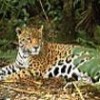
Jaguars on the Run
The majestic jaguar that once reigned in Argentina has seen its numbers reduced to just 300 animals, which are living in increasing isolation.Ecobreves – BRAZIL: Promoting a World Social Forum in Amazonia
The World Social Forum could be held in South America's Amazon region if the candidacy of the northern Brazilian city of Belém to host the massive civil society event is successful.Ecobreves – HONDURAS: Food Aid for Drought Zones
The World Food Program will deliver 1,400 tons of food to the people of three Honduran departments that lost their entire crops to drought blamed on the climate phenomenon known as El Niño, say officials.Ecobreves – ARGENTINA: Cities in Search of Lost Identity
Recuperating the landscape, smells, colors and other distinctive aspects of cities, which have become hidden in part by the consumer market, is the aim of a May 3-5 meeting in the northeastern Argentine city of Paraná.VENEZUELA: Bull Fights – Cultural Tradition or National Disgrace?
The roar of "Olé!" greeting a sweep of the cape and the rapturous applause when the bull meets its death at the matador's sword may soon become a thing of the past in Venezuela if the movement supporting a new animal protection law is successful.« Previous Page — Next Page »


Through our global network of local writers, we are continuing our award-winning coverage of global and local environmental challenges, with a focus on the people for whom the ecosphere matters in a direct way: rural dwellers who have little means to protect themselves against adverse conditions; communities that need to switch to sustainable development in order to survive; poor women and children, who are the most vulnerable in natural disasters. Sponsored by the United Nations Environment Program (UNEP), the United Nations Development Program (UNDP) and The World Bank (WB), IPS also maintains the award-winning Tierramérica, a specialised information service on environment and development.

The Week with IPS

Tracking global progress towards a sustainable world


