Languages
Wednesday, September 23, 2026



News and Views from the Global South
Water & Sanitation

Wasting & Dining: the New Water Dilemma
Concerns about the supply side of food systems are shifting from insufficient production and supply, to issues likely to affect food production in the medium and long term, such as water risks, global warming and environmental consequences.
Why We Should Care about Vulnerable Coastal Communities
According to UN statistics, approximately 40 per cent of the world’s population lives within 100 kilometers of the coast, and overall the world’s coastal population is increasing faster than the total global population. At the same time, global warming is causing sea levels to rise and increasing extreme weather incidents on coastlines.
Water, an Environmental Product of Agriculture in Brazil
For the first time in her life, retired physical education teacher Elizabeth Ribeiro planted a tree, thorny papaya, native to Brazil's central savanna.
Citizen Action in Europe’s Periphery: “An Antidote to Powerlessness”
Unjustified extra charges on drinking water, exploitation of labourers in the countryside and uncontrolled property speculation. In Europe’s periphery, citizens' initiatives show how all too prevalent modern-day ailments can be tackled successfully. More often than not with the help of artists.
Watering the Paris Agreement at COP24
Most people will experience climate change in the form of water – higher frequency and intensity of floods and droughts, an increase in waterborne diseases, and overloaded sewage systems that are unable to cope with new demands.
Northeast Nigeria: Urgent Need to Combat Deadly Cholera Outbreaks
The number of people who have been affected by cholera in northeast Nigeria has increased to 10,000. The disease is spreading quickly in congested displacement camps with limited access to proper sanitation facilities.
Diversifying Crops to Help Overcome Drought in Brazil
Dozens of trucks used to leave São Gonçalo every day, carrying the local agricultural production, mainly coconuts, to markets throughout Brazil, including the cities of Rio de Janeiro and São Paulo, more than 2,000 kilometers away.
Rainwater Harvesting Eases Daily Struggle in Argentina’s Chaco Region
"I've been used to hauling water since I was eight years old. Today, at 63, I still do it," says Antolín Soraire, a tall peasant farmer with a face ravaged by the sun who lives in Los Blancos, a town of a few dozen houses and wide dirt roads in the province of Salta, in northern Argentina.
Ambitious Agenda, Ambitious Financing? UNGA Shows a Long Way Still to Go for SDGs
There was a much-needed focus on financing the Sustainable Development Goals (SDGs) at the September 2018 opening of the United Nations General Assembly (UNGA).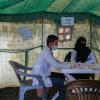
Cholera Threatens a Comeback Worldwide
Cholera outbreaks across history regularly killed a hundred thousand or more. It isn’t well known today because it was essentially eliminated in the Western world.
Sustainable Coastal Fisheries in the Pacific Depends on Improving Sanitation
At the mouth of the Mataniko River, which winds its way through the vibrant coastal port town of Honiara to the sea, is the sprawling informal community of Lord Howe Settlement, which hugs the banks of the estuary and seafront. A walk from the nearby main road to the beach involves a meandering route through narrow alleys between crowded dwellings, homes to about 630 people, which are clustered among the trees and overhang the water.
For the Survival of the Nile and its People
Running through eleven countries for 6,853 kilometres, the Nile is a lifeline for nearly half a billion people. But the river itself has been a source of tension and even conflict for countries and territories that lie along it and there have been rumours of “possible war for the Nile” for years now. While to date there has been no outbreak of irreversible tension, experts say that because of increasing changes in the climate a shared agreement needs to be reached on the redistribution of water soon.
Water: a Private Privilege, not a Community Resource
Water is becoming a private privilege rather than a community resource. It is also one of the world’s most precious resources. As vital to the survival of the human species as the air that we breathe.
The Earthquake in Indonesia: How Collaboration Impacts the Global Water Crisis
On Friday, September 28, the world first heard the devastating news out of Indonesia that a 7.5 magnitude earthquake had struck the island of Sulawesi. The quake caused substantial soil liquefaction — where the earth literally turned to liquid and started to flow — with entire homes sinking into the ground. It also triggered a tsunami, confirmed to be as high as 23 feet, that devastated the coastal areas.
Water Scarcity and Poor Water Management Makes Life Difficult for Egyptians
Local residents in Cairo are becoming concerned and discontent as water scarcity is reaching a critical point in the capital and the rest of the country.
Preservation of the Klamath River – a Life or Death Matter for the Yurok People
Fishermen are scarce in the Klamath River delta, unlike other fishing season, because climate change has driven up water temperatures which kills off the salmon, the flagship species of this region in northern California.
Q&A: Achieving Sustainable Goals: “In the End it is All About People. If People Want, it Will Happen.”
Today just over two billion people live without readily available, safe water supplies at home. And more than half the world’s population, roughly 4.3 billion people, live in areas where demand for water resources outstrips sustainable supplies for at least part of the year.
Q&A: As Water Scarcity Becomes the New Normal How Do We Manage This Scarce Resource?
Growing economies are thirsty economies. And water scarcity has become “the new normal” in many parts of the world, according to Torgny Holmgren executive director of the Stockholm International Water Institute (SIWI).
Salmon Farming, Questioned in Chile, Arrives to Argentina
Questioned for its environmental and health impacts in Chile, where it is one of the country's main economic activities, salmon farming is preparing to expand in Argentina from Norway, the world's largest farmed salmon producer. The news has triggered a strong reaction from civil society organisations.
Four-Year Drought Forces Cuba to Find Ways to Build Resilience
Eastern Cuba has suffered drought since time immemorial. But the western and central regions of the island used to be almost free of the phenomenon, until the latest drought that plagued this country between 2014 and 2017.
Why India’s Solar Water-Drawing ATMs and Irrigation Pumping Systems Offer Replicable Strategies
At New Delhi’s Savda Ghevra slum settlement, waterborne diseases have become less frequent thanks to solar-powered water ATMs that were installed here as a social enterprise venture three years ago.« Previous Page — Next Page »


The Week with IPS

NEXT STOP - SDGs
Tracking global progress towards a sustainable world
Tracking global progress towards a sustainable world
