Languages
Wednesday, September 23, 2026



News and Views from the Global South
Water & Sanitation
Climate Change Solutions Can’t Wait for U.S. Leadership
From tourism-dependent nations like Barbados to those rich with natural resources like Guyana, climate change poses one of the biggest challenges for the countries of the Caribbean.
Brazilian Dam Causes Too Much or Too Little Water in Amazon Villages
The Juruna indigenous village of Miratu mourned the death of Jarliel twice: once on October 26, when he drowned in the Xingu River, and the second time when the sacred burial ground was flooded by an unexpected rise in the river that crosses Brazil’s Amazon region.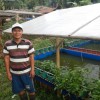
Indonesian Farmers Weather Climate Change with Conservation Agriculture
Fifty-two-year-old farmer Theresia Loda was effusive when asked how conservation agriculture has changed her economic situation.
How a Devastating Hurricane Led to St. Vincent’s First Sustainability School
In the 1980s, an institution for troubled Danish youth and a vocational school for Vincentians was built in Richmond Vale, an agricultural district on the northwestern tip of St. Vincent.
Sri Lanka’s Small Tea Farmers Turn Sustainable Land Managers
As the mercury rises higher, Kamakandalagi Leelavathi delves deeper into the lush green mass of the tea bushes. The past few afternoons there have been thunderstorms. So the 55-year-old tea picker in Uda Houpe tea garden of Sri Lanka’s Hatton region is rushing to complete her day’s task before the rain comes: harvesting 22 kgs of tea leaves.
Caribbean Faces Forecast for Prolonged Drought
The Caribbean Drought & Precipitation Monitoring Network (CDPMN) is warning countries in the region that the same abnormal climate conditions they have experienced over the last few years, which resulted in some of the worst drought in two decades, could continue this year.
1 in 4 Children Worldwide Facing Extremely Scarce Water by 2040
Warning that as many as 600 million children – one in four worldwide – will be living in areas with extremely scarce water by 2040, the United Nations children's agency has called on governments to take immediate measures to curb the impact on the lives of children.
Civil Society Representatives: “Water is the Foundation of our Life”
“Water is life”—a slogan that arose from the anti-Dakota Access Pipeline movement is one that resonates not only in the U.S., but around the world as millions still lack access to clean, safe water.
Climate Breaks All Records: Hottest Year, Lowest Ice, Highest Sea Level
Climate has, once more, broken all records, with the year 2016 making history-highest-ever global temperature, exceptionally low sea ice, unabated sea level rise and ocean heat. And what is even worse-- extreme and unusual trends continue in 2017.
Sanitation ‘Revolution’: A New Pay-Monthly Poop Removal System
Developing countries struggling to cope with huge volumes of human waste may finally get some relief, and a new business opportunity.
Don’t Understand Clouds? But You Should!
Obviously, there are so many issues and phenomena that have been brought up by growing impact of climate change that one would likely not think about. Some of them, however, are essential and would be good to learn about. For instance, the fact that clouds play a "pivotal role" in weather forecasts and warnings.
FEATURED VIDEO: World Water Day
 World Water Day on March 22nd gives us an opportunity to reflect on the one simple truth: water is life.
Water, the Great Enabler
I listened to a Haitian farmer share solutions with neighbouring water users on how best to allocate scarce water resources. I learned about the resolution of inter-village water conflicts after sitting in a longboat for hours on the Ganges Delta in Bangladesh. On the dry floodplains of Ethiopia, I heard how local solutions benefitted women and outperformed ‘imported’ ones.
Cities: a Hub for Wastewater Innovation
Water is a finite resource. With a growing population, an expanding global middle class and a rise in energy and industrial production, the demand for water is reaching new levels. According to the OECD, global demand for freshwater will increase by 55 percent between 2000 and 2050. By 2050 it is expected that roughly 6.4 billion people will live in cities, making urban water management an essential building block for resilience and sustainable growth.
No Water, No Life – Don’t Waste It!
During the final exams of Spanish official high school of journalists, a student was asked by the panel of professors-examiners: If scientists discover that there is water in Planet Mars, how would you announce this news, what would be your title? The student did not hesitate a second: “There is life in Mars!” The student was graduated with the highest score.
Asia’s Water Politics Near the Boiling Point
In Asia, it likely will not be straightforward water wars.
Three Times as Many Mobile Phones as Toilets in Africa
Though key to good health and economic wellbeing, water and sanitation remain less of a development priority in Africa, where high costs and poor policy implementation constrain getting clean water and flush toilets to millions.
Caribbean Stakes Future on Climate-Smart Agriculture
As Caribbean Community (CARICOM) countries continue to build on the momentum of the 2015 Paris Climate Agreement and the 22nd Conference of the Parties (COP22) of the United Nations Framework Convention on Climate Change (UNFCCC) in Marrakech in 2016, special emphasis is being placed on agriculture as outlined in their Intended Nationally Determined Contributions (INDCs).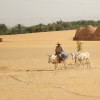
New Evidence Confirms Risk That Mideast May Become Uninhabitable
New evidence is deepening scientific fears, advanced few years ago, that the Middle East and North Africa risk becoming uninhabitable in a few decades, as accessible fresh water has fallen by two-thirds over the past 40 years.
Unhealthy Environment Causes 1 in 4 Child Deaths: WHO
Unhealthy environments - both inside and outside the home - cause the deaths of more than 1.7 million child under the age of five every year, according to two new reports released by the World Health Organization (WHO) Monday.
Caribbean Awaits Trump Moves on Climate Funding, Paris Deal
Caribbean leaders worry that with climate change sceptic Donald Trump in the White House, it will be more difficult for small island developing states facing the brunt of climate change to secure the financing necessary to adapt to and mitigate against it.« Previous Page — Next Page »


The Week with IPS

NEXT STOP - SDGs
Tracking global progress towards a sustainable world
Tracking global progress towards a sustainable world
