Languages
Monday, August 31, 2026



News and Views from the Global South
Featured
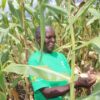
Field-Based Research Is a Lifeline for Zimbabwe’s Food Security
Agriculture sustains millions of people in Zimbabwe, serving as a vital source of both food and income. But climate-related pressures affecting land, crops, rainfall patterns, and increasing pest outbreaks are threatening smallholder farmers’ harvests, leaving them food insecure.
The GEF Leads Global Drive to Tackle Shipping Threat to Oceans
Under the warm waters off Tanzania’s Mafia Island, marine scientist Asha Mgeni hovers above a coral reef she has studied for years. Small fish dart through the currents. To most divers, the reef appears pristine. But Mgeni notices something unusual.
Norway’s Funding Cutoff Is a Wake-Up Call for the Plastics Treaty Negotiations
Norway’s reported decision to review and place on hold aspects of its funding to the United Nations Environment Programme (UNEP) should be understood as more than a budgetary matter. It is a political signal. It is also a warning that the global plastics treaty negotiations may now be approaching the point at which governments must decide whether the present UNEP process can still deliver the treaty they promised, or whether a different pathway is required.
Lawmakers From Three Continents Demand Action, Not Pledges, on Population and Health
The word heard most often at a two-day parliamentary forum in Cairo last week was not "commitment"; it was “follow-up.” And the difference mattered.
What Hungary’s New Pro-Democracy Government Means For Rule of Law
Péter Magyar, leader of the pro-democratic centre-right Tisza Party, which recently swept into power on an unstoppable wave of hope for change, has now been sworn into office as Hungary’s new Prime Minister.
Ambitious Great Green Wall Shows Slow, Steady Progress in Strengthening Landscapes, Improving Livelihoods
In 2021, Gadeja Shehu and about a hundred farmers in Garbadu village, Zamfara State in northwestern Nigeria, were invited by officials of the National Agency for the Great Green Wall to plant trees across a large stretch of land in their community.
PHILIPPINES: ‘A Protest Is One Day, but Organising Is the Thousands of Conversations That Make That Day Possible’
CIVICUS discusses Gen Z-led protests in the Philippines with Charles Zander, a 17-year-old climate justice activist from Bohol and youth campaigner for Greenpeace Philippines.
Want to Feed the World? Invest in Food Systems
As the global target to eliminate hunger by 2030 is fast slipping out of reach, investing in how the world feeds itself is the only way to ensure progress.
El Niño Likely to Return: the Case for Early Action
Climate models are converging: El Niño is likely to return by mid-2026 and could be strong. According to the World Meteorological Organization, it could emerge as early as May–July 2026, with several national hydrometeorological agencies in Asia and the Pacific already issuing alerts.
Hungary’s Long Road Back
When Péter Magyar took the stage in Budapest on the night of 12 April, he told the crowd they had ‘liberated Hungary’. The hyperbole seemed justified. His party, Tisza, had won a parliamentary supermajority on the highest turnout since Hungary’s first free election in 1990, ending 16 years of increasingly autocratic rule.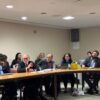
Nuclear ‘Close-Calls’ Prove Deterrence No Guarantee for Peace
The consequences of nuclear warfare would transcend borders and the impact would be felt across generations. Yet knowing this, member states, including nuclear-armed states, are increasingly flouting the nuclear taboo, while also relying heavily on deterrence to prevent fallout.
Empowering Youth Is the Fastest Path to Transforming Least Developed Countries
The future of the world’s least developed countries (LDCs) will be shaped by a critical choice they make today- strategic investment in their youth. Rich in human potential, the young people in LDCs embody ingenuity, resilience and ambition. With the right opportunities, they can transform challenges into opportunities and put their countries strongly on track to sustainable development.
The Mideast Conflict Spreads—Beyond the Strait of Hormuz & towards the UN Cafeteria
The 10-month-old Middle East conflict—which has triggered a rise in the cost of living worldwide, and an increase in the prices of food, groceries and gasoline—is likely to impose burdens on hundreds of UN staffers, delegates, journalists and civil society representatives-- and thousands more, during the General Assembly sessions beginning September.
Cleaning Up the Fields: Across Africa and Asia GEF is Helping Farmers Rewrite Their Pesticide Story
For decades, pesticides have been a quiet pillar of Malawi’s agriculture, guarding crops against pests, improving yields, and sustaining millions of livelihoods. But beneath this success story lay a troubling reality: weak regulation, unsafe handling practices, and growing threats to human health and the environment.
Why it is Time to Rewrite Africa’s Malaria Story
If you woke up with severe fever, would you stay home from work? What if the choice meant losing a week’s wages, or deciding if you could afford the trip to a doctor at all?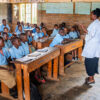
Data Gaps are Hiding the Most Excluded Children
In 2024, 273 million children, adolescents, and youth were out of school globally as per the UNESCO Institute for Statistics. While that is a staggering number, the figure is incomplete. The 2026 Global Education Monitoring report warns that the global out of school population may be undercounted by at least 13 million once humanitarian sources are used to correct data gaps in conflict-affected contexts.
VENEZUELA: ‘The Credit Goes to Detainees’ Families, Human Rights Organisations and the International Community’
CIVICUS discusses the status of political prisoners in Venezuela with Manuel Virgüez, director of Movimiento Vinotinto, a Venezuelan human rights organisation that works for citizen empowerment, democracy and justice.

Strengthening Financial Integrity: Why It Matters and What Needs to Change
A conversation with Toril-Iren Pedersen, Director of the UNDP Global Policy Centre for Governance, and Michael Jarvis, Executive Director of the Trust, Accountability, and Inclusion (TAI) Collaborative
How Santa Marta Finally Made Fossil Fuel Phase-Out Politically Discussable
The First Conference on Transitioning Away from Fossil Fuels in Santa Marta, Colombia, may eventually be remembered as a defining moment in global climate politics, not because it produced a treaty or a formal negotiation outcome, but because it changed the tone, structure, and ambition of the conversation itself.
100 Days, No Outcry – The Cost of Speaking Out
“We’ve abandoned this couple completely; we have not done even 1% of what they did for us all these years!” said journalist Asad Ali Toor.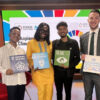
Africa’s Youth are Shaping the Continent’s Climate Future
Africa is on the frontlines of the climate crisis, warming faster than the global average and facing disproportionate climate impacts, despite contributing the least to global greenhouse gas emissions.« Previous Page — Next Page »


The Week with IPS

NEXT STOP - SDGs
Tracking global progress towards a sustainable world
Tracking global progress towards a sustainable world
