Languages
Wednesday, November 11, 2026



News and Views from the Global South
Featured
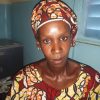
How Senegal is Providing Reproductive Health Services to those Who can Least Afford it
Pregnant with her second child, 30-year-old Ndiabou Niang was enduring pelvic pain, but couldn’t afford to access prenatal care in Diabe Salla, a village on the outskirts of the small town of Thilogne in north-east Senegal. Her husband was unemployed and her earnings of under CFAF 10,000 (17 USD) from selling seasonal fruits in the local market were insufficient to make ends meet.
Can Private Finance Really Serve Humanity?
The recent explosion of private finance has nursed the hope, dream or illusion that it can be mobilized for the public good, e.g., to achieve the Sustainable Development Goals, associated with Agenda 2030. However, such hopes ignore how changes in financial investing have deeply transformed corporations, national economies and prospects for the world economy and social progress.
Electrification of Transport: A Challenge for Urbanised Latin America
Electric transport, still limited in Latin America despite its urban benefits, could expand during the post-pandemic economic recovery, says Adalberto Maluf, president of the Brazilian Association of Electric Vehicles (ABVE).
Providing an Education in Favour of Senegal’s Girls
When Fatima* became pregnant in the middle of the school year and dropped out, she was disowned by her parents. Hers is a story that could have ended as another statistic of dropout rates among female learners in Senegal.
The Fuzia Story: Empowering Women Through the Fusion of Cultures and Ideas
A young and dynamic digital platform, named Fuzia, has attracted millions of women social media followers and 100,000 active global users with its eclectic mix of content. The platform showcases women’s talent and provides a support network.
On World Youth Skills Day, Don’t Forget the Importance of Soft Skills
It’s no secret that under pandemic lockdown for so many months, young people around the world have coped in tremendous ways. They have found new outlets for learning and creative channels for developing and using their skills.
Q&A: How Kazakhstan’s Transgender and Lesbian Women are Being Impacted by COVID-19
The coronavirus lockdown in Kazakhstan, and the resultant limited public oversight and limited publication engagement, has paved the way for the government to propose amendments to the country's laws around gender that could see the exclusion of the rights of the Lesbian, Gay, Bisexual, Transgender, and Queer (LGBTQ) community.
Lebanese Financial Crisis Validates Importance of Abolishing ‘Kafala’
They were promised the world but ended up in a Lebanese household. This is the story of many domestic workers in Lebanon. With a 70-year-old sponsor system still in place, domestic workers are tied to their employers with little or no basic rights. The ‘Kafala’ system is the major problem behind what we have been seeing in Beirut in the last months.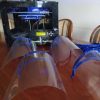
COVID-19 & Why We Care
Among the many compelling points made by Dr. Anthony Fauci in our “Rethinking Health” webinar this week was the absolute essentiality of global collaboration and transparency to contain the pandemic with which we are faced.
Beware the ‘Hunger’ to Access Indigenous Peoples’ Land and Resources for Post-COVID-19 Recovery
When governments and states begin their recovery journey from the economic downturn caused by the coronavirus pandemic, there might be a heightened threat to indigenous peoples, their land and resources. “The fear is [that] the economic recovery is based on access to land and natural resources,” Lola García-Alix, senior advisor on Global Governance at the International Work Group for Indigenous Affairs (IWGIA), told IPS.
Digital Agriculture Linking Indian Farmers to Consumers Can Impact Food Security
Digital technologies in agriculture are helping address the twin problems of food security and supply chain disruptions triggered by COVID-19 in India, while augmenting the income of smallholder farmers. Leveraging technology to match supply and demand of resources and food is key to overcoming the issues of starvation and food supply interruptions, Anshul Sushil, CEO and co-founder at Wizikey, a software that allows businesses to reach media directly, eliminating the middlemen, tells IPS.
Financialization: Tackling the Other Virus
The 1971 Bretton Woods (BW) system collapse opened the way for financial globalization and transnational financialization. Before the 1980s, most economies had similar shares of trade and financial openness, but cross-border financial transactions have been increasingly unrelated to trade since then.
In India, Climate Change is Increasing Refugees & Human Trafficking
In India the impacts of climate change induced extreme weather events on the lives and livelihood of people, particularly belonging to the poor and vulnerable sections of the society, are increasing alarmingly with each passing year.
The Quiet Survivors of a Global Pandemic
The issue of women’s rights, feminism and gender is complex and ongoing in most countries including Bangladesh. When I was asked to write about impact of COVID-19 on women and girls, I found myself drawn towards writing about women’s situation in general as that automatically impacts COVID-19 response as well. Since I am a woman who has been a part of many different cultures, yet a Bangali at heart, I am not only a survivor within its ranks but also responsible for being a part of the solution to the problems we face.
UN Chief Warns of Deadly Germs as Potential Bioterrorist Weapons
The coronavirus—which has claimed the lives of over 538,000 people and infected more than 11.6 million worldwide—has destabilized virtually every facet of human life ever since its outbreak in late December.
Online Education Moved to Top of Agenda by Indian State after IPS Reports Risks of Unequal Access
High up at an altitude of between 1,500 to 4,000 feet in India’s eastern Odisha state, live the Bonda people — one of this country’s most ancient tribes, who have barely altered their lifestyle in over a thousand years.
Non-formal Education Helps Senegalese Women Combat FGM and Harmful Practices
Growing up in Senegal’s southern Casamence region — a conflict zone — Fatou Ndiaye, now 43, often heard gunfire and watched fearfully as she saw people flee their villages. But what she dreaded more than a flying bullet was Female Genital Mutilation (FGM).
Donald Trump, Working Class Hero?
In his early February annual State of the Union address, US President Donald Trump typically hailed his own policies for increasing wages and jobs to achieve record low US unemployment. Directly appealing to labour for a second term, Trump claimed exclusive credit for the US “blue-collar boom”.
Security Council’s Overdue COVID-19 Ceasefire Resolution Must Put Women & Youth at Center
More than three months after UN Secretary General Antonio Guterres made an urgent appeal for a global ceasefire in response to the COVID-19 pandemic, the UN Security Council has finally passed a resolution supporting his call.
Impact of COVID-19 on Women and Children in South Asia
The onset of the coronavirus pandemic in early 2020 set off a series of health and economic crises that feed upon each other. The health crisis exacerbates the economic crisis by disrupting supply chains, throwing large number of people (particularly those working in the informal sector) out of work and closing down large numbers of enterprises – particularly micro, small and medium enterprises (MSME).
Has COVID-19 Pushed Women in Politics off Kenya’s Agenda?
In 2013, Alice Wahome ran in her third attempt to win the hotly-contested Kandara constituency parliamentary seat in Murang’a County, Central Kenya. As is typical of rural politics, the field was male-dominated, with the stakes being high for all candidates but more especially so for Wahome — no woman had ever occupied the Kandara constituency parliamentary seat.« Previous Page — Next Page »





The Week with IPS

NEXT STOP - SDGs
Tracking global progress towards a sustainable world
Tracking global progress towards a sustainable world
