Languages
Tuesday, November 17, 2026



News and Views from the Global South
Featured

Deep Discord at United Nations over Global Drug Policy
International drug conventions ultimately aim to ensure the health and welfare of humankind, UN Deputy Secretary-General Jan Eliasson said here Tuesday at the opening of a special three-day session on drugs known as UNGASS.
Arsenic Threat Looms Large in India: Well Switching Provides the Way Forward
An Indian Govt. Parliamentary Committee on Estimates on “Occurrence of High Arsenic (As) content in Groundwater” in December, 2014 stated that more than 70 million people in 96 districts in India is under threat due to As occurrence in groundwater.
Champions of Hygiene
Lydia Abuya, a tenant living in the Kaptembwa informal settlement west of Nakuru town, leaves one of the six on-plot toilets. She returns with a pail of water to splash away the waste.
UN Chief Seeks Fast-Paced Ratifications for Climate Change Treaty
Over 150 countries are expected to sign the Paris climate change agreement on April 22 but the historic treaty will not come into force until it has been ratified by 55 countries.
Opinion: The Empire’s New Clothes? Conjuring Growth from the TPP
While the main US motivation for the Trans Pacific Partnership (TPP) has been to counter China’s influence in the region, it has also been used to undermine the Doha ‘Development’ Round of trade negotiations to better advance politically influential US corporate interests. Hence, it has become all the more necessary to legitimize the TPP in terms of its ostensible benefits. Touted as a ‘gold standard’ 21st century trade deal, it is nonetheless necessary to ascertain what gains can really be expected and whether these exceed its costs.
Developing countries left out of global tax decisions
Over one hundred developing countries continue to be left out of global tax cooperation negotiations despite leaks such as the Panama papers showing the high cost of tax avoidance.
No Easy Outcomes in Brazil’s Political Crisis
Brazilian President Dilma Rousseff would appear to be, as she herself recently said, “a card out of the deck” of those in power, after the crushing defeat she suffered Sunday Apr. 17 in the lower house of Congress, which voted to impeach her. But Brazil’s political crisis is so complex that the final outcome is not a given.
Climate Change and the Middle East (II)
No Water in the Kingdom of the Two Seas—Nor Elsewhere
There is an oil producing country situated in the Gulf region, made of a cluster of islands. It is small, surface and population wise. But it holds the dubious privilege of ranking top of the list out of the 33 countries most likely to be water-stressed in the year 2040.

A World Drowning in Oil
Thanks to tensions between Saudi Arabia and Iran, major oil producers couldn’t come to an agreement in Doha to freeze their output to January levels to raise oil prices. The current low oil prices have a lot to do with the grim outlook for global economic growth while supply is growing. China, the second largest economy in the world, is slowing down. Not surprisingly, global oil demand is much lower at 94.8 million barrels a day vis-à-vis supply of 96.3 million barrels a day in the first quarter of 2016 according to the International Energy Agency.
Climate Change (I)
Will the Middle East Become ‘Uninhabitable’?
This is not about any alarming header—it is the dramatic conclusion of several scientific studies about the on-going climate change impact on the Middle East region, particularly in the Gulf area. The examples are stark.
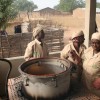
Innovations Boost Income for Women Rice Farmers
Salabanya Tabaitou no longer squints from the irritating wood smoke each time she has to parboil her rice paddy. Now Tabaitou feeds logs into a chute of a specially designed brick stove with a chimney that draws away the smoke. The stove with a stainless steel parboiling vessel cooks her rice in 20 minutes - something she would have spent two hours doing using the traditional method.
Maquilas Help Drive Industrialisation in Paraguay
“There were cases of people who stopped coming to work after receiving their first wages and then came back a few days later to ask if there was more work,” because they were used to casual work in the informal economy, said Ivonne Ginard.
The Unknown Fate of Thousands of Abducted Women and Girls in Nigeria
The plight of 219 Chibok schoolgirls abducted two years ago is all too common in Nigeria's conflict-affected north-eastern communities, and up to 7,000 women and girls might be living in abduction and sex slavery, senior United Nations officials on 14 April 2016 warned.
Can an Animal Heist Fable Help Solve the Middle East Crisis?
Make no mistake-the Middle East is the longest and perhaps the most complex crisis in recent History, this explaining the innumerable, successive –and frustrating- attempts to solve it.
OPINION: Wake Up! We Need Statesman and Values but We Get Selfish Politicians and Cynicism…
A total indifference has accompanied the number of refugees injured by Macedonian police in Idomeni, where more than 12 000 people, including 4 000 children have been trapped, since Austria asked Macedonia, Serbia, Croatia and Slovenia, to prevent the continuing passage of refugees. Austria has now informed the Italian government that it will send several hundred troops to its border with Italy.
Genetic Resources to Fight Climate Change
With Kenya’s meteorological records over the last 50 years indicating increased irregularity and variability in precipitation, the effects of changing climate are hitting hard. Rising temperatures as well other forms of extreme weather events in form of droughts and floods are a common feature.
Will the UN’s new leader stand for the powerful or the powerless?
After hundreds of questions were posed to nine candidates vying for the role of United Nations Secretary-General this week, a lasting question remains; will the UN’s new leader stand for the powerful or the powerless?Opinion: Robust Global Economic Recovery Needs Coordinated Policy Response
In the wake of releasing the IMF’s latest assessment of the global economy, Chief Economist Maurice Obstfeld noted in his blog, “Global growth continues, but at an increasingly disappointing pace that leaves the world economy more exposed to negative risks. Growth has been too slow for too long.”
Not So Smart Idea
As Bhubaneswar experiences scorching heat of 43.2 degrees Celsius in early April, 5 degrees above normal, 44-year-old Prasanti Behera barely sleeps at night. Two summers ago, a fire charred 50 homes in her slum and burnt in seconds US$600 she had painstakingly saved over two years for her daughter’s marriage.
Timor-Leste Brings Maritime Dispute with Australia to United Nations
Timor-Leste which won independence from Indonesia in 1999 is now engaged in a new struggle with Australia over rights to oil and gas reserves in the Timor Sea.
Land Tenure Still a Challenge for Women in Latin America
Rural women in Latin America continue to face serious obstacles to land tenure, which leave them vulnerable, despite their growing importance in food production and food security.« Previous Page — Next Page »


The Week with IPS

NEXT STOP - SDGs
Tracking global progress towards a sustainable world
Tracking global progress towards a sustainable world
