Languages
Sunday, September 27, 2026



News and Views from the Global South
Featured
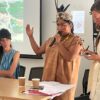
As Gold Prices Soar, Communities Pay the Price in Poisoned Rivers, Vanishing Forests and Organized Crime
The sweltering heat inside a London conference hall did not deter Indigenous leader Jackeline Mendoza Díaz from condemning the sheer destruction of the Peruvian Amazon. Her voice occasionally trembled with emotion but delivered a strong message — painting a picture far removed from the glittering gold bars traded in the world’s financial capitals.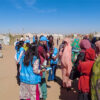
Three years of War in Sudan: A Crisis the World Can’t Ignore
Three years into the war in Sudan, survivors and human rights defenders are struggling to respond to overwhelming needs amid widespread violence, displacement, and limited global attention. As horrific violations and abuses intensify and those documenting them become targets, calls for accountability and sustained international engagement grow more urgent.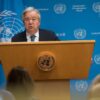
Autonomous Weapons: The Wave of the Future in Military Conflicts Worldwide
As the international community continues to weigh the good, the bad and the deadly in artificial intelligence (AI), which is spreading far and wide with apparently no guardrails, the United Nations is taking a closer look at the impact, both positive and negative, of AI.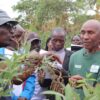
How Farmers Are Learning About Restoring Soils and Scaling Agroecology in Kenya
At Yumbuni Village in Kenya’s Makueni County, farmers from Vihiga and Kakamega counties have travelled over 560 kilometres to join their colleagues in Kathonzweni Ward and see the progress of experiments being carried out on different homemade organic fertilisers and other farm inputs.
Pride: Once Again a Protest
On the morning of 28 June, riot police sealed off Taksim Square with iron barriers and enforced bans on all weekend gatherings in Istanbul. Marchers pressed ahead anyway, re-emerging from side streets each time police dispersed them. By the end of the day police had detained at least 50 people, including a journalist. It was Istanbul Pride’s 24th edition, and the 12th year running that the authorities banned it outright.
Landmark Ruling Could Redefine Divorced Women’s Property Rights in Pakistan
A landmark Islamabad High Court ruling that recognised marriage as an economic partnership and awarded a divorced woman an equal share of assets acquired during marriage has triggered a legal and religious backlash, with Pakistan's law ministry challenging the judgment before the Federal Shariat Court, a constitutional court empowered to determine whether laws and judicial rulings conform to the Qur’an and Sunnah.
Arab Regions Remain the Most Underrepresented in the Global Trade System
Despite the importance of international trade as an engine for economic growth and development, only fourteen of the twenty-two Arab states are members of the World Trade Organization (WTO). The remaining Arab states risk missing out on opportunities for greater integration into the global economy and the multilateral trading system facilitated by the WTO.
From the Nuclear Age to the Age of Artificial Intelligence: Can Humanity Build a New Architecture for Peace?
More than eight decades after the atomic bombings of Hiroshima and Nagasaki ushered humanity into the nuclear age, the world is confronting another technological revolution whose consequences extend far beyond science and industry.
Europe’s Funding Question Puts Tanzania’s Fragile Democracy on Trial
Every evening just before sunset, Salima Kitwana hobbles into her backyard holding a photograph.
MEXICO: ‘Our Call for Justice for Our Missing Loved Ones Must Reach the World Just as World Cup Goals Do’
CIVICUS speaks about efforts to use the 2026 FIFA World Cup to highlight Mexico’s enforced disappearance crisis with Ana Enamorado, a Honduran national who continues to search for her missing son in Mexico, and founder of the Regional Network of Migrant Families.
The Next UN Secretary-General Must Break Not Only the Glass Ceiling, but Also the Culture of Patronage
As the United Nations (UN) Security Council prepares for its first round of closed-door straw polls this month to select the tenth Secretary-General, the organization stands at a critical crossroads. Multilateralism is fracturing under geopolitical gridlock, and the UN is battling a severe budgetary deficit driven by funding cuts.
Why Pastoral Production Requires Regional Coordination, Harmonised Policy
At the 64th sessions of the Subsidiary Bodies (SB64) under the UNFCCC in Bonn, Germany, the Local Communities and Indigenous Peoples Platform (LCIPP) underscored the importance of ethically and equitably incorporating indigenous values and knowledge and local knowledge systems such as pastoralism into climate policies and actions ahead of the 31st Conference of Parties on climate change (COP31).
Remember Your Humanity
Eighty years since the dawn of the nuclear age, which began with the first nuclear test in New Mexico, USA, and with the tragic atomic bombings of Hiroshima and Nagasaki, humanity faces a deep existential crisis. This crisis is much more unstable and unpredictable than the gravest Cold War confrontations. In 1955, when there were only three states with nuclear weapons and the first thermonuclear weapon was being developed, the Russell-Einstein Manifesto posed a profound question: “Shall we put an end to the human race; or shall mankind renounce war?” Today, with 9 states possessing nuclear weapons and several thousand thermonuclear devices, this question becomes an ultimate choice.
AI Helping Modernize Trade Across Asia and the Pacific, Though Adoption Gaps Remain
Artificial intelligence is reshaping trade processes across Asia and the Pacific. However, despite growing interest, most economies have yet to deploy the technology at scale, according to a new study by the United Nations Economic and Social Commission for Asia and the Pacific (ESCAP) and the Asian Development Bank (ADB).
Invasive Prickly Pear Turned into Food, Clean Energy Source
An international academic partnership is helping turn one of Laikipia County’s most destructive and invasive plants, the prickly pear cactus (Opuntia stricta), into a source of food security and clean energy while also helping end perennial resource conflict in the region.
Feeding Africa: Women Farmers Key to Ending Hunger
As FAO coordinates the implementation of the International Year of the Woman Farmer 2026, gender team leader Tacko Ndiaye discusses why investing in Africa’s women farmers is essential for food security, economic growth and creating more resilient agrifood systems
Roma Need Special Consideration After Ukraine War is Over
Governments, donors, NGOs, development banks and businesses recently gathered in Gdansk, Poland, to discuss reconstruction in Ukraine even as Russia’s full-scale invasion continues.
Inside GEF’s Blended Finance Push: Turning Public Money Into Private Capital Leverage
For most of the Eighth Global Environmental Facility (GEF) Assembly last month, the atmosphere inside Samarkand’s sprawling Congress Centre echoed a growing confidence of global environmental policymakers.
Towards a Human rights-Centred, Transformative Agenda Beyond 2030
The 2030 agenda cum SDGs are due to be completed in 2030, with negotiations towards a follow-up agenda to begin formally at the UN General Assembly in autumn 2027. Many direct or indirect discussions have, however, already begun, e.g. pluri-laterally at BRICS and G20 meetings and the EU; as well as at the UN in connection with the Summit of the Future, the Doha World Summit for Social Development, the Beyond GDP report; or in fora such as the Hamburg Sustainability Conference. Think tanks and academics, too, are brainstorming on how best to re-ignite a genuine commitment to the SDGs and at the same time reflect on the future.
CARICOM Leaders Gather in Saint Lucia as Caribbean Confronts Mounting Global, Regional Challenges
Caribbean leaders are meeting in Saint Lucia for their annual summit, confronting a convergence of global and regional challenges ranging from rising living costs and climate change to crime, food security and geopolitical tensions.
Africa’s Fourth Industrial Decade: From Political Mandate to Industrial Transformation
Amid shifting geopolitical, economic, and technological landscapes, it reflects growing international recognition that Africa’s sustainable industrial transformation is vital - not only for the continent’s future, but also for global prosperity.« Previous Page — Next Page »


The Week with IPS

NEXT STOP - SDGs
Tracking global progress towards a sustainable world
Tracking global progress towards a sustainable world
