Languages
Saturday, November 14, 2026



News and Views from the Global South
Gender
RIGHTS-LAOS: Improved Roads Exact A Price – Part 3
Lao women express their equality by being as mobile as men. The numbers astride motorbikes in particular, are the same as those of men. But there is a cost.CULTURE-IBEROAMERICA: Women MisPrized
"The judges are usually men, and they tend to prefer men's writing," Mexican journalist and novelist Elena Poniatowska, a perennial candidate for the Miguel de Cervantes Prize, said with a note of resignation in her voice.Q&A: Africa – High On Political Empowerment, Low On Education
"It is clear that there are huge discrepancies within Sub-Saharan Africa, but overall the region is doing extremely well in terms of political empowerment," says Saadia Zahidi, head of the Women Leaders and Gender Parity Programme at the World Economic Forum (WEF) in a telephone interview from Geneva.
Q&A: India’s Anti-Women Laws Dropping from the Books
The 30th anniversary of the Convention on the Elimination of All Forms of Discrimination Against Women (CEDAW) this month has brought women's rights champions from around the world to the United Nations to share their success stories. One is Sujata Manohar, who helped create a national law in India that bars sexual harassment in the workplace.
PERU: Women Workers Forced into Informal Economy
In Peru, 51 percent of all jobs are generated by the informal economy, a sector that has a female face, as more than 60 percent of the women workers in the country are forced into informality, with only 15 percent having health coverage and a mere four percent enjoying retirement benefits.
DOMINICAN REPUBLIC: Women Facing Increased Risk
Dominican organisations focused on the rights of women are bringing in assistance from all over Latin America to aid them in their fight against Article 30 in the recently approved constitution which states that the right to life is inviolable from conception until death.
HEALTH-BAHRAIN: Men Bring HIV Home
Umbassil* is unlike other engaged women. Instead of planning her wedding she is wondering where she will have her baby. She is not pregnant but she knows that Bahrain's maternity hospitals will not admit her because she is HIV positive.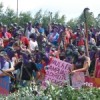
ENVIRONMENT: Tree Plantations Are Not Forests, Women Activists Say
Touted as "harvested forests," single-crop tree plantations are fast encroaching on the native forests and grasslands of Argentina, Brazil and Uruguay, affecting the environment and the lives of local communities, rural women say.INDIA: Towards an AIDS-Free Society, But at What Price?
As the global community observes World AIDS Day today, India is caught in a rancorous debate about a government scheme which mandates that all pregnant women in the country be tested for HIV so that its 1.2 billion people can have "an AIDS-free generation".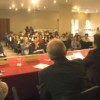
MEDIA-LATIN AMERICA: Women Deserve Better Press
"The press will change when they cease to report exclusively from a masculine point of view," Peru's deputy Minister for Women, Norma Añaños, told participants at an international seminar for journalists on "Women at Work, Women as Leaders", held in the Peruvian capital.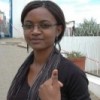
POLITICS-NAMIBIA: Born Frees Make their Mark
"It was like writing my first exam. I was nervous and didn’t want to make a mistake. I must have checked the ballot 10 times."Q&A: ‘You Have To Be Educated To Be A Leader’
Traffic flowing in and out of her office, each interruption addressed with effortless calm, the nurse in charge of Hospitalisation and Immunisation at Nyamata Health Center in Bugesera District, is a confident woman in her element.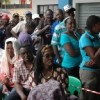
NAMIBIA: Waiting at the Polls
The Electoral Commission of Namibia (ECN) has again suspended the observer status of a human rights watchdog it accuses of lying about mistakes on the voter’s roll.WORLD AIDS DAY: Groups Urge Repeal of “Antiquated Colonial Laws”
On the heels of a new report by UNAIDS that the HIV virus is now infecting Caribbean men and women at an equal rate, activist groups are urging regional leaders to eliminate laws that further the stigmatisation associated with the deadly virus.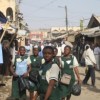
RIGHTS: Nigeria Failing To End Discrimination Against Women
Nigeria ratified the Convention on the Elimination of Discrimination Against Women (CEDAW) in 1985 without reservations. But few of its citizens have ever heard of the document. Day-to-day life for women in Nigeria is shaped less by international conventions than it is by the diverse cultures, traditions and religions found in the country.Q&A: CEDAW – Signed, Sealed and Largely Left on the Shelf
Mauritania formally adopted the Convention on the Elimination of Discrimination Against Women in 2001, but in the eight years since, it has had limited effect on the status of women.
SOUTH AFRICA: Legal Victory Offers Little Relief For Sex Workers
More than seven months after the Cape High Court ruled in favour of the Sex Workers Education and Advocacy Taskforce (SWEAT), interdicting the police for harassment and arrests, sex workers are losing the daily battles against police and criminal elements on the streets.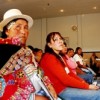
BOLIVIA: Women Clamour for Right to Land
Despite major advances in land distribution in Bolivia, single, widowed and undocumented women in this South American country have little chance of owning rural land due to the patriarchal traditions and customary practices of indigenous peoples, in violation of international instruments and conventions protecting women’s rights.
HONDURAS: Miracle in the Mangrove Forest
The beating sun in southern Honduras doesn't stop a group of women from throwing themselves into the task of protecting and recuperating a mangrove forest on the Pacific coast.BALKANS: Apologising to Sterilised Roma Women – Slovakia’s Turn
Rights activists are hoping a landmark announcement by the Czech government regretting forced sterilisation of Roma women in the past will push politicians in neighbouring Slovakia to follow suit.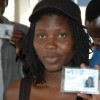
POLITICS-NAMIBIA: SWAPO’s Dominance Challenged
"Man RDP!" sighs Martha Hamukoto, sitting on the steps of a Windhoek office block. She is lamenting the breakaway faction, the Rally for Democracy and Progress (RDP).« Previous Page — Next Page »


Women make up half the world's population, but don't nearly share half of the world's wealth, well-being and opportunity. Two-thirds of the world poor are women, disproportionally exposing women to precarious living conditions, disease and unmitigated natural disasters. The media, meanwhile, remains a male-dominated sector in much of the world, contributing to women's voices lacking a crucial amplifier to put their concerns on political agendas and unleash the development potential of their ingenuity. Rather than then stereotypical victims of local and global forces, women are also organizer, innovators, conservators and community builders. These are some of their stories.

The Week with IPS

NEXT STOP - SDGs
Tracking global progress towards a sustainable world
Tracking global progress towards a sustainable world
