Languages
Thursday, October 22, 2026



News and Views from the Global South
Gender
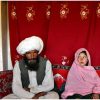
Daughters of a Lesser God (I) 800 Million Girls Forced to Be Mothers
Imagine your child, your daughter, being genitally mutilated and, further on, sold or even handed over for free to an older man who will force her to become a child mother, when her body is still far from being formed and thus able to bear with a so early pregnancy.
Is Asia and the Pacific Ready for the Global Climate Stage?
As the leaders of Asia and the Pacific prepare to head to Glasgow for the 26th United Nations Climate Change Conference of the Parties (COP26), they can be sure that our region will be in the spotlight: many of the most vulnerable countries to the impacts of climate change are located here; the seven G20 members from this region are responsible for over half of global GHG emissions; and five of the 10 top countries with the greatest historic responsibility for emissions since the beginning of the twentieth century are from Asia.
From Taliban to Taliban: Cycle of Hope, Despair on Women’s Rights
Secondary schools have reopened for boys but remain closed to the vast majority of girls. Women are banned from most employment; the Taliban government added insult to injury by saying women in their employ could keep their jobs only if they were in a role a man cannot fill—such as being an attendant in a women’s toilet. Women are mostly out of university, and due to new restrictions it is unclear when and how they can return. Many female teachers have been dismissed.
Mental Health Strategic Plan for Bangladesh: An Overview
Mental health and treating mental health conditions involves not only treating an individual’s ability to manage their thoughts, emotions, behaviors, and interactions with others, but also ensuring that the social, cultural, economic, political, and environmental conditions are in place through effective national policies, social protections, adequate living standards, working conditions, community social support, and a tiered system of care through a robust network of health services. In Bangladesh, the Mental Health Act 2018 and the National Mental Health Policy 2021 were developed with the above in mind.
Mental Health Achievements in Bangladesh
Mental health is a state of well-being when both your body and your mind are in balance, and you are able to deal with the difficulties and challenges that come your way and easily find joy, peace, and happiness once the challenge is overcome. For many people though, the challenges often remain for too long - the pain of losing someone you dearly loved, being diagnosed with a chronic disease like cancer or a heart condition, losing your family/home/job or feeling like you failed to meet expectations. All those things and more can trigger so much intense stress and maladjustment, that if it goes unchecked and untreated, it may lead to a chronic disease, a mental health disorder. WHO defines health as “a state of complete physical, mental and social well-being and not merely the absence of disease or infirmity”. The majority of people are able to cope and get back to life as normal, but for the many who cannot, they begin to experience intense detachment from reality (experiencing delusions, pervasive sadness, uncontrollable fears, intense anger and/or fantasies and hallucinations). For those individuals, there is limited help and treatment in every country in the world. Those who suffer from mental health disorders and the brave professionals who learn to treat them are chronically stigmatized, under-appreciated and under-paid.
Egypt Must End State Oppression of Women and Girls
The fate of Egyptian women and girls delicately hangs in the balance as the country continues to have one of the worst records in the world for gender equality. With oppression often state-sanctioned, Egyptian women face a daily struggle against sexual harassment and other violations of their basic human rights, including institutionalised violence.
For Girls, the Biggest Danger of Sexual Violence Lurks at Home
"During the pandemic, sexual violence against girls has grown because they have been confined with their abusers. If the home is not a safe place for them, what is then, the streets?" Mía Calderón, a young activist for sexual and reproductive rights in the capital of Peru, remarks with indignation.
10 Days to Defeat 2547 Miles of Pain
They call it the Tlaxcala-New York Route. Between one end and the other, there are 2547 miles. An infamous road that today is one of the most important channel for human trafficking gangs. And a route seemingly impossible to destroy because of its million-dollar profits.
Turning Carriers of Water into Managers of Water
Each morning, Langelihle Tshuma checks her taps to confirm the water supply before preparing for the day ahead. Despite living in the city, the married housewife and mother of four has become accustomed to what in most cities would be considered an essential service.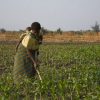
What Fate for Three Billion of Humans Who Are Born Equals?
While more than a third of all purchased food is wasted in rich, mostly Western States, and a similar percentage is lost in poor countries due to the lack of appropriate harvesting, storage and transportation facilities, over three billion people --or some 40 percent of world population-- cannot afford a healthy diet. Add to these figures --which were released by UN's Food and Agriculture Organization (FAO) on 16 October this year, marking the World Food Day-- another dramatic fact.
A School & Cultural Institution Aims to Level the Playing Field for Women & Girls in Rural Uganda
As we honored women and girls last week, on the annual International Day of Rural Women on October 15, we want to highlight how a community is coming together to change the lives and livelihoods of rural women and girls in Uganda.
Winning the Human Race, Together
“Now is the time for a stronger, more networked and inclusive multilateral system anchored in the United Nations,” said UN Secretary-General António Guterres in his latest report “Our Common Agenda.” Indeed, there is a fork in the road: we can either choose to breakdown or to breakthrough.
Why Pakistani Women Feel Unsafe in Public Spaces
The mauling, groping and tossing of a young woman by a crowd of between 300 and 400 men in a park in the eastern city of Lahore, in the Punjab province, may have caused a wave of country-wide disgust, but speaks volumes of how unsafe public spaces are for Pakistani women.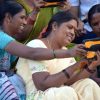
India: Gaps in the Government’s Plan to Help Unorganised Workers
The Government of India launched the e-Shram portal with the mandate of registering 380,000,000 unorganised workers in the country. The portal aims to bridge the gap in unorganised workers’ ability to access social welfare and employment benefits by issuing an e-Shram card (or Shramik card) upon registration.
Day of the Girl Child: A Digital Generation Where Every Girl Counts
The theme of this year’s annual International Day of the Girl Child, on October 11, “Digital generation. Our generation.”, recognizes the digital transformation brought about by the COVID-19 pandemic. But while the pandemic accelerated the transition to online learning, working and networking, it also accelerated women and girl's risk of being left behind.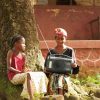
When Girls Have Access to Technologies, A True Digital Revolution Will Be In Sight
This year’s International Day of the Girl theme, Digital Generation, Our Generation, celebrates the potential of digital technologies while calling for the inclusion of all girls in accessing technology. The digital revolution will not be realized if girls without access to digital solutions are left behind. For years, advocates of technology for development have been repeating the mantra that technology is not a panacea. Yet in racing to connect, catch up, and create greater access, we ignore at our own peril the inconsistent or non-existent household- and community-level access girls have to technologies. While digital solutions are available and evolving all the time, they should be accompanied by hybrid methods which include new ways to use analog technologies, so that existing local resources are reimagined and redistributed in ways that support more girls learning.
Will Taliban Honour UN Treaties Signed by Afghanistan Over the Last 20 Years?
When the Islamic Emirate of Afghanistan receives the political blessings of the 193-member General Assembly-- and eventually inherits its seat at the United Nations-- it will have to ultimately prove its credentials as a member of good standing by adhering to the UN Charter and the Universal Declaration of Human Rights (UDHR) – as all member states do.
Afghan Women – The Emerging Narrative and Why it is Wrong
The USA and its allies have repeatedly stated that promoting women’s rights was one of the key reasons they were in Afghanistan. The US military top brass, in a letter to marines stated that they were in Afghanistan “for the liberty of young Afghan girls, women, boys, and men who want the same individual freedoms we enjoy as Americans”.
Education Cannot Wait Annual Results Reveals the Devastating Impact of COVID-19 on Learning for Children in Emergencies and Protracted Crises
The COVID-19 pandemic has changed the face of education globally, but for children in emergencies and protracted crises, its blow has been particularly devastating.
Making Online Health News Reliable, Accessible
Telemedicine and health-related information have experienced a massive uptake since the COVID-19 pandemic began last year. While online health services are seen as a panacea for many ills, disinformation and fake news reports have tarnished their credibility.
Leprosy has a Cure, so has Prejudice, says Miss Universe Brazil
A new dawn has come, and it was through the work of Yohei Sasakawa, the WHO Goodwill Ambassador for Leprosy Elimination, that those affected by leprosy now had a voice to speak for themselves.« Previous Page — Next Page »





Women make up half the world's population, but don't nearly share half of the world's wealth, well-being and opportunity. Two-thirds of the world poor are women, disproportionally exposing women to precarious living conditions, disease and unmitigated natural disasters. The media, meanwhile, remains a male-dominated sector in much of the world, contributing to women's voices lacking a crucial amplifier to put their concerns on political agendas and unleash the development potential of their ingenuity. Rather than then stereotypical victims of local and global forces, women are also organizer, innovators, conservators and community builders. These are some of their stories.

The Week with IPS

NEXT STOP - SDGs
Tracking global progress towards a sustainable world
Tracking global progress towards a sustainable world
