Languages
Friday, October 23, 2026



News and Views from the Global South
Gender

Delivering On the Promise of Health For All Must Include Gender Equality and SRHR
Gender-responsive universal health coverage (UHC) has the proven potential to transform the health and lives of billions of people, particularly girls and women, in all their intersecting identities. At tomorrow’s kick-off to the 2023 UN High-Level Meeting (HLM) on UHC, Member States and stakeholders will review progress made on the 2019 HLM’s commitments and set a roadmap to achieve UHC by 2030. We, as the co-convening organizations of the Alliance for Gender Equality and UHC, call on Member States to safeguard gender equality and sexual and reproductive health and rights (SRHR) as part of UHC implementation, especially in light of the gendered impacts of the COVID-19 pandemic.
When Love is Called as a Conspiracy: The ‘Love Jihad’ Bogey Targeting Interfaith Couples in India
When Ali (name changed) proposed to his best friend, little did he know that her parents would take six years to agree to their alliance because he was born into a Muslim family, and they were Hindus.
Women Leaders Hailed for COVID-19 Response
On September 20, Prime Minister of Bangladesh Sheikh Hasina accepted an award from the United Nations Sustainable Development Solutions Network for her country’s ‘striking’ progress towards achieving the Sustainable Development Goals.
If Women Farmers were Politicians, the World Would be Fed, says Danielle Nierenberg
Women, key contributors to agriculture production, are missing at the decision table, with alarming consequences, says Food Tank President Danielle Nierenberg in an exclusive interview with IPS.
COVID-19 Recovery Requires Justice Beyond Rhetoric
Policy responses to the COVID-19 pandemic and resulting economic crisis have exacerbated rather than reduced global inequalities. On the one hand, the net wealth of billionaires has risen to record levels since the outbreak of the pandemic (increasing by more than US$ 5 trillion to US$ 13.1 trillion from 2020 to 2021), on the other hand, the number of people living in extreme poverty has also increased massively (by approx. 100 million to 732 million in 2020).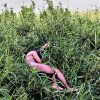
The Forbidden Love
 Abandoned by family and friends, transgender people in Bangladesh are subject to extensive daily abuse. The existing and continuously growing transphobia and homophobia in society are obstacles in the lives of this group. The people featured here from the LGBTQ+ community share a wide variety of narratives.

In a Watershed Year for Climate Change, the Commonwealth Secretary-General calls for Urgent, Decisive and Sustained Climate Action
This November, five years after signing the Paris Agreement and pledging to limit global warming to 2 degrees Celsius above pre-industrial levels, with a further target of below 1.5 degrees Celsius, world leaders will meet in Glasgow, UK amid COVID-19 pandemic shocks, rising hunger and an Intergovernmental Panel on Climate Change report that warns of more extreme temperature, droughts, forest fires and ice sheet loss due to human activity.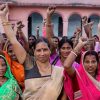
“Time Is A-Wasting”: Making the Case for CEDAW Ratification by the United States
The U.S. is one of only a handful of countries that has yet to ratify the Convention on the Elimination of Discrimination against Women (CEDAW), rendering it “strange bedfellows” with Sudan, Somalia, Iran, Tonga, and Palau.
Civil Society Must Build on Protest Movements – Podcast
 2020 was a year of tremendous upheaval. The murder of George Floyd, followed by global Black Lives Matter protests, Covid-19 and the stark light that the pandemic shone on inequality within countries and between the global north and south, protests and brutal repression after elections in Belarus, ongoing demonstrations for climate action led by youth around the world, to name just a few.
Afghanistan: A Swedish Officer’s Point of View
Like most of us, I rely on news media to find an explanation to tragedies I watch on TV. Neverthelss, some of my opinions about the Afghan tragedy have furthermore been influenced by talks I once had with my friend Bernth Dagerklint. We had for some years been working as teachers at a high school, though this was not Bernth’s main occupation. Most of the time, he served as an officer during international, armed campaigns supported by the Swedish government. He had been to former Yugoslavia, the West Bank and not the least in Afghanistan, where he since 2003 on several occasions worked as ”instructor” for Afghan officers.
Afghanistan – Another Viet Nam?
There are several points of similarity between the war in Afghanistan and the war in Viet Nam. The Taliban, like the North Vietnamese and the Viet Cong, proved to be formidable tacticians and fighters. They managed to contain a far better equipped opponent and mount effective counteroffensives; access sufficient domestic and foreign funding to pay their fighters and support their families; build a formidable intelligence network; and acquire necessary technical capabilities in areas such as repair and maintenance of small arms.
Journalists in Hiding to IPS: Silencing Women Journalists, is Silencing the Voice of Afghan Women
“If I fall into the hands of the Taliban, not only me but my family will be killed,” said AB, 23*, who worked as a broadcast journalist for the past seven years and is a well-known face on the television screen.
South Korea’s Women Fire Back
A strong movement of feminism is sweeping South Korea. While women feel empowered to stand their ground, the men are retaliating. When South Korean archer An San won two gold medals in just two days during the recent Tokyo Olympics, the response the 20-year-old received at home was a mixed. Some men were angered and said her medals should be taken away. Why? Because her short hair was a sign that she was a ‘man-hating’ feminist.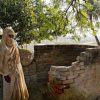
Advancing the Rights of Women Manual Scavengers in India
Manual scavenging is a caste-based profession that leads to discrimination and atrocities against those engaged in it. Generations of families from marginalised communities in India have been forced to continue in this profession because of social ostracism and a lack of alternatives.
Tonga’s experience: Implementation of Domestic Violence Legislation
Fourteen Pacific Island Countries have enacted specific legislation to address domestic violence. While these laws have been developed to respond to domestic violence, implementation continues to be a challenge. It is affected by various factors that include practical social, cultural, religious, political, environmental and economic challenges.
Why Do Organizations Fail to Keep Workplace Harassments in Check
“Sexual harassment is not about sexual attraction, it is about power. If an individual uses power plays to subjugate other people, when we have such dynamics going on in the workplace, what we need is a system that fights back against it, which unfortunately a lot of workplaces, they allow it to persist,”, says Adrienne Lawrence, anchor and legal analyst in an interview given to me here.
As Climate Disaster Migration Rises, Girls Get Married Off
When 11-year-old Mitali Padhi hugged her childhood friends to say goodbye, she felt a deep-seated foreboding.
“Don’t Call It Ethnic. Ituri Conflict Is a Mystery”
It is a metallic sound, harmless. It lasts just over a second, but it can become as sharp as a machete blade or as devastating as the burst from an assault rifle. It is a beep, just the beep of a phone notification. A woman is on the ground, her belly open, her intestines exposed and her severed head resting on her arm. A pagne of colorful fabric still girds her hips. Where? Why? Then, a video. Do you hear those voices? It happened there, in that village. It was them who did it, it was them.
Southern African Migrants Excluded as COVID-19 Pandemic Grows
Migrants across the Southern Africa region are massively disadvantaged as they find themselves excluded from vaccine programmes – even when the global vaccine initiative COVAX often funds these programmes.
Parliamentarians Determined to Reach ICPD 25 Goals
Politicians from Asia and Africa shared activism anecdotes demonstrating their determination to meet ICPD 25 commitments. They were speaking at a hybrid conference held simultaneously in Kampala, Uganda, and online.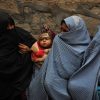
As the Taliban Returns, 20 Years of Progress for Women Looks Set to Disappear Overnight
As the Taliban takes control of the country, Afghanistan has again become an extremely dangerous place to be a woman.« Previous Page — Next Page »





Women make up half the world's population, but don't nearly share half of the world's wealth, well-being and opportunity. Two-thirds of the world poor are women, disproportionally exposing women to precarious living conditions, disease and unmitigated natural disasters. The media, meanwhile, remains a male-dominated sector in much of the world, contributing to women's voices lacking a crucial amplifier to put their concerns on political agendas and unleash the development potential of their ingenuity. Rather than then stereotypical victims of local and global forces, women are also organizer, innovators, conservators and community builders. These are some of their stories.

The Week with IPS

NEXT STOP - SDGs
Tracking global progress towards a sustainable world
Tracking global progress towards a sustainable world
