Languages
Tuesday, November 10, 2026



News and Views from the Global South
Gender

Extraordinary Lives of Indian Muslim Women Documented
It’s time the achievements of Indian Muslim women were documented to make their contribution to society visible, says international health and gender expert Dr Farah Usmani.
2021: Yet Another Challenging Year in Review
 In 2020, 1.8 million people across the world died from COVID-19.
At the end of 2021 the death toll has risen to over 5.3 million.

Women’s Rights Groups Welcome New Legal Protections Against Sexual Violence in the Maldives, including Marital Rape
Marital rape has now been criminalized without exception in the Maldives, as part of a raft of significant amendments to the Sexual Offences Act (2014). The First Amendment to the Sexual Offences Act was ratified on 6 December 2021 by President Ibrahim Mohamed Solih.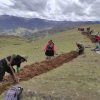
Rural Women in Peru Seed Water Today to Harvest It Tomorrow
"When I was a little girl we didn't suffer from water shortages like we do now. Today we are experiencing more droughts, our water sources are drying up and we cannot sit idly by," Kely Quispe, a small farmer from the community of Huasao, located half an hour from Cuzco, the capital of Peru's ancient Inca empire, told IPS.
Getting Beyond Body-Shaming
This is an age where pandemics are raging, millions live in war-torn strife, yet women are judged on their skin tones and height, says matchmaker Hirion Shah.
Liberal Facade Hides Lebanon’s Patriarchy
Despite its apparent liberalism, Lebanon scores low in gender equality, especially in politics.
Trafficked and Trapped in Libya: A Nigerian Woman’s Story
Miriam* hoped for a better life in Europe. Instead, her journey ended in Libya, where, double-crossed by traffickers she was raped and abused. She has returned to Nigeria and shared her experiences with Sam Olukoya. 
Open Letter to the Secretary General, Heads of UN Agencies & International Donor Community
We are former UN officials with decades of combined experience supporting international civil society and governments to advance the rights of women and girls.
Noorjehan Niaz and Zakia Soman: Bonded to Change the Trajectory of Muslim Women in India
Discriminated in society and concerned about the discrimination of women in their homes, the two women who co-founded the Bhartiya Muslim Mahila Andolan (BMMA) started the movement to further Muslim women’s leadership and help them reclaim their rights.
Fighting Female Genital Mutilation and Cutting in Asia – Podcast
 I suspect that most of you have at least heard of female genital mutilation, or FGM. It’s a practice that happens in numerous African countries, in which girls’ genitalia are removed or cut, for cultural or religious reasons. FGM has been condemned globally for years and campaigners continue working to end it.

Q&A: Femicides, Domestic Violence and Online Violence Have Been Exacerbated
"The level of injustice in the world cannot go on like this…I am not pessimistic about the future," said Gladys Acosta, president of the CEDAW Committee, in an interview with IPS in the Peruvian capital.
ECW Interviews UK Special Envoy for Girls’ Education, Helen Grant
Helen Grant became actively involved in politics in 2006 and was elected as Member of Parliament for the Kent constituency of Maidstone & The Weald at the 2010 General Election.
ECW Joins Call to Action on Protection from Gender-Based Violence in Emergencies: Global Community Urged to Orange the World and End Gender-Based Violence Now
The statistics are dire: One in three women have experienced a form of gender-based violence in their lifetime, be it sexual violence, physical violence, or child marriage. The message is clear: Women and girls deserve a safer, brighter future – free from gender-based violence.
A Call to End the Cycle of Discrimination and Exclusion of Iraqi Women
As a feminist activist and defender of women’s rights in Iraq, I would like to share with you my growing concerns about the assassinations, kidnappings, assaults, threats of assassination against and defamation of feminist activists and human rights defenders, which they have faced especially during the popular protests in October 2019–2020, all of which have occurred with impunity.
Refugee Voices Matter – Nothing about Us, Without Us
Over the past two years, the global refugee response has been tested. The world is being rocked by the greatest pandemic in over a century, while waves of refugees have fled from Afghanistan, Myanmar, Belarus, and Tigray. So, where do we go from here? Next week, the international community will convene to take stock of the successes and shortcomings of the Global Compact on Refugees (GCR), a unique multilateral mechanism built to ensure the protection of one of the most vulnerable populations. This marquee Compact is up for review, but unlike other review processes, the participation of the people whose lives are shaped by the decisions to be made in the review process will be marginal. Unfortunately, only 1 in 50 of the invited attendees at the UNHCR High-Level Official’s Meeting (HLOM) to discuss the GCR are refugees.
All Humans Are Born Equal in Rights? That’s Still Far from Being True
”All human beings are born free and equal in dignity and rights.” These words are a sound introduction to the transcendental issue of human rights and equalities, as stated by the 1948 Universal Declaration of Human Rights (UDHR).
Partnering with Persons with Disabilities Toward an Inclusive, Accessible and Sustainable Post-COVID-19 World
As the world observes the International Day of Persons with Disabilities today, we honour the leadership of persons with disabilities and their tireless efforts to build a more inclusive, accessible and sustainable world. At the same time, we resolve to work harder to ensure a society that is open and accommodating of all.
African Network Fosters Unity, Fights Gender Discrimination & Advances Sustainable Development
The widespread 21-month-old lockdown, triggered by the corona virus pandemic, had a destructive impact on the global economy, claimed over 5.2 million lives, destabilized governments and radically changed lifestyles worldwide.
How Inequality Drives HIV in Adolescent Girls and Young Women
Despite the advances that have been made against HIV, the world has 37 million people living with HIV. And 680,000 people died from AIDS-related causes in 2020. While the prevention of mother to child transmission, and provision of treatment as prevention, are great successes, there are still gaps. Over 1.5 million new HIV infections were recorded in 2020.
How to Tackle the Femicide Epidemic
Since the start of the Covid-19 pandemic, the increase in domestic violence rates has led the United Nations to declare a ‘shadow pandemic’ of gender-based violence. In the most brutal cases, the violence has led to murder – or ‘femicide’, as the World Health Organisation calls the killing of women specifically because of their gender.
Pakistan: Gender-Intentional Policy Can Make Agent Banking Work Better
Many women in Pakistan remain financially excluded. In 2020, only 7% of the female population had a formal account. One of the reasons for this is that agent networks — the bridge between the cash economy and digital financial services — remain largely inaccessible to many women. Approaching policy and regulation through a gender-intentional lens that considers prevailing social norms can help regulators affect positive change in this arena.« Previous Page — Next Page »





Women make up half the world's population, but don't nearly share half of the world's wealth, well-being and opportunity. Two-thirds of the world poor are women, disproportionally exposing women to precarious living conditions, disease and unmitigated natural disasters. The media, meanwhile, remains a male-dominated sector in much of the world, contributing to women's voices lacking a crucial amplifier to put their concerns on political agendas and unleash the development potential of their ingenuity. Rather than then stereotypical victims of local and global forces, women are also organizer, innovators, conservators and community builders. These are some of their stories.

The Week with IPS

NEXT STOP - SDGs
Tracking global progress towards a sustainable world
Tracking global progress towards a sustainable world
