Languages
Saturday, November 7, 2026



News and Views from the Global South
Gender

Inequalities in Human Development in the 21st Century
Inequalities. The evidence is everywhere. And although they may be hard to measure and summarize, there is a sense in many countries that many are approaching a precipice beyond which it will be difficult to recover.
Do I Need Permission to Breathe? – A Migrant Woman’s Story
“I soiled my pants, I could feel the wetness seeping into my waistband, my eyes started to become blurry. Only the sound of the blaring television assured me that I was still alive. I tried to stop thinking and make my mind go completely blank. Over the years I have adapted and now I can make my mind go numb. But the only nagging question ringing on my mind during the last 45 seconds was: will this stain the carpet? Should I clean myself first or should I clean the carpet first? Which one is safer? Did he notice the stain?
UNFPA Highlights Need to Address Sexual and Reproductive Health of Women in Crisis Areas
The United Nations Population Fund (UNFPA) is appealing for $683million in their mission to address sexual and reproductive health services for women and girls in conflict areas in the world.
Female Genital Mutilation Costs $1.4 Billion Annually: UN Health Agency
Female Genital Mutilation (FGM) poses serious risks to the health and well-being of women and girls, but it also exacts a crippling economic toll, according to the World Health Organization (WHO).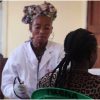
Women & Girls Up Front — the Humanitarian Response in Democratic Republic of Congo
Eleven-year-old “Anne” went to a health facility with her mother in the conflict-affected province of Ituri, in northeastern Democratic Republic of the Congo. At first, she could barely tell her story.
Addressing the Low Female Representation in STEM Education
Dr. Anne-Maria Brennan loved science as a young girl. But instead of encouraging her, those around her made attempts to steer her in the "right direction". “The right direction was in nursing, teaching and secretarial courses. I was told that girls do not study physics,” she tells IPS.
Balanced and Gender-Inclusive Education is a Smart Investment
Fihima Mohamed’s mother never attended school and until two years ago she could not read or write. Mohamed’s mother had been born in neighbouring Somalia but was sent to Djibouti as a young girl to live with her aunt. The expectation had been that she would have a better life by escaping the ongoing conflict in her home country at the time.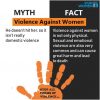
Am I Abused or Am I a Failure to Adjust? – A Migrant’s Story
Every year hundreds of immigrants leave their homes and trail to a land of dream and hope where they aspire to find peace, happiness and sometimes a little bit of safety compared to what they leave behind.
Tipping Point on Menstrual Banishment in Nepal
It is easy to be cynical about recent reports of actions taken to end chhaupadi, the traditional practice in parts of western Nepal of segregating menstruating women.
Bridging Africa’s Great Gender-Financing Divide
What stands between Soi Cate Chelang and her dream of turning her small pallet-making business into a major enterprise is capital.
“For Generations, We Have Been Nominating Men Just Because They are Men”
Marlène Schiappa, Minister of State for Gender Equality and the Fight against Discrimination in France, attended the 25th year Regional Review Meeting of the Beijing Platform for Action for the UN Economic Commission for Europe (UNECE) Region last month. She highlighted why this meeting is key for advancing the gender equality agenda and the priorities for the Generation Equality Forum in 2020, a global gathering for gender equality, convened by UN Women and co-chaired by France and Mexico.
Ending Bullying and Humiliation over Menstruation as Girls and Boys in Conservative Eswatini are Educated about Reproductive Health
When 14-year-old Nomcebo Mkhaliphi first noticed the blood discharged from her vagina, she was shocked. Confused, she turned to her older sisters for advice. “My sisters told me that they were experiencing the same every month and that they used fabric, toilet paper and newspapers as sanitary wear,” recalls the now 45-year-old Mkhaliphi. She had to follow suit and use these materials because she had no money to buy sanitary pads.
Women Activists Escalate Demand for “Bodily Autonomy” as 19 Nations Dissent
The United States and 18 other UN member states have come under fire for denying a woman’s legitimate right to “bodily autonomy”—the right to self-governance over one’s own body without coercion or external pressure.
In the Elusive Grip of an Abusive Partner: A Migrant’s Story
To live in a home with family, to have a safe environment, food and basic human necessities, are some of the essentials that most people expect to have without giving it all much thought. When a child is born, parents or caregivers are likely to provide these things. These expectations get renewed whenever someone gets married and moves to a new home, a different neighborhood, or a city. We can hardly find someone who will say that they were not expecting happiness and safety when stepping into a new relationship, or starting a new chapter of life. But these expectations of a better life turn disastrous for millions of people when they step into another country as a dependent.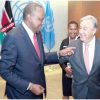
The United Nations Reforms-From Ideas to Actions
One of the highlight activities as the United Nations commemorates its 75th anniversary this year will be the launch of an “annual temperature check” on Sustainable Development Goals (SDGs), progress. With only ten years left to the final whistle for the Goals, this activity that will take place each September will provide a snapshot of what’s working, and where countries need more action.
India and Japan’s MPs Act Quickly to Implement Sexual and Reproductive Health Plans after ICPD25
Parliamentarians from India and Japan have hit the ground running by acting soon after the recent Nairobi Summit on International Conference on Population Development (ICPD25).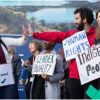
Women’s Groups Applaud Gender Action Plan Following COP 25
After nearly two weeks of negotiations at COP 25 climate negotiations in Madrid last month (2-13 December), governments will be adopting a new 5-year Gender Action Plan (GAP) that progressively builds upon the first GAP, and works to address many of the concerns raised by women and gender groups at the Framework Convention on Climate Change (UNFCCC), including calls for greater focus on implementation and scaling up gender-just climate solutions.
How Gender-based Violence Should be Reported in the Media
Sexual and gender-based violence terrorizes women and girls around the world, affecting as many as one in three women. Reporters play an essential role in bringing these cases to light so that authorities can take action and prevent further abuses. Yet reporting on gender-based violence comes with serious risks to survivors.
2020: a Year Full of Danger
Let’s face what lies ahead with open eyes: 2020 is going to be a very tough year for the world, and developing countries in particular. The infant decade has already begun with the harbingers of climate disaster as thousands fled to beaches in Australia from raging bush fires, and the Middle East braced for more conflict after a U.S. air strike in Baghdad killed Iran’s top general.
Reflections for a New Year
In a world shaken by so many problems, it is difficult to look at 2020 and not make some kind of holistic analysis. While enormous progress has been made on many fronts, it is clear that the tide has turned, and we are now entering – or have already entered – a new low point in the history of humankind..
Child Marriages Unlikely to End by UN’s 2030 Deadline
“Right now, I don’t want to get married. I have a long life and a dream in front of me”, a 14-year-old young girl from Bangladesh told her parents as she was just not ready to get married.« Previous Page — Next Page »





Women make up half the world's population, but don't nearly share half of the world's wealth, well-being and opportunity. Two-thirds of the world poor are women, disproportionally exposing women to precarious living conditions, disease and unmitigated natural disasters. The media, meanwhile, remains a male-dominated sector in much of the world, contributing to women's voices lacking a crucial amplifier to put their concerns on political agendas and unleash the development potential of their ingenuity. Rather than then stereotypical victims of local and global forces, women are also organizer, innovators, conservators and community builders. These are some of their stories.

The Week with IPS

NEXT STOP - SDGs
Tracking global progress towards a sustainable world
Tracking global progress towards a sustainable world
