Languages
Saturday, November 7, 2026



News and Views from the Global South
Gender

Q&A: ‘Place Gender Equality at the Heart of our Work’
Ambassador Mona Juul started her role as the Permanent Representative of Norway to the United Nations in January 2019, and is also the president of the United Nations Economic and Social Council (ECOSOC).
To Attack a Female Journalist’s Credibility, Go After Her Body
Brazilian journalist Patrícia Campos Mello made her career reporting from conflict zones around the world -- but lately, the greatest threats to her security are coming from closer to home.
UN Report: World remains a ‘violent, highly discriminatory place’ for girls
Twenty-five years after the historic Beijing women’s conference in China – a milestone in advancing equal rights – violence against women and girls is not only common, but widely accepted, a new UN report revealed.
Personal Conviction Versus Fandom: The Case of Mitt Romney
The great American impeachment show has ended not with a bang, but with a whimper. The dirt was washed away from President Trump, the perfect Teflon Guy. Maybe his invulnerability comes from the fact that he appears to be more of a brand than a real person, adapted to a frame of mind that increasingly dominates social media – cheap entertainment, shallowness, vulgarity, invectives, and catchy phrases without support in well-founded facts. Trump is all and nothing, a shape shifting trickster pretending to be the role model for voiceless masses.
Sexist Economies Where World’s 22 Richest Men Have More Wealth than All the Women in Africa
This International Women’s Day, 25 years after we first heard it declared that “women’s rights are human rights” at the historic Beijing 1995 Fourth World Conference on Women, we need to take the space and time to reflect on just how far we’ve come – and just how much more work there is to do.
It is Time for Action! Uniting for Africa’s Transformation
Twenty-five years ago, thousands of representatives adopted the Beijing Declaration, one of the most progressive universal agreement to advance women’s rights.
Helping Advance Women’s Political Rights in Ecuador
Inclusion of women in political processes is one of the key ingredients of sustainable peace. Although the number of women in political office has increased worldwide over the past 25 years, progress has been slow.
What’s Needed for Real Changes for Women in Lebanese Politics?
Women were at the forefront of Lebanon’s 2019 ‘October Revolution’. Beyond the iconic images of their participation, it seems that by women linking equity in politics to the broader issues of mismanagement of corruption paid off - although activists say there is a long road ahead.
Preserving World’s Biodiversity: Negotiations Convene at FAO Headquarters
“The world out there is watching and waiting for results,” Elizabeth Maruma Mrema warns while talking to IPS regarding the preservation of biodiversity of our planet.
Women Bear the Burden of India’s Water Crisis
Across cities and villages in India, an impending water crisis is at our doorsteps. India will face a water shortfall of almost 50 percent by 2030, if our water use continues its current pattern. Last year, Chennai and Bangalore showed us what water scarcity looks like; the statistics are no longer just numbers on paper, they have become our reality.
Generation Equality: Four Ways to Accelerate Progress
The global gender community will meet in New York in March to review progress on gender equality and women’s empowerment in the 25 years since the Beijing declaration. The theme for this year’s Commission on the Status of Women gathering is Generation Equality, emphasizing how the current generation must close the gender gap.
Fiscal Policies For Women’s Economic Empowerment
Making sure that opportunities to enter the workforce are fair and rewarding for women benefits everyone. Yet, the average female workforce participation rate across countries is still 20 percentage points lower than the male rate, largely because gender gaps in wages and access to opportunities, such as education, stubbornly persist.
What Future for the Rohingyas after the ICJ Ruling?
 In a groundbreaking ruling in January 2020, the International Court of Justice demanded that Myanmar halt all measures that contribute to the genocide of the Rohingya community.

U.S. President’s Global Gag Rule is Having Negative Impact on the Health of Malawians: Report
A report released last week has detailed the complex ways in which President Donald Trump’s ‘Global Gag Rule’ (GGR), that blocks U.S. global health assistance to foreign non-governmental facilities providing abortion or abortion-related services, is affecting the population in Malawi, a country already hard hit with numerous climate change disasters.
Why Trade in Services Matters for Development and Inclusiveness in Africa
The rise of the services economy around the world represents a profound transformation that offers significant opportunities for countries' sustainable development strategies.
Coming Down the Davos Mountain with a Gender Lens
In a recent report by World Economic Forum (WEF) shows women suffer a “triple whammy” in the workplace. Without drastic action, gender parity will take more than a lifetime to achieve. This is the challenge that Katja Iversen, President and CEO of Women Deliver is staring down.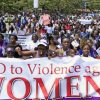
The Hammer of Justice for Sexual Assault Victims Must Be Swift, Loud and Consistent
Every year Valentines Day is celebrated with great relish & celebration. People show their affection for another person or people by sending cards, flowers or chocolates with messages of love.
Female Genital Mutilation: Not just an Emotional and Health Impact on Women but a $1.4 Billion Dollar Cost to Communities
When society doesn't act to prevent Female Genital Mutilation (FGM) it has a massive economic cost -- over $1 billion -- on communities globally. And while the practice is starting to become less common over time, experts say a large number of women and girls still remain affected.
Internet Needs New Global Regulations Against Online Sexual Exploitation
Online sexual exploitation is a global epidemic that is increasing at an alarming rate.
Landmark Law Empowers Women Farmers
When Pakistan’s eastern Sindh province passed the ‘Sindh Women Agricultural Workers Bill’ on 20 December, giving women in agriculture, livestock, fisheries and other agro-based work the same rights and benefits enjoyed by workers in the industrial sector, it was a revolutionary step for the whole of South Asia.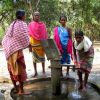
Are Economic Systems Sexist?
Women’s unpaid care work is the hidden engine that keeps the wheels of our economies, businesses, and societies moving, yet it is not accounted for.« Previous Page — Next Page »





Women make up half the world's population, but don't nearly share half of the world's wealth, well-being and opportunity. Two-thirds of the world poor are women, disproportionally exposing women to precarious living conditions, disease and unmitigated natural disasters. The media, meanwhile, remains a male-dominated sector in much of the world, contributing to women's voices lacking a crucial amplifier to put their concerns on political agendas and unleash the development potential of their ingenuity. Rather than then stereotypical victims of local and global forces, women are also organizer, innovators, conservators and community builders. These are some of their stories.

The Week with IPS

NEXT STOP - SDGs
Tracking global progress towards a sustainable world
Tracking global progress towards a sustainable world
