Languages
Monday, June 29, 2026



News and Views from the Global South
Women's Health
HEALTH: To Fight AIDS, Fight Gender Inequality
Under the banner that gender inequality is one of the main drivers of the spread of AIDS, women from around the world are uniting to demand a stop to the epidemic among all females -- whether adults or girls.
LIBERIA: Men in Testing New Role as Midwives
Henry Teh gently slides down a blue hospital sheet to expose the bare belly of a pregnant woman. As he pokes around to feel the position of the foetus, the midwife-in-training knows he is breaking tradition and changing the face of obstetric care in Liberia.
COLOMBIA: Midwives Seek Legal Recognition, Respect
In Colombia, western medicine has nearly succeeded in pushing midwives -- "parteras" or "comadronas," as they are known in Spanish -- out of existence. But some tenacious practitioners are pushing for a law to formalise the role of midwife as a health worker.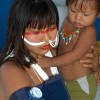
More Than 200 Ways of Becoming a Mother
"You can only have one mother," as the saying goes, but in Brazil there are 215 ways of becoming a mother, one for each of the ethnic groups in this South American country. Promoting maternal health while respecting cultural traditions is a major health challenge.Midwives vs. Doctors in U.S. Maternal Mortality Crisis
"I was baking a cake when my contractions were two minutes apart," Kristine says, her voice warm with memory, "not in a hospital, holding onto a bedside somewhere screaming."
Making 2010 a Turning Point for Women’s Health
As the international community readies to commemorate World Population Day Sunday, the United Nations is reviewing the state of the world's women - and how they stack up against the risks of maternal mortality and the lack of universal access to reproductive health.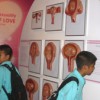
THAILAND: Sexuality 101 Exhibit Says It Straight
Teenage boys gape at a coloured photograph of a vagina, while girls give embarrassed smiles as they watch a cartoon that showed penises 'talking' about masturbation. Young girls crowd around a display panel about love and relationships, as a boy embraces a female mannequin with all his might in order to measure the strength of his hug.
PAKISTAN: More Action, Less Words, Needed to Ease Population Bulge
While militancy, power outages and skyrocketing food prices hog the limelight in parliamentary and media discussions in Pakistan, health experts warn that it is a neglected issue – the population bulge – that will prove to be a more insidious problem.
KENYA: Tradition an Obstacle to Maternal Health
Their kangas and heavy bead necklaces are the only colour in an arid landscape. The weary women waiting outside the Kangatotha dispensary have walked up to 50 kilometres to receive food aid; now they will walk home carrying their share.LATIN AMERICA: Majority Favours Legalising Abortion – But Not for All Cases
The majority of people surveyed in Brazil, Chile, Mexico and Nicaragua are in favour of legalising therapeutic abortion, but not all forms of elective abortion, according to a study by the Latin American Faculty of Social Sciences (FLACSO).
DEVELOPMENT: Cambodia Struggles to Reduce Maternal Deaths
For Chan Theary, a remote, mountainous stretch of land in western Cambodia encapsulates the uphill struggle this South-east Asian nation faces in reducing the alarming number of women who die during pregnancy.
MEXICO: Extending the Reach of Safe Abortion
By 5:00 AM, dozens of women are already lined up outside of this clinic in the Mexican capital. Most come with their mothers, sisters, husbands, friends or boyfriends. A few show up alone.
CHILE: Maternity Leave – Longer, or for All Working Mothers?
"In Chile, women carry the entire burden of maternity," says teacher Fabiola Quiñones, who applauds the government's proposal to extend pre- and post- natal leave to six months -- but only if all new mothers who work can have that option.
U.S. Bill Would Outlaw FGM “Holidays”
The U.S. currently lags behind several Western European countries in closing a legislative loophole banning the practice of Female Genital Mutilation (FGM) beyond its borders to protect U.S. citizens and residents. But this may soon change.Keeping the Pressure on to Invest in Women’s Health
Men, women, NGOs, governments, the Gates Foundation. Everyone agrees – women are awesome. More importantly, protecting the health of the people that make up more than half of the human population and do far more than half of the work to sustain it should be everyone's priority.
Are Namibian Women Being Forcibly Sterilised?*
A landmark court case, alleging that HIV-positive women were forcibly sterilised in Namibian state hospitals begins in Windhoek's High Court on Jun. 1. Human rights groups claim the practice has continued long after the authorities were notified.JAPAN: Women Changing the Face of Politics, Slowly but Almost Surely
Junko Hamada, 59, is now in her 12th year as an elected member of the city council of Isehara, a sprawling bed town west of Tokyo with an estimated population of 150,000.INDIA: Rising Use of Emergency Contraceptives Raises Alarm
When Sunita Sanyal (last name changed) complained of intense headache and vomiting, her mother presumed it was just pre-examination jitters. After all, Sunita’s business management finals were just a week away.PAKISTAN: TB-Afflicted Women Struggle to Overcome Social Stigma
Abdul Wahid’s wife had been unwell for two years, showing symptoms of a chronic infectious disease such as prolonged coughing, before she finally decided to see a doctor.PERU: Glass of Milk Half Empty
The "Glass of Milk" Programme, created in 1985 in Peru to provide a nutritional supplement for the most vulnerable population, specifically children up to six years old and pregnant and nursing women, is undermined by poor oversight, according to an audit by the Comptroller General's Office.World Bank Boosts Commitment to Lower Maternal Mortality
The World Bank intends to ramp up spending on family-planning and related initiatives to reduce maternal mortality, improve reproductive health, and reduce fertility rates in nearly 60 developing countries, particularly in sub-Saharan Africa, according to a new five-year plan released by the Bank here this week.« Previous Page — Next Page »


Worldwide, women’s health is a serious issue. The result of a wide diversity of factors, most notably insufficient access to education, women’s health issues must be addressed. Without access to proper schooling, many girls grow up without the necessary understanding of reproductive health. Due to this, reproductive issues and sexually transmitted infections plague women in developing countries. Women struggle to battle infections such as HIV. The lack of relevant services, coupled with the lack of women’s rights pertaining to their own health, are some of the serious issues that these stories seek to explain.

The Week with IPS

NEXT STOP - SDGs
Tracking global progress towards a sustainable world
Tracking global progress towards a sustainable world
