Languages
Monday, June 29, 2026



News and Views from the Global South
Women's Health
HEALTH-BOLIVIA: Subsidy to Cut Maternal-Child Mortality
A new Bolivian government programme will provide special payments to pregnant women and mothers with children up to the age of two, with the aim of cutting the country’s maternal and infant mortality rates.
HEALTH-NEPAL: Baby Boom in Maoist Army
At the annual military parade of the People’s Liberation Army, Nepal’s ex-guerrillas, curious bystanders saw a young woman clad in military fatigues kiss and cuddle a baby before handing her back to an older woman.
HEALTH-INDIA: On the Rag Amidst Riches
For millions of Indian women the colloquial phrase 'going on the rag' can literally mean that, or using just about anything available to stay dry during menstrual periods for lack of access to modern sanitary pads.NICARAGUA: Total Ban on Abortion Violates Human Rights, Says UN
The United Nations Committee against Torture (CAT) described the criminalisation of abortion under any circumstances in Nicaragua as a violation of human rights.MEXICO: Avalanche of Anti-Abortion Laws
In the last 13 months, 12 of Mexico's 32 states have approved amendments to their state constitutions defining a fertilised human egg as a person with a right to legal protection, and seven other state parliaments are taking steps in the same direction.
Q&A: How an Alcohol Ban Revived an Aboriginal Community
In 2007, a group of aboriginal women from Fitzroy Crossing in Western Australia decided that the only thing that could save their community from going under was to impose a complete ban on the sales of takeaway alcohol.LESOTHO: Cultural Beliefs Threaten Prevention of Mother-Child HIV Transmission
A health centre in one of Lesotho’s poorest districts has scored significant success in implementing a prevention of mother-to-child HIV transmission (PMTCT) programme, but health experts warn that a number of factors, including cultural beliefs and stigma, threaten to derail it.
DOMINICAN REPUBLIC: Lethal Link Between Gender Violence and AIDS
When she went to the doctor, 25-year-old Francisca Barros received two pieces of earthbreaking news. The welcome news was that she was pregnant. The terrifying news: that she was HIV-positive.
HEALTH-MEXICO: Training Professional Village Midwives
Mexican communications specialist Marla Vargas had her baby in the bathtub at home, attended by a midwife, because, she says, "I wanted a different experience, and a better way for my child to come into the world."
ANGOLA: No Law to Stop Domestic Violence
Teresa Barros’ problems started last year with the death of her baby.HEALTH-MALAWI: Women’s Group Sues Govt Over Abortion Rights
An influential women rights organisation in Malawi, Women in Law in Southern Africa-Malawi (WILSA-Malawi), is suing the government of Malawi for preventing women from accessing safe abortion.
DOMINICAN REPUBLIC: Church Pushes Draconian Abortion Law
A truck full of female police officers, dressed in black riot protection gear, pulled up in front of the General Assembly building here to confront and control the crowd of women who had gathered on Tuesday to protest a "right to life" amendment to the Dominican constitution.IRAQ: Virtual Therapy Treats Real Agony
"Oh, dear Lord, what I am going through," 'N', a 25-year-old Iraqi from Baghdad wrote several months ago. "Am I going to see my family again? Sometimes, I even see my own dead body, lying somewhere. And I imagine the pain my death would cause to the people I love the most."
HEALTH-SWAZILAND: 'Role Models in the Community'
She is popularly known as sitjifiri (beautiful and well-kempt woman in SiSwati). Sylvia Khuzwayo travels across the Shiselweni region in the southern part of the Kingdom of Swaziland, giving testimonials to communities on her experience of living with HIV.DEVELOPMENT: U.N. Triples Allotment for Population
The 1994 landmark International Conference on Population and Development (ICPD), held in the Egyptian capital of Cairo, fixed a target of 20.5 billion dollars for investments in population programmes worldwide for the year 2010.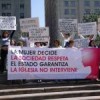
CHILE: Therapeutic Abortion – Hot Election Issue
The debate on the decriminalisation of therapeutic abortion has been revived ahead of the December presidential elections in Chile, one of the few countries in the world where abortion is illegal even under extreme circumstances, such as risk to the mother's life or a severely deformed foetus.POPULATION: Global Financial Crisis Threatens Family Planning
The spreading global financial crisis is threatening to undermine another one of the U.N.'s major development and health goals: family planning.RIGHTS-BENIN: Support for Women Facing Violence
Judges and gynaecologists in Benin have undergone training on the interpretation of forensic evidence in cases of violence against women, as well as in investigative procedures when dealing with rape cases.
HEALTH-PAKISTAN: Spacing Births for Mother and Child
Health experts in Pakistan are now concentrating on getting women from all strata of society to space births.MEDIA: Fashion Advice and Info for HIV-Positive Women
The colourful new magazine of the International Community of Women Living with HIV/AIDS (ICW) in Latin America and the Caribbean has a modern look and provides not only information but articles on fashion and entertainment. It is also the perfect size to carry in a purse.
Q&A: Women’s Special Water Needs Find Voice
Climate change and corrupt practices are considered root causes for a potential water crisis of global proportions, leading to scarcity where water is needed most and flooding where it is needed the least.« Previous Page — Next Page »


Worldwide, women’s health is a serious issue. The result of a wide diversity of factors, most notably insufficient access to education, women’s health issues must be addressed. Without access to proper schooling, many girls grow up without the necessary understanding of reproductive health. Due to this, reproductive issues and sexually transmitted infections plague women in developing countries. Women struggle to battle infections such as HIV. The lack of relevant services, coupled with the lack of women’s rights pertaining to their own health, are some of the serious issues that these stories seek to explain.

The Week with IPS

NEXT STOP - SDGs
Tracking global progress towards a sustainable world
Tracking global progress towards a sustainable world
