Languages
Saturday, October 17, 2026



News and Views from the Global South
Women's Health

Successful Climate Solutions Require Investment in the Lives of Adolescent Girls
This year commemorates the 10th anniversary of the International Day of the Girl Child. While the last decade has seen greater attention on the positive development needs of girls, we must move beyond documenting the barriers that girls face to investing in and prioritizing girl-centered solutions to the critical development challenges of our world.
Poverty Impacts on Efforts to End Child Marriage, say Parliamentarians
Child marriage continues to be a scourge in many African countries – despite legislation and efforts of many, including parliamentarians, to keep girls in school and create brighter futures for them. This was the view of participants in a recent webinar held under the auspices of the African Parliamentary Forum on Population and Development (FPA) and UNFPA East and Southern Africa Regional Office (ESARO).
The New Cold War Over Access To Safe Abortion in Kenya
Fatuma is a 24 year old girl from Korogocho, an informal settlement in Nairobi. She died in December 2021, from complications arising from an unsafe abortion. Her friend and a few of her neighbors found her bleeding profusely and unable to move. They rushed her to the hospital. Unfortunately, she died before she could see the doctor.
To End AIDS, We Need to End Punitive Laws Perpetuating the Pandemic
This week, the global HIV response community is gathering in Montreal to address the crisis of stalling progress that is putting millions of people in danger.
Abortion in Canada—Legal for Decades But Hindered by Stigma
Toronto resident Miranda Knight describes her abortion experience as relatively simple. After finding out she was pregnant on a Wednesday in 2017, she booked an appointment at an available clinic and got one for the following Monday. She had the procedure that day and left the clinic by noon.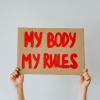
Rights Groups Question ‘Pregnancy Register’ for Polish Women
Women’s rights groups fear a new legal provision in Poland requiring doctors to collect records on all pregnancies could create what they have described as a ‘pregnancy register’ to monitor whether women are having abortions.
A Story of Abortion Rights
On June 24, the U.S. Supreme Court overturned the 1973 Roe v. Wade decision, which had declared abortion constitutional, and a woman's right to abortion is no longer guaranteed. This is another example of the divisiveness that has surrounded abortion to date, and has sparked controversy on both sides of the issue. While it is politically perceived that this Supreme Court decision resulted from a majority of conservative judges appointed during the Trump administration, an important point is being forgotten.
Roe Overturned: What You Need to Know about the US Supreme Court Abortion Decision
After half a century, Americans’ constitutional right to get an abortion has been overturned by the Supreme Court. The ruling in Dobbs v. Jackson Women’s Health Organization – handed down on June 24, 2022 – has far-reaching consequences. The Conversation asked Nicole Huberfeld and Linda C. McClain, health law and constitutional law experts at Boston University, to explain what just happened, and what happens next.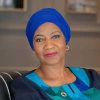
‘When it Comes to Gender Equality, Our Best is Not Good Enough’: says Dr Phumzile Mlambo-Ngcuka
 The Covid-19 pandemic has impacted lives all over the world. According to this report, gender is emerging as a significant factor in the social, economic and health effects of Covid-19. Women have been hit much harder socially and economically than men. The greatest and most persistent gender gap was seen in employment and uncompensated labour, with 26% of women reporting loss of work compared with 20% of men globally in September 2021.

COVID and Discrimination Aggravated Maternal Mortality in Latin America
Brazil had the dubious distinction of champion of maternal mortality in Latin America during the COVID-19 pandemic, with a 77 percent increase in such deaths between 2019 and 2021.
Those Who Dare: Feminist Movements in Sudan, Lebanon & Syria
The year 2019 was not just a time before the world saw the global pandemic, but also a time when the world saw mass political uprisings with women at the forefront. The MENA region in a way led this force, in Sudan women played as drivers of the revolution, protesting decades of corruption, socioeconomic grievances and gendered violence. Nubian queen became the symbol of the revolution in Sudan which finally saw the overthrow of the dictatorship in 2019.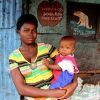
Most Maternal Deaths Are Preventable: How To Improve Outcomes in South Africa
The past 20 years have seen a significant decline in maternal mortality rates from 342 deaths to 211 per 100,000 globally . But every day, more than 800 women around the world die from complications of pregnancy and childbirth, up to 42 days after delivery. Most of these deaths are preventable.
Those Who Dare: Voices of Women in the MENA Region
When it comes to gender equality and development, the Middle East, North Africa (MENA) and the Arab States region continues to be in a paradoxical situation. While within the region, several laws, policies and programming focused on gender equality are growing, women’s representation in government jobs, corporate roles, and national programming seem to be dismissed. Healthcare, education have seen improvement, most countries have become tech inclusive as well, but access to hospitals and educational institutions –at times due to social programming or gender-related policies continues to prevent women from accessing them and using them.

Breaking Menstruation Taboos and Leaving No Girl Behind
Fourteen-year-old Hadiza smiles as she clutches a purple bag in her hands. Inside the cloth bag is a Menstrual Hygiene Management kit, an essential item that gives her dignity and enables her to continue with school even when menstruating.
When Is Too Much Autism Awareness Still Not Enough?
When is too much Autism awareness still not enough? This thought recurs every April as we near World Autism Day on April 2, and parents reach out to me after reading enthusiastic and well-meaning news and journal articles – which are actually harmful and hurtful.
How Collective Action Can Move the Needle on Gender Equality
During this year’s sixty-sixth session of the Commission on the Status of Women (CSW66), we are eager to see the global community pivot towards more inclusive approaches to advocacy. It's imperative to put the spotlight on women’s rights and youth-led organizations in communities that are often left out of key discussions. By handing the mic over to advocates across all backgrounds and ages, we can shift to a model that enables all advocates to take a lead role in policy-making and ultimately translate promises and rhetoric into real impact and accountability.
Youths Trailblazing Paths in Sexual and Reproductive Health Ahead of ICFP Family Planning Conference
Travelling in northern Nigeria, Peace Umanah noticed teenage girls with multiple children – they would be walking with one strapped to their back, holding another by hand and with a protruding belly.
International Women’s Day, 2022
Girls’ Education Must Come First
For decades now, world leaders have talked about ending hunger and poverty and building a new world order based on human rights and gender-equality.

International Women’s Day, 2022
How Bangladesh Became a Test Case for Women’s Empowerment
The increased empowerment of rural women in Bangladesh over the past 10 years has been no accident.
A decade ago, not even one in four rural women could be said to be “empowered” across five key metrics, a figure that surprised even those working on the ground with the country’s poorest. By 2015, this had risen to more than two in five, or 41 per cent, with continued gains in recent years.

International Women’s Day, 2022
To Overcome Africa’s Development Crisis, Invest in Strengthening Girls’ Power
It was on a visit to Lesotho that I first heard the derogatory term Mmutla – nocturnal hare. It is a word used in some southern districts to insult adolescent girls who have been forced into sexual exploitation and transactional sexual relations for survival.
International Women’s Day, 2022
Raising up Women as Light in Dark Times
When I was a young girl, a friend and I spent our summers building a treehouse. We built it because our older brothers were building one and wouldn’t allow us to help them. So, we asked our parents to support us through the procurement of basic tools, collected scrap wood from the local hardware store, chose a tree, and then spent day after day puzzling beams and boards together into structure in which only people of our small size could fit.
« Previous Page — Next Page »





Worldwide, women’s health is a serious issue. The result of a wide diversity of factors, most notably insufficient access to education, women’s health issues must be addressed. Without access to proper schooling, many girls grow up without the necessary understanding of reproductive health. Due to this, reproductive issues and sexually transmitted infections plague women in developing countries. Women struggle to battle infections such as HIV. The lack of relevant services, coupled with the lack of women’s rights pertaining to their own health, are some of the serious issues that these stories seek to explain.

The Week with IPS

NEXT STOP - SDGs
Tracking global progress towards a sustainable world
Tracking global progress towards a sustainable world
