
Sunday, October 11, 2026



News and Views from the Global South
Civilisations Find Alliances
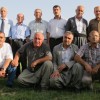
Troubled Kurds Draw Closer
"The Islamists’ announcement that god supported the killing of Kurds in Syria made us react," recalls Farouk Aziz Khadir. This 60-year-old Iraqi Kurd is ready to take up arms to defend his kin in the neighbouring war-torn country. And there are many more like him.
Will Iran’s Opposition Leaders Be Released?
Hassan Rouhani’s election as Iran’s new president has garnered much international attention. In particular, Rouhani’s ascendance has raised hopes of a diplomatic breakthrough on the Iranian nuclear crisis.
Balkans Feed the Syria Battle
This holy month of Ramadan comes with a difference for some families in the Balkans. It is the first without their young sons, husbands or brothers who died far away from home fighting in Syria.U.S. and Pakistan Try to Mend Frayed Ties
U.S. Secretary of State John Kerry, on an official trip to Pakistan, announced Thursday that high-level policy discussions will begin anew between Washington and Islamabad.
OP-ED: Bahrain Declares War on the Opposition
The special session of the Bahraini National Assembly held on Sunday Jul. 28 was a spectacle of venom, a display of vulgarity, and an unabashed nod to increased dictatorship.
Egypt-Like Disputes Stir Tunisia
As political divisions threaten to destabilise the national transition process in Tunisia, Prime Minister Ali Laarayedh has set deadlines for finalising the new constitution and holding elections. Not everyone is convinced these will be met.
Positive Signals Between Iran and U.S. Intensifying
Within days of the inauguration of Hassan Rouhani as Iran’s new president, both Tehran and Washington appear to be sending positive signals to each other.
New Bid for Mideast Talks after Five-Year Hiatus
There is a real opportunity for peacemaking between Israel and the Palestinians, even though the obstacles are more formidable than in the past. That was the assessment of former U.S. president Jimmy Carter, speaking Monday at a public event which posed the question “Can the Two-State Solution Be Saved?”
Rouhani Faces Tests at Home and Abroad
The successful campaign of Iran’s President-elect Hassan Rouhani may have been built on the persistence of hope among Iranian voters for a better future.Challenges and Opportunities Await Iran’s Rouhani
The transition team of Iran’s President-elect Hassan Rouhani was busy last week lowering expectations for a quick economic recovery, saying that things are far worse than they had thought.
Imported Torture Haunts Poland
The only sign of life at Szymany’s "international airport" are mosquitoes eager to suck blood out of a rare visitor. The gate is locked with a rusted chain and a padlock.Advocates of Iran Engagement Get Unexpected Boost
For the first time in many months, supporters of intensified diplomatic engagement with Iran appear to be gaining strength here.OP-ED: Egyptian Muslim Brotherhood: Exclusion Breeds Radicalism
The Egyptian military’s removal of the democratically-elected President Mohamed Morsi and the Muslim Brotherhood from power upended the MB’s 20-year old political participation programme. If the new regime aims to achieve genuine reconciliation and political consensus, the MB and its supporters must be included in the restructuring of Egyptian politics.
When Israelis Boycott a Settlement
As the European Union delegitimises the settlement enterprise further by officially announcing that, effective Jul. 30, its 28 member states are required to differentiate between pre-1967 Israel and Israeli-occupied territories, Israelis supportive of a two-state solution vigorously lead their own boycott campaign against Ariel, a settlement town of 20,000.OP-ED: Iran in the Era of Moderation and Reform
Do you expect a miracle from Rouhani? You are heading down the wrong road. Please take it easy!
Egypt May Not go the Algeria Way
The ouster of Egypt's first freely elected president by the military has led some to warn of a possible Algeria-style civil war. Local analysts, however, dismiss the likelihood of the "Algeria scenario" occurring in Egypt.Israel May Even Miss Morsi
For Israel, what must be exercised in the volatile struggle for power and democracy in Egypt are, above everything else, three follow-on principles: stability within its institutions, particularly the armed forces; security in the Sinai Peninsula and the Hamas-ruled Gaza Strip, which both border Israel; and peace with Israel itself.
Civil Society Fears Taliban Return
While United States President Barack Obama and Afghan leader Hamid Karzai scramble to solidify a peace process ahead of the 2014 withdrawal of NATO troops from Afghanistan, fears that the Taliban will use the drawdown to seize power hang like a dark cloud over civil society.
Spring Brings Differing Fruits for Tunisian Women
The revolution that ousted dictator Ben Ali in January 2011 brought new, hard-won freedom to the Tunisian people. However as the country discovers whether secularism and growing political Islam can co-exist, some women are enjoying greater liberty to practise their religion while others are concerned that their rights may be eroded.
A President Fights His People
Egyptian President Mohammed Morsi faces massive demonstrations, but he faces also his own government on many fronts.
Tunisia Now Searches an Economic Spring
Nearly two-and-a-half years since the toppling of the autocratic regime of Zine el-Abidine Ben Ali in the first regime change of the now famous Arab Spring, the high expectations of change to come with the revolution have hardly been met.« Previous Page — Next Page »





The United Nations Alliance of Civilisations (www.unaoc.org) has taken an essential step ahead of the earlier dialogue of civilisations: it recognises the need to act together rather than just talk, to take the world past conflict - some of it real, but much of it perceived. Far too much discourse places "civilisations" into opposed categories and labels them with ill-informed attributes. These lazy stickers will not be removed by weapons and arguments but through communication, with initiatives such as the Joint Rapid Response Media Mechanism (www.theglobalexperts.org), a panel of media experts who can guide facts past dangerous distortion. Here IPS takes its readers past standard prejudices to present the facts behind myths.

The Week with IPS

Tracking global progress towards a sustainable world
