
Monday, October 12, 2026



News and Views from the Global South
Civilisations Find Alliances
Abandoned Egypt Suffers
As supporters and opponents of Egyptian President Mohammed Morsi prepare for a face-off on Sunday, a mushrooming problem for Egypt arises from the people not there – the tourists.
To Find Peace, And Then Sell It
As the month of Ramadan nears, shop owners in Sanaa’s old city souk stock up on goods. For men like Ali Al-Fakri, who sells jambiyahs, Yemen’s traditional daggers held in place with richly embroidered belts, the gift-giving holiday marking Ramadan’s end is the busiest time of the year.
Egypt Split ‘Between Egyptians and Islamists’
The Muslim Brotherhood realised a long cherished dream when it came to power last year. The Muslim Brotherhood had faced continuing discrimination since former president Gamal Abdel Nasser came to power in 1956 until the end of Hosni Mubarak’s days.
Creating Their Own Spring
The soldiers of former Libyan strongman Muammar Gaddafi had left just a few days before, but a group of about 50 children were already singing in the Amazigh language in the village of Yefren, 110 kilometres south of Tripoli. This month will mark two years since the establishment of the first Amazigh school in Libya.
Egypt Sees a Dam Confrontation
Ethiopia's diversion of part of the Blue Nile late last month has both rocked Cairo's relations with Addis Ababa and provided fodder for Egypt's ongoing war of attrition between its Islamist government and secular opposition.
Egypt Marks a Spring for Islamists
Egyptians are deeply divided and the majority are dissatisfied with the performance of Islamist President Mohamed Morsi, but also have little confidence in the main opposition figures or their future, a new poll has found.
Border Weakens Between Bombs and Cherries
It all happened within ten days – Syria’s civil war fought metres away from Israeli orchards abutting the ceasefire line; Austrian peacekeepers hastily evacuating the Demilitarised Zone (DMZ) that separates Israel from Syria; fears of a total collapse of the UN Disengagement Observer Force (UNDOF). All while the cherry-picking season is at its peak.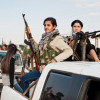
Kurds Advance, Into the Unknown
A ban on political and even social gatherings, a bar on Kurdish language and culture; uprooting people, forced disappearances and a ‘caste’ of hundreds of thousands of local Kurds deprived of citizenship... life for Kurds in pre-war Syria was probably as dire as it is today for their kin in Iran.
Living in Hell, Iraqi Christians Dream of Paradise
Luis Shabi nostalgically recalls his nine years of novitiate in Rome and a "fantastic road trip through Europe" before returning to Iraq in 1969. "Those were the good times," sighs the Chaldean Archbishop of Baghdad from a bunker in the heart of the Iraqi capital.
Cartoons Lead the Way From Humour to Dialogue
By now, most movie fans know that American actor Leonardo DiCaprio was in this southern French city for the annual Cannes Film Festival. But fewer people are aware that Willis from Tunis and Kichka of Israel were also here.
Q&A: “To Propel Change, You Have to Be in Their Faces”
Eighteen days ago, Diane Wilson, a 65-year-old fisherwoman from Texas, decided to go on a hunger strike.
Pluralities of Israelis, Palestinians Want Stronger U.S. Peace Role
Amidst a new U.S. effort to revive the long-stalled Israeli-Palestinian peace process, healthy pluralities of both peoples want U.S. President Barack Obama to play a stronger role in resolving their conflict, according to a major new poll released here Thursday by the Pew Research Center.
Hamas ‘Talibanising’ Gaza
The Islamist resistance group Hamas, which controls the Gaza Strip, is being accused by its Palestinian Authority (PA) rivals in the West Bank of Talibanising Gaza and turning the coastal territory into a new Muslim Brotherhood neighbourhood.
As Hunger Strike Spreads, Obama Again Denounces Guantanamo
With at least 100 detainees now participating in a three-month-old hunger strike, U.S. President Barack Obama Tuesday reiterated his earlier denunciations of the Guantanamo detention facility and blamed Congress for preventing its closure.
Some Hear Death Knell for a Two-State Solution
Despite indications that U.S. Secretary of State John Kerry is committing a substantial amount of time and effort to revive the long-stalled Israel-Palestinian “peace process", a growing number of experts believe a two-state solution is no longer viable and the lack of a realistic discussion of the issue in the United States is leaving the country without an alternative policy.OP-ED: How Bin Ladin’s Jihadist Message Continues to Lure the Vulnerable
The surviving Boston Marathon bomber reportedly told authorities the U.S. “war on Islam” drove him and his brother to commit their terrorist act. Their linking the wars in Iraq and Afghanistan with a perceived global war on Islam is at the heart of the Jihadist message Bin Ladin and Al-Qaeda issued to the Muslim world almost two decades ago.
Bedouin Resist Israeli Shove
Dozens of metal and wooden tents cling to the rocky hillside, just outside of Jerusalem along the road leading to the Dead Sea, while the unmistakable red roofs of Israeli settlements peak out from behind opposite hilltops.
Spring Brings Worse for Shias
The mob that surrounded the home of Mohamed Nour, an Egyptian Shia living in Cairo’s Bab El-Shaariya district, claimed it was on a mission to “inoculate” Egypt against Shia religious beliefs. Without intervention, Shia doctrine would spread across Egypt “like a cancer,” they had warned.
BOOKS: A History of the Search for Justice in the Middle East
It’s no wonder that Egypt has floundered in its efforts to create a more democratic system from the ruins of the Mubarak regime.
Palestinians Fight Unlawful Deportation
Hind Ibrahim Abeyat has spent most of her life separated from her father. “Every house in Palestine has something – someone in prison, a martyr,” the 19-year-old told IPS from her family home in Abeyat village, near Bethlehem.
Israeli Cloud Hovers Over Green Energy
A quiet diplomatic war is being waged by several European governments against the Israeli authorities, specifically the Israeli Civil Administration which controls the Israeli occupied West Bank.« Previous Page — Next Page »





The United Nations Alliance of Civilisations (www.unaoc.org) has taken an essential step ahead of the earlier dialogue of civilisations: it recognises the need to act together rather than just talk, to take the world past conflict - some of it real, but much of it perceived. Far too much discourse places "civilisations" into opposed categories and labels them with ill-informed attributes. These lazy stickers will not be removed by weapons and arguments but through communication, with initiatives such as the Joint Rapid Response Media Mechanism (www.theglobalexperts.org), a panel of media experts who can guide facts past dangerous distortion. Here IPS takes its readers past standard prejudices to present the facts behind myths.

The Week with IPS

Tracking global progress towards a sustainable world
