Languages
Saturday, October 31, 2026



News and Views from the Global South
Global Geopolitics

Is Europe’s Breadbasket Up for Grabs?
Amidst an exodus of some 100,000 people from the conflict-torn eastern Ukraine, ongoing fighting in the urban strongholds of Donetsk and Luhansk between Ukrainian soldiers and separatist rebels, and talk of more sanctions against Russia, it is hard to focus on the more subtle changes taking place in this eastern European nation.
Israel Lobby Galvanises Support for Gaza War
Pro-Israel activists assembled a huge crowd and a long list of congressional leaders and diplomats to declare their unconditional support for Israel’s military operations in the Gaza Strip on Monday, largely downplaying tensions between Jerusalem and Washington.
Oil Alliance Between China and Costa Rica Comes to Life Again
China’s plan to become Costa Rica’s main energy ally through the joint reconstruction of an oil refinery has been revived after the presidents of the two countries agreed to review the conditions of the project during a meeting in the Brazilian capital.
Ticking Diplomatic Clock a Cover for Israeli Assaults on Gaza
As the death toll in Gaza keeps climbing - and charges of alleged war crimes against Israel keep mounting - the most powerful political body at the United Nations remains ineffective, impotent and in a state of near paralysis.
OPINION: How to End the Gaza War
As the killing and destruction rages on in Gaza, and as Israeli Prime Minister Benjamin Netanyahu and the Hamas leadership exchange recriminations and threats, key regional and world players must accept a central truism: No peace can be achieved between Israel and the Palestinians without including Hamas. The quicker they internalise this fact, the faster the cycle of violence can be broken.People Before Borders
With Italy having taken over presidency of the European Union (EU) until December 2014, questions remain regarding Europe’s migration policies as reports of migrants dying at sea while trying to reach Italy regularly make the headlines.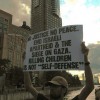
Thousands of New Yorkers Protest Gaza Killings
Thousands of New Yorkers took to the streets in multiple protests this past week against the Israeli offensive in Gaza, which has left at least 1,049 Palestinians dead and over 6,000 injured since Jul. 8.South Stymies North in Global Trade Talks
A group of developing countries brought a tectonic shift at the World Trade Organization on Friday by turning the tables against the industrialised countries, when they offered a positive trade agenda to expeditiously arrive at a permanent solution for food security and other development issues, before adopting the protocol of amendment of the contested Trade Facilitation Agreement.
Oil Lubricates Equatorial Guinea’s Entry into Portuguese Language Community
Evidently, oil talked louder. By unanimous resolution, the Community of Portuguese Language Countries (CPLP) admitted Equatorial Guinea as a full member, in spite of the CPLP’s ban on dictatorial regimes and the death penalty.
Touaregs Seek Secular and Democratic Multi-Ethnic State
The government of Mali and Touareg rebels representing Azawad, a territory in northern Mali which declared unilateral independence in 2012 after a Touareg rebellion drove out the Malian army, resumed peace talks in Algiers last week, intended to end decades of conflict.
U.S., Russia, China Hamper ICC’s Reach
Despite making important strides in the first dozen years of its existence, the International Criminal Court (ICC) faces a daunting task if it hopes to create a reputation as a truly global institution.
Spain: A Precarious Gateway to Europe for Syrian Refugees
Little Samir covers his face with his hands as he plays under the orange tree in the centre of the inner courtyard of the Spanish Refugee Aid Commission (CEAR) centre in the southern city of Malaga. He is four years old and has spent nearly a year in Spain, where he arrived with his parents, fleeing the war in Syria.
Child Migrants – A “Torn Artery” in Central America
The migration crisis involving thousands of Central American children detained in the United States represents the loss of a generation of young people fleeing poverty, violence and insecurity in Honduras, Guatemala and El Salvador, the countries of the Northern Triangle of Central America where violence is rife.
Why No Vetoed Resolutions on Civilian Killings in Gaza?
As the civil war in Syria continues into its fourth year, the Western nations sitting on the U.N. Security Council (UNSC) have unsuccessfully tried to condemn the killings of civilians, impose punitive sanctions and accuse the Syrian government of war crimes - in four vetoed and failed resolutions.
As Winds of Change Blow, South America Builds Its House with BRICS
While this week's BRICS summit might have been off the radar of Western powers, the leaders of its five member countries launched a financial system to rival Bretton Woods institutions and held an unprecedented meeting with the governments of South America.Public Stockholding Programmes for Food Security Face Uphill Struggle
Framing rules at the World Trade Organization for maintaining public stockholding programmes for food security in developing countries is not an easy task, and for Ambassador Jayant Dasgupta, former Indian trade envoy to the WTO, “this is even more so when countries refuse to acknowledge the real problem and hide behind legal texts and interpretations in a slanted way to suit their interests.”
International Reform Activists Dissatisfied by BRICS Bank
The creation of BRICS’ (Brazil, Russia, India, China and South Africa) own financial institutions was “a disappointment” for activists from the five countries, meeting in this northeastern Brazilian city after the group’s leaders concluded their sixth annual summit here.BRICS Forges Ahead With Two New Power Drivers – India and China
The Sixth BRICS Summit which ended Wednesday in Fortaleza, Brazil, attracted more attention than any other such gathering in the alliance’s short history, and not just from its own members – Brazil, Russia, India, China and South Africa.
Zarif and Kerry Signal Momentum on Nuclear Pact
As the negotiations on the Iranian nuclear programme approach the Jul. 20 deadline, both U.S. Secretary of State John Kerry and Iranian Foreign Minister Mohammad Javad Zarif have signaled through their carefully worded statements that they are now moving toward toward agreement on the two most crucial issues in the talks: the level of Iranian enrichment capability to be allowed and the duration of the agreement.
BRICS Build New Architecture for Financial Democracy
The BRICS alliance (Brazil, Russia, India, China and South Africa) launched the New Development Bank (NDB) and Contingency Reserve Arrangement (CRA) during its sixth summit, institutionalising a new financial architecture for the emerging powers.Russia Hoping Cuba Can Help Spur Trade with Latin America
Amid deteriorating relations with the West, Russian President Vladimir Putin is looking to diversify a Russian economy that is tightly linked to European markets. Fittingly, an old Soviet-era satellite state seems eager to lend a helping hand.« Previous Page — Next Page »





Is the world dominated by three great empires -- the U.S.A, China and the European Union? How much power do the great behemoths of the south -- India, Brazil, and South Africa -- wield? And where does Russia fit in that equation? Are we in the middle of a new Cold War? What are the implications of the armed conflict with Georgia? What about the new axis: Venezuela-Russia? And what role does Turkey play? What about issues like Climate Change and other global forces like the food crisis and the high energy prices? How is all this reshaping the world's forces? IPS looks for some answers.

The Week with IPS

NEXT STOP - SDGs
Tracking global progress towards a sustainable world
Tracking global progress towards a sustainable world
