
Thursday, October 22, 2026



News and Views from the Global South
Globalisation

The UN’s Failure to Act on Race
Racism is not only an American problem but a plague that people of African descent have had to endure since time immemorial. Rather than seizing this historic moment to act decisively, the United Nations, the world’s highest platform for human rights, dithered on the issue when it was called on to establish a full commission of inquiry on race following the outrageous killing of George Floyd on May 25 2020.
Scourge of Racism Violates UN Charter
I welcome this opportunity to speak to this urgent and necessary debate of the Human Rights Council. I bring you warm greetings from Secretary-General António Guterres, who shares your abhorrence of racism and is committed to fighting it with every tool we have.
Reviving the Economy, Creating the ‘new Normal’
The Covid-19 pandemic has significantly impacted most economies in the world. Its full impacts will not be felt, let alone measured, until it runs its course. Many countries are still struggling to contain contagion, while the costs on both lives and livelihoods will undoubtedly have long-term repercussions.
High Volatility
Six months after the outbreak, the new global scenario resulting from the impact of COVID-19 is gradually becoming much more defined. From the very beginning, we sensed that little good could result from a situation so surprising and unexpected. Now it is becoming increasingly clear that we are entering times of extreme volatility in the international sphere. Times of uncertainty and incandescence as we have not seen for years.
COVID-19: Reset Food Systems Now for a Better Future
The COVID-19 pandemic has highlighted the inherent fragility of food systems, Marta Antonelli told an international video conference organised by the Barilla Center for Food Nutrition (BCFN).
The Pandemic Underlines America’s Ingrained Racism
The murder of George Floyd by a police officer in broad daylight came amid a high point in the continuing rampage of the coronavirus throughout the country, killing over 100,000 and infecting nearly 2 million while more than 45 million have lost their jobs.
Is the Fight for Human Rights & Racial Justice Overriding the Coronavirus Risk?
The deadly coronavirus pandemic, which has claimed the lives of over 372,000 people worldwide, has reinforced the concept of “social distancing” which bars any gathering of over 10 or 20 people – whether at a social event, a wedding, a political rally or even a funeral.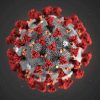
EXCLUSIVE: In the Face of the COVID-19 Pandemic We Are Only as Strong as the Weakest of Us
When the COVID-19 virus travelled from Wuhan, China halfway across the world through Europe, the Americas and beyond in the space of a few weeks, it gave us proof, if one was ever needed, of how tightly interconnected we all are. Not only are our globalized economies interdepended, but also we ourselves are one with the environment around us, and with one another. We are one humankind sharing one planet. And yet, all too often we seem to forget it, as we carelessly revert to misguiding differences between “us” and “them.” Take, for example, the distinction between rich and poor countries, or as economists put it, between advanced economies and least developed countries. In the face of COVID-19, the only difference that matters is if we are sick or healthy. Other than that, we are all the same, regardless of economic status or geographic location.
Covid-19 Straw Breaks Free Trade Camel’s Back
Economic growth is supposed to be the tide that lifts all boats. According to the conventional wisdom until recently, growth in China, India and East Asian countries took off thanks to opening up to international trade and investment.
The Commonwealth’s Response to COVID-19
The Coronovirus pandemic has been an unforgiving test of advanced economies. Health systems in the United States, France, Italy, Spain, and the UK have been put under immense pressure, with shortages of doctors, ventilators, personal protective equipment and the capacity to test for the virus. Their economies have been battered and the consequences are spoken of in terms of the Great Depression.
COVID-19: Why We Must Reset Our Thinking
Covid-19 is the most significant event since the Second World War. It changes everything. It brings great sadness to many of us as we lose loved ones, as we see people losing their jobs, and as we see people around the world suffering immensely.
The Crises of 2020 Will Delay the Transition to Clean Energy
The oil slump, global recession and uncertainty about the magnitude of the COVID-19 pandemic will fuel the appetite for cheaper fossil fuel energy and delay investments in renewables, affecting the targets of the Paris Agreement on climate change and the Sustainable Development Goals (SDGs).
Coronavirus, New Threat for Mexican Migrant Workers in the U.S.
As the high season for agricultural labour in the United States approaches, tens of thousands of migrant workers from Mexico are getting ready to head to the fields in their northern neighbour to carry out the work that ensures that food makes it to people's tables.
Haunting Forest Spirits – is Mother Nature Striking Back?
Epidemic diseases are not random events that afflict societies capriciously and without warning, on the contrary, every society produces its own specific vulnerabilities. To study them is to understand the importance of a society's structure, its standard of living, and its political priorities. […] Epidemics are a mirror, they show who we really are: Our ethics, beliefs, and socio-economic relationships. Frank Snowden 1
On Watching Contagion: What Do We Learn?
Contagion is a 2011 film by US director Steven Soderbergh (Erin Brockovich, Traffic, Che) that has proved very popular viewing during the first few weeks of the Coronavirus crisis. Set in a fictional global pandemic – modelled on the outbreak of a bat-borne Nipah virus identified in 1999 that killed around 100 people in Malaysia - the film is a tightly-written topical drama with a great castthat includes Matt Damon, Gwyneth Paltrow, Jude Law, Laurence Fishburne, Kate Winslet, Marion Cotillard and Jennifer Ehle.
East Asian Lessons for Controlling Covid-19
By the third week of March 2020, the number of Covid-19 deaths in Italy had overtaken the number of deaths in China. Authorities all over the world are restricting the movements of their populations as part of efforts to control the spread of Covid-19.
Fighting Coronavirus: It’s Time to Invest in Universal Public Health
Austerity policies pushed by international financial institutions have weakened public health systems, despite current financial support packages, condemning many people to die.
TikTok: Expressive Mechanism for many dealing with today’s world
“What do you get from the TikTok videos? Do you prefer the platform for entertainment, passing time or for connecting with your friends? I have seen comical videos, venting sessions and some that do not make any sense what so ever and some are just rude, making fun of others.” I asked the 14-year-old k-popper teenager flipping through the pages of a manga book while he chose to respond in English coming from a Spanish speaking family and studying Mandarin as a third language.
War No More
75 years ago following the end of the Second World War and the first time any state has dropped an atomic bomb, not once, but twice, on Hiroshima and Nagasaki, 51 countries from all continents met to create the United Nations.
Intellectual Property Raises Costs of Living
Many medicines and medical tests are unaffordable to most of humanity owing to the ability of typically transnational pharmaceutical giants to abuse their monopoly powers, enforced by intellectual property laws, to set prices to maximize profits over the long-term.
Financialization Increases Inequality
Financialization has worsened inequality through various channels, including macroeconomic policies. For example, quantitative easing and low, if not negative interest rates have fuelled credit and asset price bubbles, while fiscal spending cuts have adversely affected those depending on government assistance.« Previous Page — Next Page »





The international flow of capital and the emergence of diverse blocs and alliances are dramatically reshaping lives and the environment all around us, with the world's poorest paying the price of prosperity for the few. But the globalisation process offers unprecedented advantages too. Since WWII the possibilities for international cultural, social and economic interaction have increased at an explosive rate. The effects of these trends on trade, geopolitics, environment, media and many other fields are interconnected and extremely complex. IPS news agency seeks to analyse the free trade initiatives' impact on the individual, as well as the behaviour of corporations, international finance institutions and the multilateral system, giving visibility to the perspectives of a more diverse range of people, including civil society and the individual.

The Week with IPS

Tracking global progress towards a sustainable world
