Languages
Wednesday, November 11, 2026



News and Views from the Global South
Global Governance

South Sudan’s Authorities Allow Serious Human Rights Abuses to Flourish and go Unpunished – Report

Human rights movement Amnesty International has accused South Sudanese authorities for lack of independence as they have allowed allowing human rights abuses, war crimes and crimes against humanity to go unpunished.
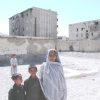
Afghan War Deadly for Children Despite Peace Process: UN
The United Nations has warned that the past four years were among the deadliest for children in Afghanistan since the United States-led invasion of 2001, with nearly 13,000 youngsters killed and injured in that period.
Modern Conflicts Against the Backdrop of Climate Change, Inequalities, Injustice & Human Rights Violations
We will look at how modern conflicts will be affected by the recent unprecedented technological and societal developments. The nature of conflict is also changing. It is becoming more protracted, complex and unpredictable.
The Rise of Phantom Investments
According to official statistics, Luxembourg, a country of 600,000 people, hosts as much foreign direct investment (FDI) as the United States and much more than China. Luxembourg’s $4 trillion in FDI comes out to $6.6 million a person.
Salvaging the SDGs: New Thinking to Spur Action Takes Shape
For the first time since a new development agenda was adopted in 2015 to make the world a better place for everyone, government leaders assembled at the United Nations in late September to take stock of progress. The verdict of this summit was not good.
Wall Street can Free the World’s 40 Million Modern-Day Slaves
Financiers in Wall Street, the City of London and other banking centres should play a bigger role in freeing the millions of people who endure slave-like working conditions globally, according to a new study.
No to Ageism, Yes to Intergenerational Equality
As we are celebrating the International Day of Older Persons today, we recognize that population ageing is a human success story, a story of longer and often healthier lives of the world’s people. The many faces of older persons that we see in Asia and in the Pacific, and, indeed, all over the world, attest to this fact. Still, however, ageing is considered a threat. There is talk about the “burden of ageing”, exploding healthcare costs, and concerns about plummeting economic growth due to the shrinking labour force. In many cities of Asia-Pacific, we see advertisement for “anti-ageing cosmetics” and surgeries. The current ideal is that we must be young, dynamic and without wrinkles or grey hair, especially older women.
Countercyclical Fiscal Policy Needed to Counter Global Economic Downturn
A conjuncture of developments, short- and medium-term, have conspired to further slow the world economy. In recent months, the International Monetary Fund (IMF), among others, has acknowledged that global economic prospects are worsening, forcing it to make not one, but at least five consecutive growth forecast revisions, all downward.
Watchdog Pushes U.S. to Publish ‘Duty to Warn’ Khashoggi Files
A media watchdog has asked United States intelligence agencies to reveal whether they knew about an assassination plot against Jamal Khashoggi and failed to warn the Saudi journalist he was in mortal danger.
The Risk of Nuclear War is Increasing
Over the long course of the nuclear age, millions of people around the world, often led by a young generation of clear-eyed activists, have stood up to demand meaningful, immediate international action to halt, reduce, and end the threat posed by nuclear weapons to humankind and the planet.
Right-Wing Politicians Fear “Invasion” of Europe & US by Migrants and Refugees
The United Nations commemorated its annual World Day of Migrants and Refugees (WDMR) on September 29 ---- this time amidst rising anti-immigrant rhetoric and widespread xenophobia.
A Rising Youth Movement Picks Up Where Governments Have Failed
When the Youth Climate Summit concluded last week, Secretary-General Antonio Guterres predicted that if governments still lack the political will to make peace with nature, “there is huge hope in what the youth is doing all over the world".
Oceans in Crisis as they Absorb the Brunt of Climate Change
Warnings of strong winds, high waves and reduced visibility along the East African coastline are increasingly common. But local fisher folk like Ali Sombo from Kwale County, situated along Kenya's Indian Ocean Coastline, don't always heed the warnings by the Kenya Meteorological Department (KMD) to stay clear of the open sea during rough waters.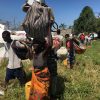
Climate Emergency: A Humanitarian Call to Action
We saw this coming. As humanitarians, our risk assessments in different parts of the world have always factored in the potential for extreme weather events and the spread of vector-borne diseases, of drought, desertification, and mass displacement. Emergency first responders like us work up scenarios for interventions and gain experience each time we put our planning to the test in real crises.
We Have Swung into the Dark Ages, Says Nobel Peace Laureate Jody Williams
On Monday, United States President Donald Trump continued to float the idea that he should be awarded a Nobel Prize, but that it would never happen because the system was rigged.
At the U.N., it Was the Day of Populist Strongmen
The United Nations is an institution which promotes multilateralism and preaches some of the basic tenets of multiparty democracy and liberalism, including the rule of law, universal human rights, free speech, civil liberties, the rights of refugees and freedom of the press.
Nature’s Solution to Climate Change
When it comes to saving the planet, one whale is worth thousands of trees.

Advice to US: When You’re Going to a Gunfight, Bring all Your Friends with Guns
Jim Mattis a former United States Defense Secretary in the Trump administration quotes a Marine Corps dictum in a recently released book titled “Call Sign Chaos: Learning to Lead”.
World Summit of Nobel Peace Laureates Calls for Decisive Action, With No Time to Waste
In a world of increasing fragility and declining resources, can the world foster peace? With a looming climate crisis, is war inevitable? Will nuclear war be the final result? Are women the ultimate peace builders? How do we train and engage youth to promote peace?
50 Days of Kashmir Under Lockdown – in Pictures
It is 50 days into the lockdown in Kashmir since roads were blocked off, schools shut, and internet and communication services stopped.
Africa’s Industrial Development: Turning Challenges into Opportunities
When world leaders gathered in New York for the 70th session of the General Assembly back in 2016, and proclaimed the period 2016-2025 as the Third Industrial Development Decade for Africa (IDDA III), it reaffirmed the importance of industrialization in supporting Africa’s own efforts towards sustained, inclusive and sustainable economic growth and accelerated development.« Previous Page — Next Page »





The Week with IPS

NEXT STOP - SDGs
Tracking global progress towards a sustainable world
Tracking global progress towards a sustainable world
